The Memory That Watches Back
Early Detection, Cognitive Tools, and What Honesty Requires
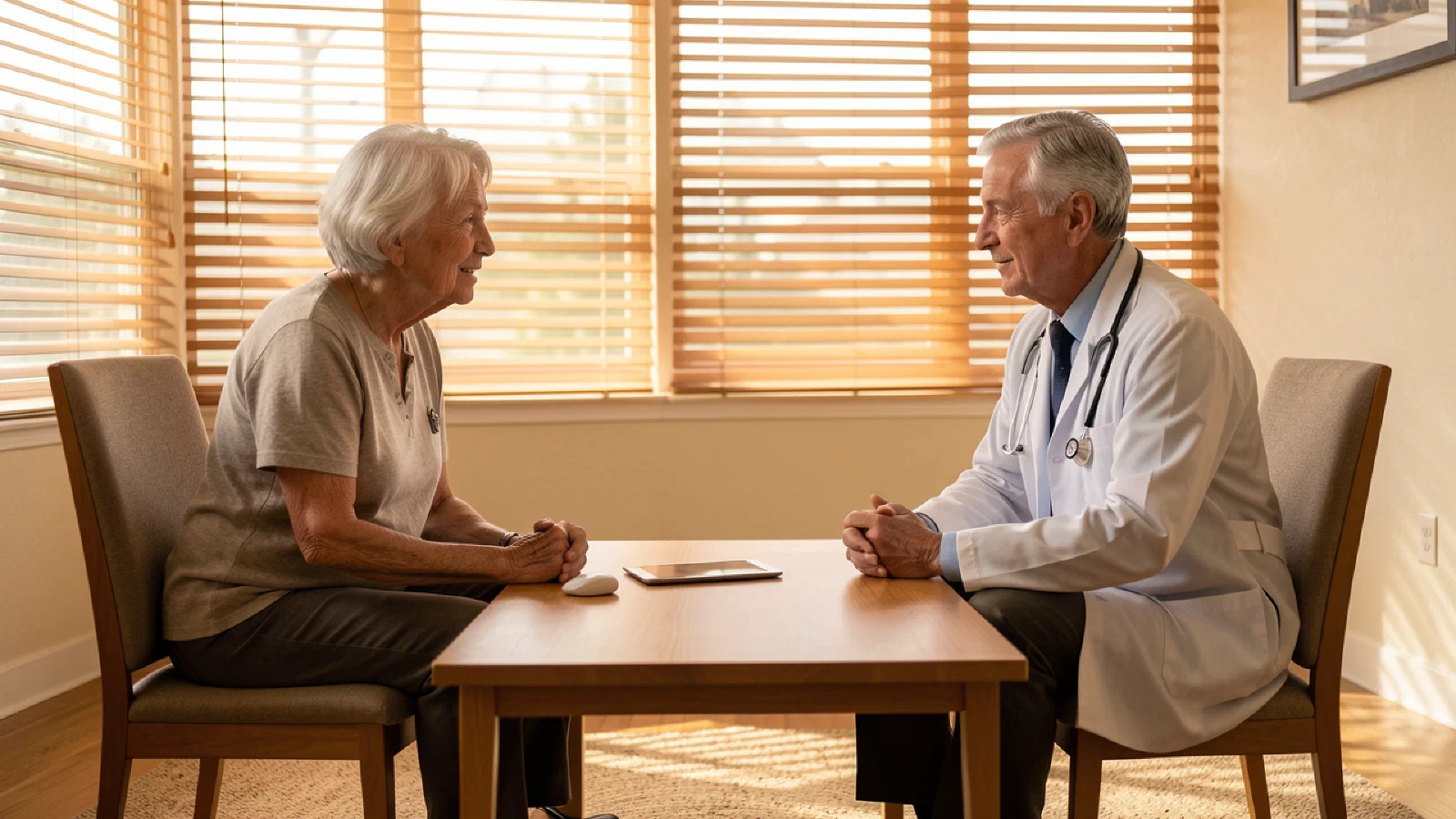
James and Patricia have been married for forty-four years. They met at a department store in 1981 where James was working the electronics floor and Patricia was returning a toaster. He is 72 now, a retired civil engineer who designed water treatment systems for three decades. The changes started eighteen months ago, the kind that accumulate before they are named: a repeated question, a lost word mid-sentence, a moment of confusion about a route he has driven a thousand times. The neurologist said mild cognitive impairment and told them to monitor it.
Monitor how? With what? Patricia typed “early Alzheimer’s detection” into a search engine and received 4.2 billion results arranged in no particular order of reliability, beginning with a study from the National Institutes of Health and ending, several pages later, with supplements that promised to reverse memory loss in thirty days. She has been a nurse for thirty years. She knows how to read clinical language. She still cannot sort what is real from what is hope dressed in laboratory vocabulary.
This installment is written for Patricia. It is the most important piece in this series to get right, because the territory is genuinely difficult and the cost of getting it wrong in either direction is high. False hope is cruel. Extinguished hope, when the evidence does not yet justify it, is also cruel. The standard here is honest assessment, which means saying clearly what each technology can do, what it cannot do, and what it means to live in the gap between detection and treatment.
Early detection: the honest assessment
Four categories of early detection technology deserve attention. They differ substantially in clinical validation, cost, availability, and practical meaning for a family in Patricia’s situation.
Blood biomarkers are the most significant development in Alzheimer’s detection in the past decade, and the least understood by the general public. Two platforms, Lumipulse G and PrecivityAD2, have received FDA clearance for measuring amyloid and tau proteins in blood. These proteins accumulate in the brain years before symptoms appear and are the primary targets of the new disease-modifying treatments. Until recently, detecting them required either a spinal tap or a PET scan costing thousands of dollars. A blood test changes the access calculus considerably.
What the tests show and do not show: a positive result indicates the presence of amyloid pathology consistent with Alzheimer’s disease. It does not predict when or whether symptoms will progress. It does not tell you how fast the disease will move. It is a biological indicator, not a prognosis. Insurance coverage is inconsistent and evolving. Medicare covers amyloid PET scanning under specific criteria; blood biomarker coverage is expanding but not universal. The right question for James’s neurologist is whether a biomarker test is appropriate given his current presentation and what a positive or negative result would actually change about his care plan. That conversation is worth having.
Speech and language analysis is the most promising non-invasive detection method in active development. Researchers at institutions including Boston University and the University of Toronto have shown that automated analysis of speech patterns, specifically changes in vocabulary, sentence complexity, fluency, and hesitation patterns, can identify cognitive changes years before clinical diagnosis. The technology works by comparing speech samples over time. Longitudinal studies using interview recordings from writers and public figures who later developed Alzheimer’s have shown the signal was present in their speech a decade before diagnosis.
What is not yet available: a validated consumer tool you can use at home. Research-grade speech analysis requires controlled conditions and specialized software. Several companies are developing consumer applications, and early pilots are underway in clinical settings. The clinical validation for practical use is not complete. This is not ready for clinical recommendation. It is worth knowing about.
Gait and movement monitoring has a more established evidence base than most people realize. Walking speed, stride length, stride variability, and dual-task performance (walking while talking, for example) change measurably in early dementia and predict cognitive decline in longitudinal studies with reasonable accuracy. Ambient sensors that monitor gait continuously in the home, the kind that can detect a change in walking pattern over weeks and months, are in deployment in research settings and beginning to appear in commercial products. The accuracy for individual-level prediction, as distinct from population-level association, remains a research question. The technology is not yet sensitive or specific enough for confident clinical use, but it is closer than the public conversation suggests.
Retinal imaging as a window into brain health is still early-stage but scientifically interesting. The retina is neurologically continuous with the brain, and amyloid deposits visible in the retina appear to correlate with amyloid burden in the brain. Several research groups have published promising findings. No clinical tool is validated or commercially available for this application. This is a research direction, not a near-term option.
The hardest truth: detection has outpaced treatment
This is the section that is most important to read carefully, because the technology landscape around Alzheimer’s treatment creates conditions for misunderstanding that can cause real harm.
Lecanemab (Leqembi) and donanemab (Kisunla) are the first treatments to show genuine disease modification in Alzheimer’s: they clear amyloid from the brain and slow the rate of cognitive decline. This is scientifically meaningful and represents decades of research. The clinical trial results showed approximately 27 percent slower cognitive decline in treated patients compared to placebo.
What 27 percent slower decline means in daily life is something that requires honest translation. The clinical trials measured decline using standardized scales over eighteen months. A patient at a particular stage of disease who would score, say, four points worse on the Clinical Dementia Rating scale at eighteen months might score three points worse with treatment. The difference is real. It is not transformation. For someone early in the disease, the preservation of function over time has genuine value: more time with preserved driving, preserved independent medication management, preserved capacity to participate in decisions about the future. The honest framing is that these treatments offer meaningful time, not reversal.
Access, cost, and eligibility narrow the picture further. Both drugs require intravenous infusion at a certified infusion center, with MRI monitoring for a serious side effect called amyloid-related imaging abnormalities, or ARIA. They are indicated for early-stage disease; people with more advanced dementia are not candidates. Medicare covers them under specific criteria that include confirming amyloid pathology, which brings the biomarker conversation back to center. Annual costs exceed $20,000 before infusion fees and monitoring costs. For many people, these treatments are not accessible regardless of eligibility.
The detection-treatment gap this creates is real. The capacity to detect Alzheimer’s pathology years before symptoms has moved ahead of the capacity to do something about it that most people can access. Knowing early has value, including time to plan, time to make legal and financial arrangements while the person with cognitive changes can fully participate, time to begin lifestyle interventions with some evidence of protective effect. The value of that time should not be dismissed. But it is not the same as treatment, and the difference matters when a family is deciding whether to pursue biomarker testing.
Cognitive engagement: what has evidence
The consumer brain-training market is worth several billion dollars and is built substantially on weak evidence. Apps that promise to improve memory through digital games have not, in the large-scale trials conducted to date, produced cognitive benefits that transfer to daily life. Lumosity paid a $2 million settlement to the FTC in 2016 for making claims its evidence did not support. The apps are not harmful. They are not the intervention the research supports.
What the research does support: cognitively stimulating activity that is genuinely challenging and novel. Not the same crossword puzzle completed the same way every morning, but activities that require learning and problem-solving. Language learning. Musical instrument practice. Complex crafts. Community college courses. Volunteering in roles that require judgment and problem-solving. The evidence for cognitive reserve, developed by neuroscientist Yaakov Stern at Columbia, suggests that more cognitively complex lives throughout adulthood build resilience against the manifestation of dementia symptoms even when the underlying pathology is present. The research does not promise protection. It suggests the foundation matters.
For someone already living with mild cognitive impairment or early dementia, the evidence points toward structured programs rather than self-directed apps. Music programs have the strongest evidence base for people with dementia: music memory is processed differently from episodic memory and is often preserved even as other capacities decline. Art therapy, dance, and structured physical activity programs have supportive evidence. The common denominator is engagement with something meaningful, with other people, in a format that does not depend on the capacities that are declining.
Caregiver technology: the most useful and least discussed
The most immediately practical technology for families managing a diagnosis like James’s is not detection technology or cognitive engagement software. It is care coordination infrastructure, and it is genuinely available now.
Shared care platforms like CareZone, CaringBridge, and Lotsa Helping Hands allow families to maintain a shared record of medications, appointments, care preferences, and symptom observations, and to coordinate tasks across multiple family members or helpers. This is not glamorous technology. It is the difference between Patricia managing the entire picture in her own head and Patricia sharing that picture with James’s son in Chicago and the neighbor who drives him to appointments.
Symptom tracking over time, whether through a dedicated app or a simple shared document, creates a record that is useful at neurology appointments and that catches changes that might otherwise not be reported. The neurologist who sees James every three months has a fifteen-minute window. Patricia’s observations between appointments are the most clinically relevant data about what his daily life actually looks like. Getting that data into a form the neurologist can use is a practical and achievable goal.
Respite scheduling and caregiver support platforms, including connections to the ARCH National Respite Network and local adult day programs, are the category Patricia is least likely to seek for herself and most likely to need. BGM covered the caregiver brain in depth in BGM-2E; the summary is that caregiving under chronic stress changes the caregiver’s cognitive function and health outcomes in documented and significant ways. The technology that protects Patricia is part of the care plan for James.
What Patricia can do this week
Call James’s neurologist and ask specifically about blood biomarker testing: whether it is appropriate for his presentation and what a result would change about his care plan. This is not a decision to make without that conversation, but it is a conversation worth initiating.
Contact the Alzheimer’s Association helpline at 1-800-272-3900. They operate 24 hours a day, seven days a week, with counselors who provide care consultation, referrals, and a level of honest, experienced guidance that is difficult to find elsewhere. The helpline is free.
Begin a shared document: medications, primary contacts, care preferences, important account information, and James’s own written statement about his values and wishes for his care. Start this while James can fully participate. The legal and financial conversations, including durable power of attorney and healthcare proxy designations, belong in this same window.
Find one structured activity James responds to, and build it into the week’s schedule with the same reliability as a medical appointment. For James, who spent his career solving complex engineering problems, that activity might involve spatial reasoning, technical reading, or building something with his hands. For someone else it might be music, or a community garden, or a class. The specifics matter less than the regularity and the meaning.
Patricia did not find a cure this week. She did not expect to. She found a support group at a local memory care center where three other spouses were managing versions of the same conversation she and James have been having. She found a music program at the library on Thursday afternoons where James sat through the entire session and, at one point, hummed along to something she recognized from their early years together. She found a neurologist willing to order a biomarker test and willing to talk with her for twenty minutes about what the result would and would not mean.
The technology did not change the diagnosis. It changed the texture of how they live with it, and the degree to which they are living with it together rather than separately, each alone with what they know and what they are afraid to say.
That is not nothing. In the absence of the reversal that is not yet available for most people, it is most of what there is.
Related reading: BGM-2A (Before the Diagnosis), BGM-2D (What the New Drugs Actually Do), BGM-2E (The Caregiver’s Brain), BGM-2K (The Philosophy of Forgetting), BGM-4A (The Surgeon General Was Right)
Blue Gray Matters is an independent publication. We have no financial relationship with any product, device, or service mentioned here.
How this article connects to others in Blue Gray Matters.
Sources cited in this article.
- U.S. Food and Drug Administration. "FDA Clears First Blood Test Used in Diagnosing Alzheimer's Disease." FDA News Release, 16 May 2025.
- van Dyck, Christopher H., et al. "Lecanemab in Early Alzheimer's Disease." New England Journal of Medicine, vol. 388, no. 1, 5 Jan. 2023, pp. 9-21.
- Sims, John R., et al. "Donanemab in Early Symptomatic Alzheimer Disease: The TRAILBLAZER-ALZ 2 Randomized Clinical Trial." JAMA, vol. 330, no. 6, 8 Aug. 2023, pp. 512-527.
- Stern, Yaakov. "Cognitive Reserve in Ageing and Alzheimer's Disease." Lancet Neurology, vol. 11, no. 11, Nov. 2012, pp. 1006-1012.
- Fagherazzi, Guy, et al. "Voice for Health: The Use of Vocal Biomarkers from Research to Clinical Practice." Digital Biomarkers, vol. 5, no. 1, Jan. 2021, pp. 78-88.
- Federal Trade Commission. "Lumosity to Pay $2 Million to Settle FTC Deceptive Advertising Charges." FTC Press Release, 5 Jan. 2016.
- Simons, Daniel J., et al. "Do 'Brain-Training' Programs Work?" Psychological Science in the Public Interest, vol. 17, no. 3, Oct. 2016, pp. 103-186.
- van der Steen, Jenny T., et al. "Music-Based Therapeutic Interventions for People with Dementia." Cochrane Database of Systematic Reviews, vol. 7, 23 July 2018, CD003477.
- Alzheimer's Association. "24/7 Helpline: 1-800-272-3900." Alzheimer's Association, 2024.
- ARCH National Respite Network and Resource Center. "National Respite Locator." ARCH, 2024.