The Sage and the Native
Purpose, the Aging Brain, and the Expertise Nobody Thinks to Deploy
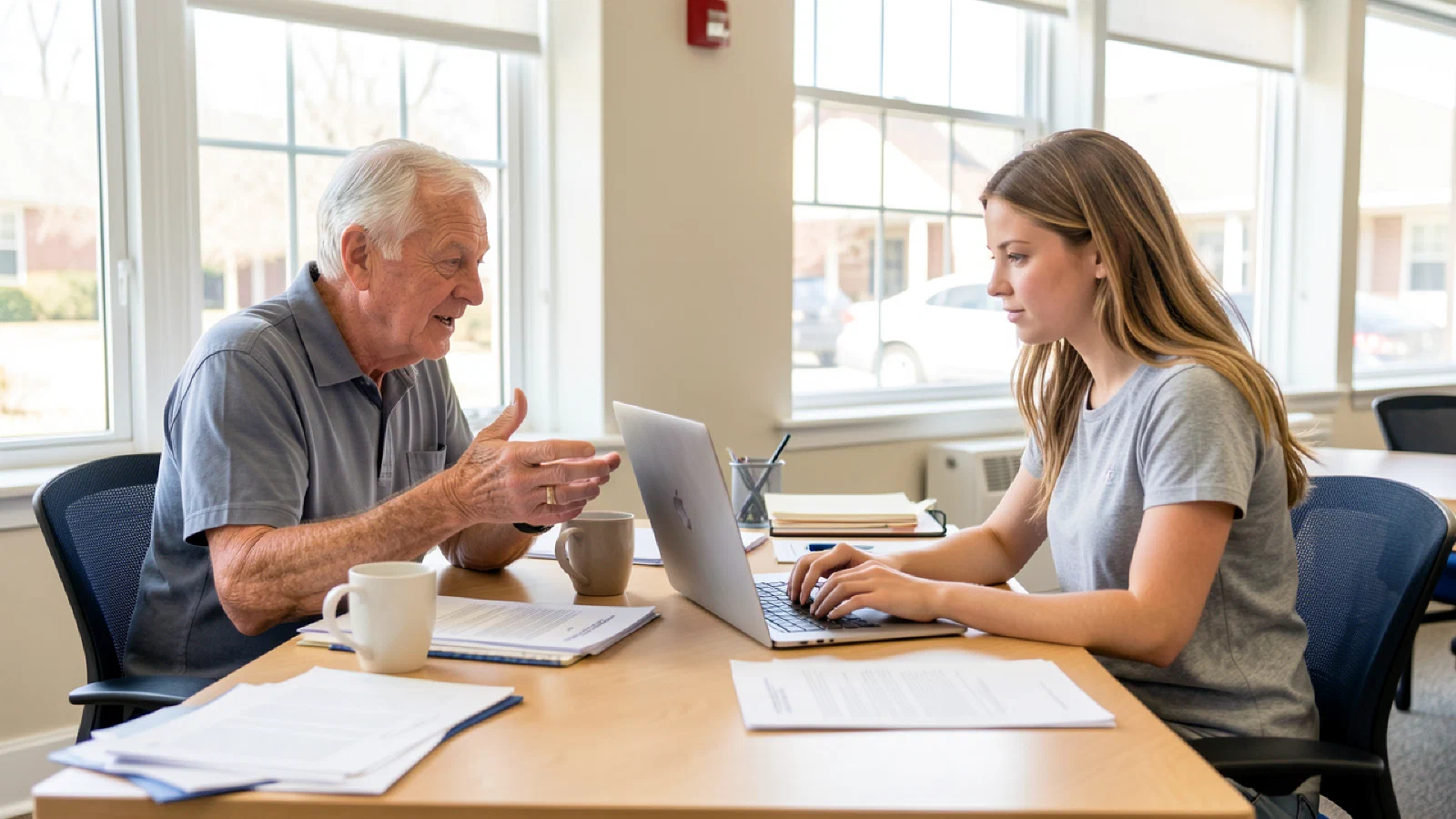
Roy Garza spent thirty-two years building a regional hospital into a functioning institution. Not a prestige institution, not a research center, but a place that delivered care to 180,000 people a year across four counties in south Texas and did not lose money doing it. At his peak he was managing $180 million in annual revenue and 2,200 employees. He understood cost structures, clinical workflows, labor negotiations, regulatory compliance, capital planning, and the specific human geography of a community that needed its hospital and knew it.
His retirement party was well attended. The next morning his calendar was empty.
He tried golf. He tried the food bank near his house, where he bagged canned goods for three months with the same hands that had signed contracts and restructured departments and talked a physician group out of leaving the network. He was grateful for the work. He was bored in a way that unsettled him. His expertise was not bagging canned goods, and no one had asked him to use it for anything else.
His granddaughter Maya is 23 and recently finished a data science degree at UT Austin. She can build a pipeline in an afternoon and query a database in her sleep. She graduated into a market that did not know what to do with her either, a surplus of technical skill looking for problems worth solving, tools without the judgment to know where to point them.
Six weeks ago they drove together to Harlan County, Kentucky, where a federally qualified health center serving 4,200 patients was losing roughly $200,000 per year in missed Medicaid reimbursements. Roy identified the core problem in two days: the intake form was not collecting the eligibility documentation that Medicaid required, so valid claims were being denied for administrative incompleteness rather than clinical ineligibility. Maya built the new intake system in four days. Roy trained the staff over the following week. In the first month, the denial rate dropped 60 percent. The clinic is on track to recover approximately $120,000 in annual revenue it was losing to a form design problem.
Roy has not felt this engaged since the year before he retired. Maya learned more in six weeks than she absorbed in two semesters of coursework. Neither of them used the word “purpose” to describe what happened. But the research has a word for it, and the word matters.
What the neuroscience says about work that demands judgment
Cognitive reserve is a concept developed by the Columbia neurologist Yaakov Stern to describe the brain’s resilience against the symptoms of neurodegeneration. People with higher cognitive reserve can sustain more neurological damage before that damage manifests as detectable cognitive decline. Reserve is not fixed at birth; it is built across a lifetime through education, complex social engagement, and work that requires judgment.
Occupational complexity is one of the most consistently documented contributors to cognitive reserve. Multiple meta-analyses, synthesizing data from longitudinal studies tracking workers across decades, find that people who spend their careers in jobs requiring complex problem-solving, non-routine decision-making, and management of competing demands have lower rates of dementia and slower rates of cognitive decline in later life, independent of education level. The effect is not trivial. A 2021 analysis in Neurology found that people in the most cognitively complex occupations had dementia rates roughly 30 percent lower than those in the least complex occupations, after controlling for education and other relevant factors.
What the research also shows is that the type of activity matters after retirement, not just the quantity. Volunteering that deploys expertise, that requires judgment, problem-solving, and accountability to a real outcome, shows different cognitive profiles than volunteering that does not. The distinction is between engagement and stimulation. Stimulation, the kind that comes from puzzles, games, or novel experiences, has modest benefits. Engagement, the kind that comes from doing something that matters to someone who is counting on you, is more potent.
Roy is not doing a crossword puzzle in Harlan County. He is doing the work he has done for thirty years, in a context where the stakes are real, where his judgment changes outcomes, where someone is counting on what he knows. That is not retirement. That is purpose deployment.
The isolation intervention nobody named
The BGM series has spent considerable space on the research around loneliness and social isolation, particularly in Series 4. The five conditions that reliably produce genuine connection are worth repeating here: proximity, repeated unplanned interaction, shared activity, low-stakes invitation, and reciprocal need.
Roy and Maya’s engagement satisfies all five. They work in proximity, or on video calls that substitute for it. Their interaction is regular and structured around shared problems that neither anticipated. Their activity is shared and purposeful. The invitation to collaborate was low-stakes enough that both said yes. And the reciprocal need is real: Roy needs Maya’s technical capacity; Maya needs Roy’s judgment. Neither can do what they are doing without the other.
This is structurally different from most senior volunteer programs, which tend to be designed around what older adults can still do rather than what they do exceptionally well. A program that asks a retired hospital COO to answer phones at a nonprofit is not deploying expertise. It is providing occupational therapy with a charitable frame. The protective effects of the latter are modest. The protective effects of genuine purposeful engagement with a reciprocal relationship are categorically different.
The intergenerational dimension adds a layer the research increasingly supports. Regular contact between older adults and younger people, structured around shared purpose rather than mere proximity, shows benefits for both generations that persist over time: reduced age-based stereotyping, increased mutual understanding, and a kind of knowledge transmission that neither generation accomplishes as well by other means. Roy knows things that cannot be Googled. Maya knows tools that Roy would not have encountered in his career. The exchange is genuinely bilateral.
The equity argument
Strategic operational capacity at Roy’s level costs between $200 and $400 per hour in commercial consulting markets. This is not a criticism of the market; it reflects the genuine scarcity and value of thirty years of relevant experience. It also means that the organizations most likely to benefit from that expertise cannot afford it.
Federally qualified health centers, which provide primary care to underserved populations regardless of ability to pay, operate on thin margins and cannot budget for high-end consulting. Rural public libraries facing technology transitions. Title I schools building new instructional systems. Legal Aid offices trying to scale case management. Area Agencies on Aging with more need than staff. These are institutions that hold communities together, and they share a common condition: they need exactly the kind of expertise that the labor market has declared obsolete and the consulting market has priced out of their reach.
Purpose deployments of the kind Roy and Maya executed route that expertise to where it produces the most impact. The equity argument is not primarily about fairness, though it is also that. It is about efficiency: expertise sitting idle in retirement while community institutions struggle with solvable problems is a waste that the communities bear most directly.
There is a class dimension to who is in a position to do this. Roy has a pension, paid-off housing, and the financial cushion to spend six weeks in Kentucky without compensation. Not every retired professional has that flexibility. Any model that depends on purely voluntary deployment will systematically draw from those with the most financial security, which tends not to be the most diverse pool. This is not an argument against the model. It is an argument for building compensation and support structures that expand who can participate.
The reproducible knowledge argument
The forward-looking element of what Roy and Maya did in Harlan County is not the $120,000 in recovered revenue, significant as that is. It is that the methodology they developed is portable.
The intake redesign Roy built is not custom to that clinic. The Medicaid eligibility capture workflow, the staff training protocol, the denial audit process: these are documented procedures that can be adapted for the next FQHC facing the same problem. Roy spent the last week of the engagement writing that documentation, because he has thirty years of experience watching institutional knowledge walk out the door when people retire. He knows what it costs when nobody writes it down.
What Roy and Maya built is the beginning of an infrastructure, not just a service. If the next engagement deploys the documented methodology from the first one, and the one after that refines it further, what accumulates is not a series of one-off consulting projects. It is a knowledge base: tested, practical, specific enough to be usable, general enough to travel. Expertise becomes infrastructure rather than biography.
This argument is speculative in its larger form; no one has built this at scale. It is not speculative in its immediate form: Roy documented his methodology, and the clinic that helped him develop it is more resilient because of it.
The sustainability question, honestly
The model cannot run on goodwill indefinitely. Roy had the resources and motivation to spend six weeks in Kentucky. The next person might not. The financial question is real and not yet solved.
Several possibilities exist, none proven. A tithe model: organizations with the capacity to pay for expertise fund deployments to organizations that cannot, with the matching and coordination done by a third-party intermediary. Foundation grants: a limited but real option, particularly for documented, evidence-generating pilots. Government partnership: the AmeriCorps Seniors program (formerly RSVP) provides modest stipends and infrastructure for older adult volunteers, and an expansion focused on expertise deployment rather than generic volunteering is a policy argument worth making. Hybrid compensation: small stipends, health benefit contributions, and the documented cognitive protection benefits together constitute something closer to a real value proposition for participants who are not fully resource-secure.
The most immediately testable model is simple: one commercial consulting engagement funds one purpose deployment. Roy could charge market rate for a week of work with an organization that can pay and use that fee to cover his expenses on a week of work with an organization that cannot. The ratio can evolve. The principle is replicable now with the resources Roy already has.
None of these models has been proven at scale. All of them are worth testing. The urgency is not abstract: every year of retirement without purposeful complex work is a year of cognitive reserve not built, a year of isolation deepening, a year of expertise depreciating that nobody will get back.
What this means for the reader
Two different readers are in this audience.
The reader with unused expertise: your judgment is not obsolete. The labor market made an actuarial decision about the cost of your salary relative to someone younger, which is a fact about accounting and not a fact about what you know. The skills that took thirty years to build do not expire when your employment status changes. The question is whether you have found the context that needs what you have.
The reader who is a family member of someone recently retired or approaching retirement: purposeful complex work may protect cognitive function more effectively than any supplement on the market, any brain training app, and most pharmacological interventions currently available. Not as a guarantee. As a lead worth following. The question worth asking is not whether your parent can keep busy. It is whether they can find work that demands their judgment.
Roy’s calendar is not full. It has enough. A Tuesday call with the Harlan County clinic about a staffing problem that cropped up after the intake system went live. A Wednesday video call with Maya about a second engagement they are scoping at a Title I school district in rural Mississippi that needs help with its federal grant reporting. A Thursday conversation with a retired superintendent in San Antonio who heard about what they did and wants to understand whether the model would work for her.
At Roy’s last neurological checkup, his physician commented on something she had not seen in his previous two visits. Not decline. The opposite: a quality of engagement and recall that she mentioned specifically, without prompting, as unusual for someone his age who had been recently retired. She did not call it proof of anything. She called it something worth paying attention to.
Roy called it a Tuesday.
Related reading: BGM-2A (Before the Diagnosis), BGM-4A (The Surgeon General Was Right), BGM-4H (What You Know), BGM-6A (Working Past 70, Not by Choice), BGM-6D (Encore Careers and Reinvention), BGM-9D (Reclaiming the Narrative), BGM-10A (The Rural Cliff)
Blue Gray Matters is an independent publication. We have no financial relationship with any product, device, or service mentioned here.
How this article connects to others in Blue Gray Matters.
Sources cited in this article.
- Stern, Yaakov. "Cognitive Reserve in Ageing and Alzheimer's Disease." Lancet Neurology, vol. 11, no. 11, Nov. 2012, pp. 1006-1012.
- Then, Francisca S., et al. "Systematic Review of the Effect of the Psychosocial Working Environment on Cognition and Dementia." Occupational and Environmental Medicine, vol. 71, no. 5, May 2014, pp. 358-365.
- Anatürk, Melis, et al. "A Systematic Review and Meta-Analysis of the Relationship Between Lifestyle Activities and the Cognitive Trajectory in Later Life." Ageing Research Reviews, vol. 62, Sept. 2020, 101113.
- Smyer, Marc A., and Sara M. Pitt-Catsouphes. "The Meanings of Work for Older Workers." Generations, vol. 31, no. 1, Spring 2007, pp. 23-30.
- Carlson, Michelle C., et al. "Impact of the Baltimore Experience Corps Trial on Cortical and Hippocampal Volumes." Alzheimer's & Dementia, vol. 11, no. 11, Nov. 2015, pp. 1340-1348.
- Freedman, Marc. The Big Shift: Navigating the New Stage Beyond Midlife. PublicAffairs, 2011.
- AmeriCorps. "AmeriCorps Seniors (formerly Senior Corps)." Corporation for National and Community Service, 2024.
- Pillemer, Karl, et al. "Environmental Volunteering and Health Outcomes Over a 20-Year Period." The Gerontologist, vol. 50, no. 5, Oct. 2010, pp. 594-602.
- Burr, Jeffrey A., et al. "Volunteering and Cardiovascular Disease Risk: Does Helping Others Get 'Under the Skin?'" The Gerontologist, vol. 56, no. 5, Oct. 2016, pp. 937-947.