AI and the Early Detection Revolution
What Machines Can See That Doctors Cannot
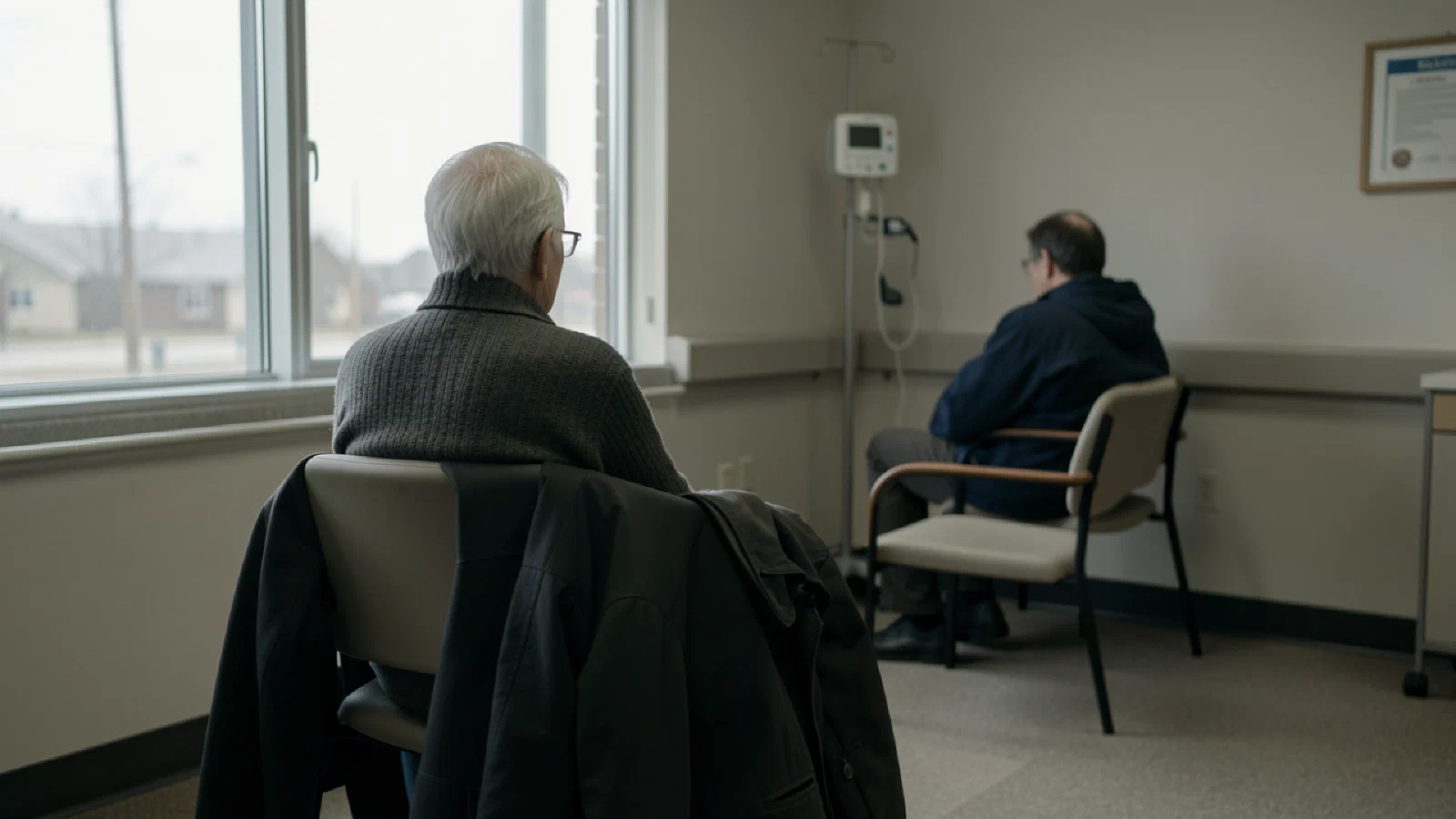
He is sitting in his primary care doctor’s office for a routine checkup. The nurse hands him a tablet and asks him to read a short paragraph aloud, then describe a picture on the screen. It takes ninety seconds. He thinks nothing of it.
Three weeks later, his doctor calls. The AI that analyzed his voice recording flagged a pattern: subtle changes in word-finding, increased pauses, reduced sentence complexity. The algorithm identified markers consistent with early cognitive change. The patient has noticed nothing. His wife has noticed nothing. The machine noticed.
The conversation that follows will change his life. Not because he has Alzheimer’s disease; that is not yet certain. Because he now knows that something may be changing in his brain, years before he would have known otherwise. What he does with that knowledge is up to him.
This is the early detection revolution. Artificial intelligence is transforming when and how cognitive decline can be identified, moving the window of detection years earlier. Some of these tools are already in use. Others are years away. The promise is time: time to plan, time to treat, time to prepare. The complications are real: detection without cure raises profound questions, and the tools themselves carry risks that mirror the inequities in everything else.
Blood Biomarkers and AI
The first installment of this series discussed the FDA-cleared blood test for Alzheimer’s pathology. What that discussion did not emphasize is the role of AI in making the test useful.
The Lumipulse G test measures two proteins in blood: phosphorylated tau-217 and amyloid beta 1-42. The ratio between them indicates whether amyloid plaques are present in the brain. But a simple ratio is not enough. The relationship between blood levels and brain pathology varies by age, sex, kidney function, and other factors. AI models, trained on thousands of matched samples (blood draws paired with PET scans), determine the optimal cut-points for interpreting results. Without AI, the test would be less accurate.
More advanced AI applications are emerging. The p-tau217 “clock” model, published in early 2026, uses longitudinal biomarker data to estimate when symptoms might begin. For someone with elevated biomarkers but no symptoms, the model can predict, with median accuracy of three to four years, when cognitive decline might start. This is not yet a clinical tool. It is a research tool pointing toward a future where detection is not just binary (positive or negative) but prognostic (how long until symptoms).
Newer biomarkers are entering the picture. MTBR-tau243 tracks tau tangle pathology specifically, complementing the amyloid-focused tests. It is being used as an outcome measure in anti-tau drug trials. As the therapeutic targets diversify, so do the biomarkers, and AI is essential for integrating multiple signals into clinically useful information.
The access challenge remains. The Lumipulse instruments are expensive laboratory equipment, not point-of-care devices. Roll-out beyond major medical centers will take years. Rural clinics, community health centers, and under-resourced systems will be last in line. The technology exists. The distribution does not.
Speech and Language Analysis
Your voice may reveal cognitive change before you notice it yourself.
AI systems trained on thousands of speech samples can detect patterns associated with early cognitive decline. The signatures include reduced vocabulary diversity, simpler sentence structure, increased pauses, word-finding failures, and changes in conversational flow. These changes are subtle, below the threshold of human perception in casual conversation. Machines can quantify them.
Academic labs and startups have developed speech analysis tools approaching clinical validation. Some require structured tasks: reading aloud, describing pictures, recounting a story. Others analyze free conversation. The appeal is obvious. A screening tool that requires nothing more invasive than a phone call or a tablet recording could be deployed at scale, at low cost, in any setting with basic technology.
The limitations are equally real. Speech patterns vary by accent, language, education level, and cultural communication norms. A non-native English speaker may pause more frequently or use simpler syntax without any cognitive impairment. Someone with lower formal education may have a narrower vocabulary that is entirely normal for them. AI trained primarily on white, English-speaking, college-educated populations may perform poorly in other communities. False positives in these groups would cause unnecessary fear; false negatives would miss people who need detection most.
The bias problem is not unique to speech analysis, but it is particularly acute here. Language is cultural. AI that treats one cultural pattern as normal and another as pathological encodes assumptions that have nothing to do with brain health.
Gait and Movement Analysis
How you walk may predict how you think.
Research has established that changes in walking speed, stride variability, and balance correlate with cognitive decline. Dual-task tests, which measure gait while the person performs a cognitive task like counting backward, are particularly sensitive. The connection makes biological sense: walking requires coordination among motor, sensory, and cognitive systems. When any of these systems degrades, gait changes.
Sensor-based systems can detect these changes passively. Wearable devices track step patterns over time. Floor sensors embedded in homes measure gait without requiring the person to do anything. Camera-based motion capture, potentially integrated into smart home systems, can analyze movement continuously.
AI algorithms identify subtle gait changes that precede clinical cognitive symptoms by years. A person whose stride variability has increased, whose walking speed has slowed, whose dual-task performance has declined, may be flagged for further evaluation long before they or their family notice memory changes.
The smart home application is both promising and concerning. Passive monitoring that detects changes without requiring action is appealing, especially for people who might resist formal testing. But it raises the privacy-utility tradeoff starkly. Who has access to the gait data? What happens if the monitoring identifies a pattern consistent with dementia? Who decides whether and how to act on that information? These questions do not have settled answers.
Retinal Imaging
The eye may be a window to the brain in a more literal sense than the metaphor suggests.
The retina shares developmental origins with brain tissue. Its blood vessels and nerve layers are accessible through standard eye imaging. Changes in the retina, including thinning of specific layers, vascular alterations, and even amyloid deposits, have been associated with Alzheimer’s disease.
AI analysis of standard retinal photographs, the kind taken during routine eye exams, can detect patterns associated with cognitive decline. The appeal is significant: eye exams are widely available, routine, non-invasive, and relatively inexpensive. If retinal imaging could screen for Alzheimer’s risk, the screening infrastructure already exists.
Current status: these are research tools, not clinical ones. Multiple companies are pursuing FDA clearance. The accuracy is not yet sufficient for standalone diagnosis, but as one signal among many, retinal imaging may contribute to composite risk assessment. Collaborations between AI imaging companies and clinical networks are testing these tools in real-world settings.
The Ethical Terrain
The technical capabilities are advancing faster than the ethical frameworks to govern them.
Detection without cure is the central dilemma. If an AI algorithm identifies elevated Alzheimer’s risk in someone who has no symptoms and no effective treatment option, what is the value of that knowledge? For some, it enables planning: legal arrangements, financial preparation, conversations with family, decisions about how to spend the years ahead. For others, it is a burden: years of anticipatory dread with nothing constructive to do.
The right not to know is a recognized principle in medical ethics. If a voice analysis flags you during a routine primary care visit, you should have the opportunity to decide whether you want to learn the result. But how this should work in practice, particularly for passive monitoring systems that generate data continuously, is not clear.
Algorithmic bias threatens to reproduce and amplify existing disparities. AI systems trained predominantly on white, English-speaking, affluent populations may miss early changes in other groups or may flag normal variation as pathological. The communities at highest risk for Alzheimer’s, including Black and Hispanic Americans, may be worst served by tools developed without their data.
Data privacy becomes urgent when the data is speech recordings, gait patterns, retinal images, and genetic information. Who owns this data? Can it be shared with insurers, employers, or marketers? The legal framework is incomplete. The Genetic Information Nondiscrimination Act protects against use of genetic data in employment and health insurance decisions, but it does not cover biomarker or imaging findings. Early detection of Alzheimer’s risk could affect insurability for long-term care, for life insurance, and for disability coverage. It could affect employment in subtle or overt ways.
What This Means for You
What is available now: blood biomarker testing is accessible through specialist referral in major medical centers. Cognitive screening tools, including the MoCA and more sensitive digital assessments, are available in primary care for patients who ask.
What is coming: speech analysis, gait monitoring, and retinal screening as complementary tools, potentially integrated into routine care. Timeline: two to five years for some applications, longer for others. The full vision of multimodal AI-enabled screening, combining blood, speech, gait, and imaging data into a single risk assessment, is further out.
What to ask your doctor: “Are there new screening tools I should know about?” “Given my risk factors, should I consider testing?” “What would a positive result mean, and what would we do differently?”
The case for early detection, honestly stated: knowing early allows planning. It opens treatment windows that close as the disease progresses. It enables conversations that become harder later. Knowledge is not always comfortable. It can be powerful.
The case for caution, equally honestly stated: early detection without effective treatment may create anxiety without benefit for some individuals. The tools are imperfect. The access is unequal. The ethical frameworks are incomplete.
The decision about whether to pursue early detection is personal. It depends on your risk tolerance, your planning orientation, your family situation, and your beliefs about what you would do with the information. There is no universally right answer. There is only the answer that is right for you.
How this article connects to others in Blue Gray Matters.
Sources cited in this article.
- U.S. Food and Drug Administration. "FDA Clears First Blood Test Used in Diagnosing Alzheimer's Disease." FDA News Release, 16 May 2025.
- Petersen, Kellen K., et al. "Predicting Onset of Symptomatic Alzheimer's Disease with Plasma p-tau217 Clocks." Nature Medicine, vol. 32, no. 3, Mar. 2026, pp. 1085-1094.
- Fagherazzi, Guy, et al. "Voice for Health: The Use of Vocal Biomarkers from Research to Clinical Practice." Digital Biomarkers, vol. 5, no. 1, Jan. 2021, pp. 78-88.
- Verghese, Joe, et al. "Motoric Cognitive Risk Syndrome and the Risk of Dementia." Journals of Gerontology: Series A, vol. 68, no. 4, Apr. 2013, pp. 412-418.
- Cheung, Carol Yim-lui, et al. "A Deep Learning Model for Detection of Alzheimer's Disease Based on Retinal Photographs: A Retrospective, Multicentre Case-Control Study." Lancet Digital Health, vol. 4, no. 11, Nov. 2022, e806-e815.
- Obermeyer, Ziad, et al. "Dissecting Racial Bias in an Algorithm Used to Manage the Health of Populations." Science, vol. 366, no. 6464, 25 Oct. 2019, pp. 447-453.
- Topol, Eric J. Deep Medicine: How Artificial Intelligence Can Make Healthcare Human Again. Basic Books, 2019.
- Schindler, Suzanne E., et al. "Acceptable Performance of Blood Biomarker Tests of Amyloid Pathology — Recommendations from the Global CEO Initiative on Alzheimer's Disease." Nature Reviews Neurology, vol. 20, July 2024, pp. 426-439.
- Char, Danton S., et al. "Implementing Machine Learning in Health Care — Addressing Ethical Challenges." New England Journal of Medicine, vol. 378, no. 11, 15 Mar. 2018, pp. 981-983.