Race, Memory, and Medicine
The Unequal Landscape of Alzheimer's in America
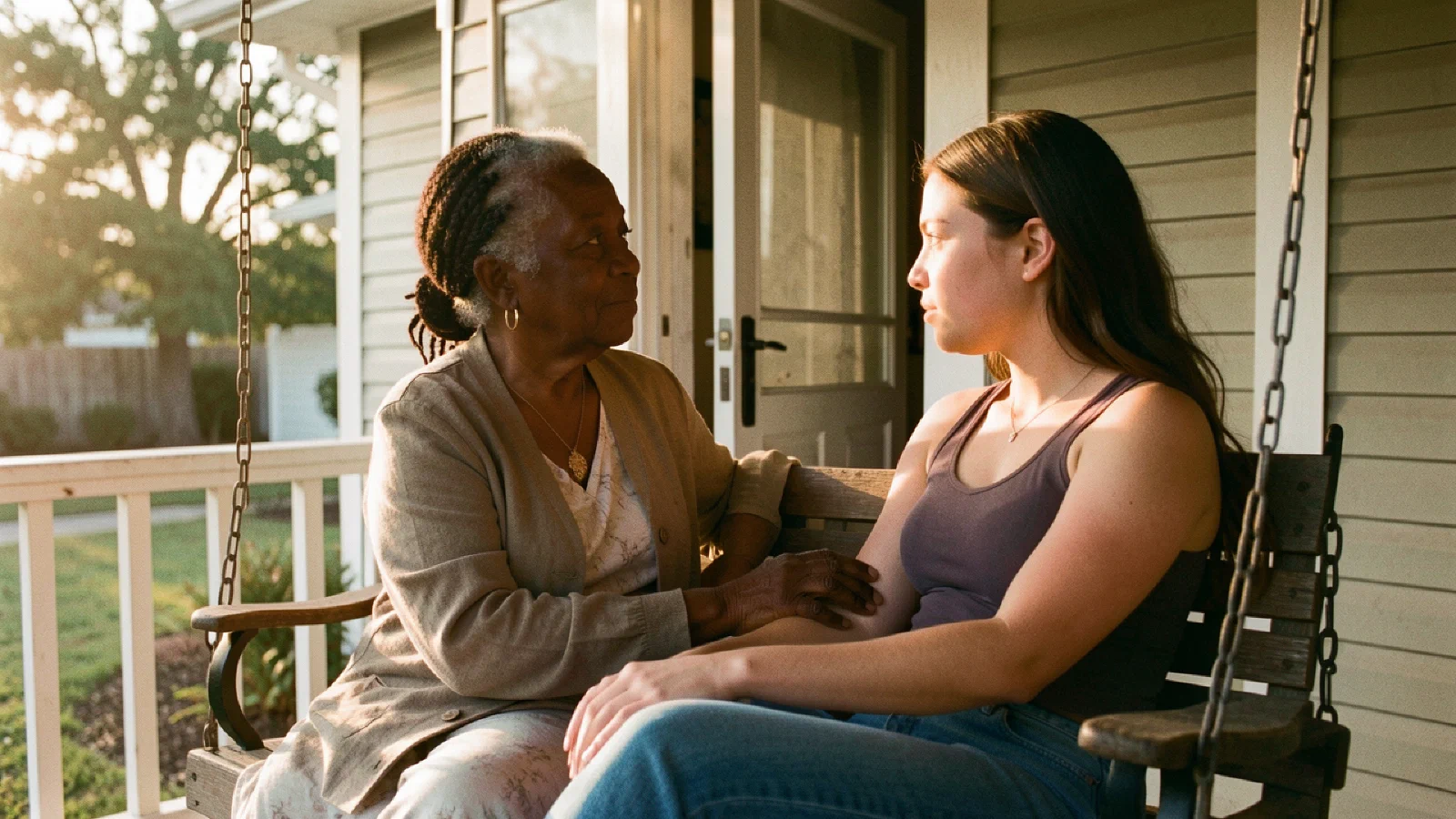
Her mother had been “forgetful” for years. The primary care doctor said it was normal aging. Nothing to worry about. Come back if it gets worse.
It got worse. By the time a specialist finally saw her, after her daughter insisted on a referral, the diagnosis was moderate Alzheimer’s disease. The new drugs, the ones that might have slowed the decline, were not an option. They only work in early-stage disease. The window had closed.
The daughter, a Black woman in Atlanta, asked the question that haunts her still: “Would they have caught it earlier if she were white?”
The answer, according to the research, is probably yes. Not because her mother’s doctor was consciously racist. But because the system that doctor operates in, the patterns of referral and screening, the assumptions about what is normal for whom, the distribution of specialists and diagnostic technology, all of it is shaped by race. Alzheimer’s disease does not discriminate. The American healthcare system does.
The Disparity in Numbers
Black Americans are roughly twice as likely to develop Alzheimer’s disease as white Americans. Hispanic Americans are approximately one and a half times as likely. These are not small differences. They represent hundreds of thousands of additional cases, additional caregiving years, additional deaths.
The instinct is to look for a genetic explanation, something intrinsic to populations that accounts for the gap. But genetics explains only a fraction of the disparity. The rest is written in social determinants: the conditions in which people are born, grow, live, work, and age.
Cardiovascular risk factors are the clearest pathway. Hypertension, diabetes, and obesity all increase Alzheimer’s risk, and all are more prevalent in Black and Hispanic communities. This is not because of biology. It is because of decades of unequal access to healthcare, healthy food, safe places to exercise, and freedom from environmental toxins. The neighborhoods where Black Americans were permitted to live, through redlining and its successors, are the neighborhoods with more fast food outlets and fewer grocery stores, more pollution and less green space, more chronic stress and less wealth. These conditions elevate cardiovascular risk. Cardiovascular risk elevates dementia risk. The disease begins in policy.
Chronic stress itself is a biological accelerant. Arline Geronimus, the public health researcher who developed the weathering hypothesis, has documented how the cumulative burden of discrimination ages the body faster than calendar years alone. Allostatic load, the physiological toll of chronic stress, includes elevated cortisol, inflammation, and cellular aging. Black Americans, on average, have higher allostatic load than white Americans at every age. This is not because of genetics. It is because of the daily, lifelong experience of navigating structural racism.
The APOE ε4 gene variant, the strongest known genetic risk factor for late-onset Alzheimer’s, varies in frequency across populations. But here too, the story is more complicated than genetics alone. Research suggests that the risk associated with ε4 differs by race: the same gene variant may confer different levels of risk depending on environmental context. Genes do not operate in a vacuum. They interact with the conditions of life. When those conditions are shaped by inequality, the gene expression follows.
The Diagnostic Gap
Higher risk would be concerning enough. But Black and Hispanic Americans are also diagnosed later, when fewer options remain.
Studies consistently show that Black and Hispanic patients are more likely to receive their Alzheimer’s diagnosis at moderate or advanced stages rather than early. By the time someone reaches moderate disease, the new anti-amyloid treatments are no longer an option. The treatment window is early. Late diagnosis forecloses it.
The reasons are multiple. Cultural factors play a role: different communities have different frameworks for understanding cognitive change in older adults. In some families, forgetfulness is normalized as part of aging, something to be managed within the family rather than brought to a doctor. Help-seeking patterns vary. The decision to pursue medical evaluation for memory concerns is shaped by beliefs about what medicine can offer, past experiences with healthcare, and practical considerations like cost, transportation, and time off work.
Provider bias plays a role. Research has documented disparities in cognitive screening rates by patient race. Black and Hispanic patients are less likely to be screened, less likely to be referred to specialists, and less likely to receive thorough diagnostic workups. This is not always conscious prejudice. It can be the result of time pressure, assumptions about patient preferences, communication barriers, or clinical algorithms that were developed and validated in predominantly white populations. The effect is the same: missed diagnoses, delayed diagnoses, closed windows.
Language barriers affect Hispanic communities specifically. Cognitive testing is language-dependent. A patient evaluated in their non-dominant language may perform worse than their actual cognitive status would suggest. Spanish-language cognitive assessments exist but are not universally available. Spanish-speaking neurologists are scarce. The infrastructure assumes English proficiency.
The Treatment Access Problem
The new disease-modifying treatments require infrastructure that is unequally distributed.
Lecanemab and donanemab require confirmation of amyloid pathology before treatment can begin. Traditionally, this meant an amyloid PET scan, which requires specialized equipment, radioactive tracers, and expert interpretation. PET scanners are concentrated in major medical centers. They are not evenly distributed across geography or community. The blood biomarker test cleared by the FDA in 2025 could reduce this barrier, but it too requires laboratory infrastructure, clinician education, and insurance coverage that remain uneven.
Treatment itself requires infusion centers, MRI availability for monitoring, and neurologists experienced with anti-amyloid therapy. These resources are concentrated in academic medical centers and affluent suburban areas. They are sparse in rural America and in urban neighborhoods that have been historically disinvested. A Black patient in a majority-Black neighborhood in a major city may be miles from an infusion center. A Hispanic patient in a rural area may be hours away.
Clinical trial enrollment tells a parallel story. Historically, Black Americans have represented approximately 5 to 7 percent of Alzheimer’s clinical trial participants, despite bearing the highest disease burden. Hispanic enrollment is similarly low. This means that the drugs developed and tested in trials are developed and tested predominantly in white populations. The efficacy and safety data may or may not generalize. We do not know because the studies were not designed to find out.
The legacy of Tuskegee hangs over this. For forty years, from 1932 to 1972, the U.S. Public Health Service studied untreated syphilis in Black men in Alabama, withholding treatment even after penicillin became available. Henrietta Lacks’s cells were taken without consent and commercialized without compensation. These are not ancient history. They are within living memory for many families. The distrust of medical research that persists in Black communities is not irrational. It is a rational response to documented exploitation. Asking communities to trust clinical trials requires earning that trust, and the medical establishment has not yet done the work required.
Recent efforts aim to change this. Roche’s TRAVELLER study uses plasma biomarker pre-screening to identify eligible participants in community settings, reducing the burden of travel to academic centers. The Alzheimer’s Association has developed an Equity in Research framework. The National Institute on Aging has prioritized diversity in trial enrollment. These are steps. They are not yet transformation.
Biology and Society, Entangled
The distinction between biological and social causes of disease is never clean, but in Alzheimer’s it is particularly blurred.
Consider cognitive reserve, the concept that education and intellectual engagement may buffer the brain against the clinical expression of Alzheimer’s pathology. Two people can have similar levels of amyloid plaques on autopsy; one may have been cognitively impaired for years while the other showed minimal symptoms. The difference may be cognitive reserve built through education, occupational complexity, and intellectually stimulating environments.
Now consider educational inequity. Black Americans who grew up under Jim Crow attended underfunded, segregated schools. Hispanic Americans in many regions attended schools where their language was forbidden and their presence unwelcome. Educational quality was not distributed by merit but by race and place. If cognitive reserve is protective, then educational inequity directly translates to reduced protection, decades later, in the form of earlier symptom onset and faster decline.
Lead exposure offers another pathway. Lead damages the brain, and Black children have historically been exposed to more lead through paint in older housing, proximity to industrial sites, and contaminated water systems. The effects of childhood lead exposure on adult cognitive function are documented. Redlining determined where Black families could live. Those neighborhoods had older housing stock, more lead paint, more environmental contamination. The policy decisions of the 1930s reach forward to the dementia diagnoses of the 2020s.
Food access, air quality, healthcare access, wealth accumulation, incarceration, police violence, the daily stress of navigating a society structured by race: all of these filter into biology. They affect cardiovascular health, inflammatory markers, stress hormones, and brain aging. The disparity in Alzheimer’s disease is not separate from the disparity in everything else. It is the same disparity, expressed in one more domain.
What Change Looks Like
The honest assessment is that awareness of these disparities is growing, pilot programs exist, and structural change is slow.
Clinical trial design is beginning to evolve. Community-based recruitment, where researchers partner with trusted local organizations rather than waiting for patients to come to academic centers, shows promise. Addressing practical barriers, including transportation, scheduling flexibility, and compensation for time, improves enrollment. Culturally appropriate communication, developed with community input rather than imposed from outside, builds trust incrementally.
Community health workers and trusted messengers are being integrated into Alzheimer’s screening and education. Programs that embed brain health information in churches, barbershops, and community centers reach people who might never see a neurologist. These approaches respect the reality that trust is earned within relationships, not bestowed by credentials.
Culturally adapted caregiver support programs recognize that caregiving happens within cultural contexts. The Alzheimer’s Association and AARP have developed resources specifically for Black and Hispanic families, acknowledging different family structures, different relationships to formal care systems, and different community resources.
But none of this addresses the upstream determinants. You cannot fix Alzheimer’s disparities without fixing healthcare disparities. You cannot fix healthcare disparities without addressing the housing policy, environmental policy, education policy, and economic policy that shape them. The downstream interventions, the trials and the screenings and the support groups, are necessary. They are not sufficient.
The daughter in Atlanta, the one whose mother was diagnosed too late, is now an advocate. She speaks at community events about early detection. She pushes her own doctor to screen her. She tells other Black families: do not accept “it’s just aging” as an answer. Demand the evaluation. Insist on the referral. The system will not advocate for you. You have to advocate for yourself.
This is true and it is also unfair. The burden of navigating a discriminatory system should not fall on its victims. But until the system changes, self-advocacy is survival. And changing the system requires naming what the system does, clearly and repeatedly, until the people with power to change it cannot pretend they do not know.
Alzheimer’s disease does not discriminate. But in America, the risk of getting it, the likelihood of early diagnosis, the access to treatment, and the quality of care all depend on race. This is not a mystery. It is not inevitable. It is the predictable result of policy choices, resource distribution, and historical injustice that continue to structure American life.
The disease is biological. The disparity is political. Only political will can close the gap.
How this article connects to others in Blue Gray Matters.
Sources cited in this article.
- Mayeda, Elizabeth Rose, et al. "Inequalities in Dementia Incidence Between Six Racial and Ethnic Groups Over 14 Years." Alzheimer's & Dementia, vol. 12, no. 3, Mar. 2016, pp. 216-224.
- Geronimus, Arline T. "The Weathering Hypothesis and the Health of African-American Women and Infants: Evidence and Speculations." Ethnicity & Disease, vol. 2, no. 3, Summer 1992, pp. 207-221.
- Geronimus, Arline T., et al. "'Weathering' and Age Patterns of Allostatic Load Scores Among Blacks and Whites in the United States." American Journal of Public Health, vol. 96, no. 5, May 2006, pp. 826-833.
- Barnes, Lisa L. "Alzheimer Disease in African American Individuals: Increased Incidence or Not Enough Data?" Nature Reviews Neurology, vol. 18, Jan. 2022, pp. 56-62.
- Manly, Jennifer J., et al. "Estimating the Prevalence of Dementia and Mild Cognitive Impairment in the US: The 2016 Health and Retirement Study Harmonized Cognitive Assessment Protocol Project." JAMA Neurology, vol. 79, no. 12, Dec. 2022, pp. 1242-1249.
- Hoffman, Kelly M., et al. "Racial Bias in Pain Assessment and Treatment Recommendations, and False Beliefs About Biological Differences Between Blacks and Whites." Proceedings of the National Academy of Sciences, vol. 113, no. 16, 19 Apr. 2016, pp. 4296-4301.
- Lincoln, Karen D., et al. "Black Americans' Diagnosis and Treatment of Alzheimer Disease and Related Dementias." Health Affairs, vol. 41, no. 5, May 2022, pp. 663-670.
- Reuben, David B., et al. "Patient and Caregiver Benefit From a Comprehensive Dementia Care Program: 1-Year Results From the UCLA Alzheimer's and Dementia Care Program." Journal of the American Geriatrics Society, vol. 67, no. 11, Nov. 2019, pp. 2267-2273.
- Stern, Yaakov. "Cognitive Reserve in Ageing and Alzheimer's Disease." Lancet Neurology, vol. 11, no. 11, Nov. 2012, pp. 1006-1012.
- Reuben, David B., et al. "Recruitment of Underrepresented Minorities to Alzheimer Disease Research." Alzheimer's & Dementia, vol. 19, no. 9, Sept. 2023, pp. 4274-4280.