The Caregiver's Brain
What Happens to the Person Doing the Caring
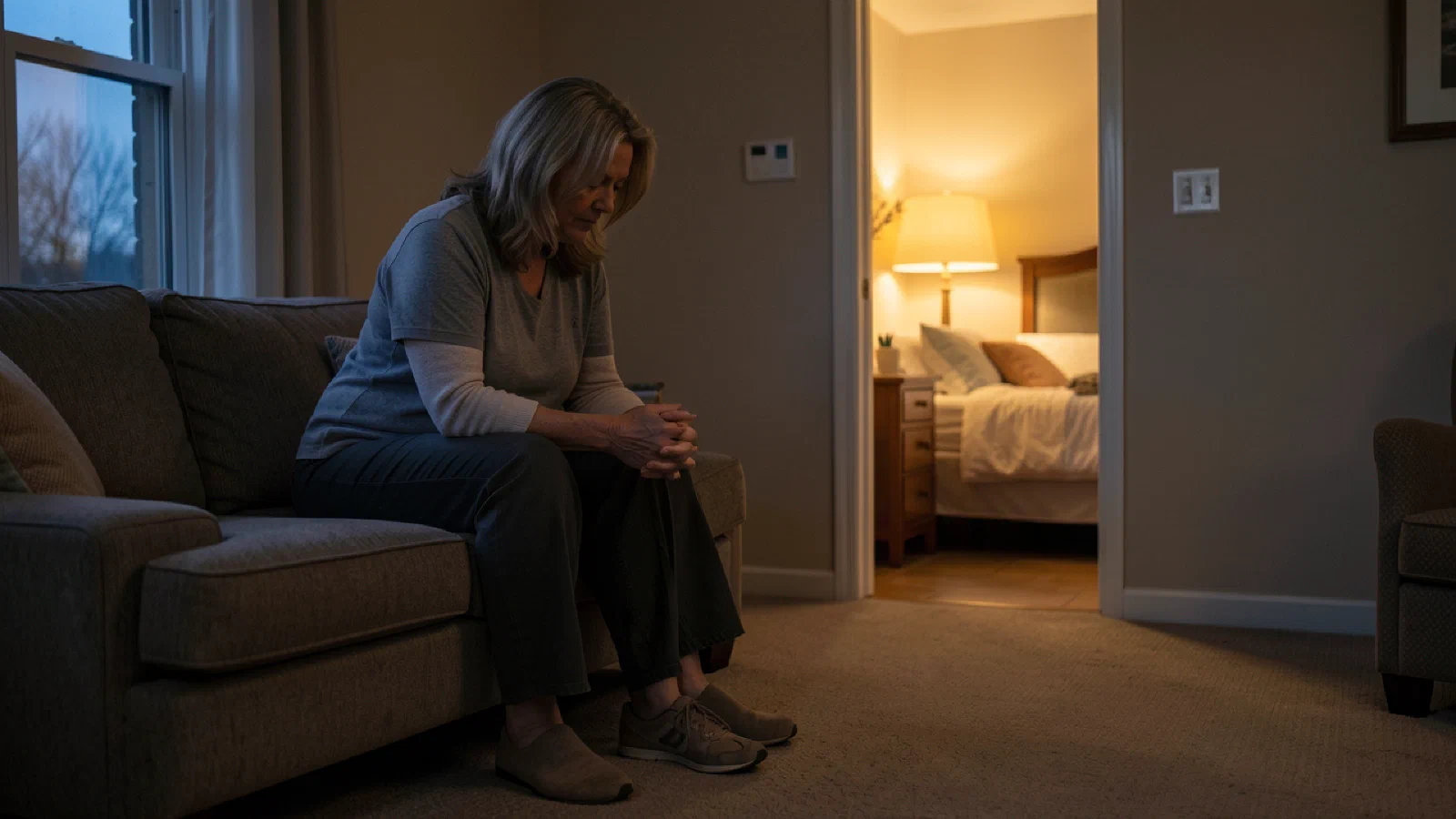
She is sixty-four years old. Her husband has Lewy body dementia. She has not slept more than four consecutive hours in two years.
At her last checkup, her doctor told her that her blood pressure has spiked, her A1C is creeping toward diabetic range, and she has lost weight she cannot afford to lose. She nodded, took the prescriptions, and said what caregivers always say: “I’ll deal with my health when this is over.”
She did not finish the sentence. She did not need to. They both knew what “over” means.
This is the story no one tells about dementia. Not the story of the person with the disease, though that story matters profoundly. The story of the person doing the caring. The one who absorbs the nighttime wandering, the repeated questions, the personality changes, the slow vanishing of the person they married or raised or were raised by. The one whose own brain and body are being remodeled by years of unrelenting stress.
There are nearly twelve million of them in America. Most are women. Most are unpaid. Most will tell you they are fine. Most are not.
What Chronic Stress Does to the Brain
Caregiving for someone with dementia is not ordinary stress. It is not a difficult project at work or a challenging year. It is years of hypervigilance, sleep disruption, emotional weight, and physical labor with no clear endpoint. The body was not designed for this. Neither was the brain.
The stress response system, governed by a circuit called the HPA axis, is meant to handle acute threats: a predator, a car accident, a deadline. Cortisol floods the system, sharpens attention, mobilizes energy. Then the threat passes and the system returns to baseline. In chronic caregiving, the threat never passes. The system never returns to baseline. Cortisol stays elevated, day after day, year after year.
What happens to a brain bathed in cortisol for years? The hippocampus, the brain region essential for memory and learning, is particularly vulnerable. It is rich in cortisol receptors. Chronic elevation can cause hippocampal volume reduction, measurable on brain imaging. The same structure that Alzheimer’s disease attacks is damaged by the stress of caring for someone with Alzheimer’s disease. This is not metaphor. It is MRI data.
The immune system degrades. Research by Janice Kiecolt-Glaser and colleagues, spanning decades, has documented the immunological toll of caregiving: slower wound healing, reduced response to vaccines, elevated inflammatory markers. A caregiver’s cut takes longer to heal. Their flu shot works less well. Their body runs on a low hum of inflammation that increases risk for cardiovascular disease, diabetes, and cognitive decline.
At the cellular level, the damage is visible in telomeres, the protective caps on the ends of chromosomes. Telomere length is a marker of biological aging; shorter telomeres are associated with earlier onset of age-related disease. Studies of caregivers have found telomere shortening equivalent to four to eight additional years of biological aging compared to non-caregivers. Caring for someone with dementia can make you measurably, cellularly older.
Sleep deprivation accelerates all of this. Many people with dementia experience disrupted sleep-wake cycles, wandering at night, confusion in the dark hours. The caregiver cannot sleep through it. They lie awake listening. They get up to redirect, to soothe, to prevent falls. Over months and years, chronic sleep deprivation compounds the cortisol effects, impairs immune function, increases inflammation, and damages cognition. Sleep is when the brain clears metabolic waste, including amyloid beta. Depriving a caregiver of sleep may be increasing their own dementia risk.
The Psychology No One Talks About
The neuroscience is only half the story. The psychology of dementia caregiving involves emotional terrain that most people never discuss.
Anticipatory grief is the term for mourning someone who is still alive. Pauline Boss, the therapist and researcher who spent her career studying ambiguous loss, described this as one of the most difficult forms of grief because it has no resolution. The person is present and absent simultaneously. You cannot fully mourn because they are still here. You cannot fully connect because they are already partly gone. You are suspended between.
Many caregivers describe a loss of self that parallels the loss of their person. The identity of “caregiver” expands until it crowds out everything else: friend, professional, spouse, individual. The things that once defined you fall away because there is no time, no energy, no mental space for them. You forget who you were before this started. You cannot imagine who you will be after.
Guilt is constant. Guilt for feeling resentful. Guilt for needing a break. Guilt for the moments of impatience. Guilt for placing someone in residential care. Guilt for not placing them sooner. Guilt for the relief that flickers when you imagine this being over. Caregivers live in a permanent state of feeling they are not doing enough, not doing it right, not doing it with sufficient grace.
And then there is rage. This is the taboo emotion, the one caregivers rarely admit to anyone, sometimes not even to themselves. Rage at the disease. Rage at the healthcare system. Rage at friends who disappeared. Rage, sometimes, at the person who is sick, for becoming sick, for needing so much, for not being who they were. The rage is followed by shame. How can you be angry at someone who is suffering? How can you be angry at someone you love? The shame pushes the rage underground, where it does its damage invisibly.
All of this coexists with tenderness. The moments of unexpected connection. The hand that reaches for yours. The joke that lands. The flash of recognition. The intimacy of caring for someone’s body. The privilege, buried under the exhaustion, of being the one who stays. Both are true. The rage and the tenderness. The resentment and the love. The wish for it to be over and the terror of what “over” means.
The Health Consequences
The biological and psychological toll translates into measurable health outcomes.
Cardiovascular risk is elevated in dementia caregivers compared to age-matched non-caregivers. The mechanisms are the ones already described: chronic cortisol, inflammation, sleep deprivation, and often the neglect of one’s own diet, exercise, and medical care. Caregivers skip their own appointments. They eat what is convenient rather than what is healthy. They do not have time for the walk that would lower their blood pressure.
Depression and anxiety rates are significantly higher. Studies report that 30 to 40 percent of dementia caregivers experience clinical depression, several times the rate in the general population. Anxiety is similarly elevated. These conditions often go untreated because caregivers do not prioritize their own mental health, because they do not have time for therapy appointments, because they tell themselves they will deal with it later.
There is emerging evidence that chronic caregiving stress may accelerate the caregiver’s own cognitive decline. This research is preliminary and should be stated carefully. But the biological mechanisms are plausible: hippocampal damage, chronic inflammation, sleep deprivation, and elevated amyloid accumulation in the absence of proper sleep. The cruelest possibility in the Alzheimer’s landscape is that caring for someone with the disease may increase your own risk of developing it.
Mortality itself may be affected. A study by Schulz and Beach, published in JAMA, found that elderly spousal caregivers who reported strain had a 63 percent higher mortality risk over four years than non-caregiving controls. Caregiving under strain is not just hard. It can be lethal.
The burden falls disproportionately on women. Women provide the majority of unpaid dementia care. They are more likely to reduce work hours, leave the workforce, or take on the most intensive caregiving tasks. They absorb the majority of the health consequences. The economic dimensions of this are covered in Series 1 of this publication. The biological dimensions are here: women’s bodies and brains bear the cost.
What Protects
Not everything is damage. Some factors buffer the impact of caregiving stress, and the evidence for them is strong enough to act on.
Social support is the single most powerful protective factor. Not platitudes about self-care. Structural support. People who show up. Someone to sit with the person with dementia so the caregiver can leave the house. Someone to call when the night is hard. Someone who does not disappear when the caregiving stretches from months into years. The research by Julianne Holt-Lunstad and others has demonstrated that social connection is as significant for health outcomes as smoking cessation or blood pressure control. For caregivers, isolation is a health crisis.
Respite care, the provision of temporary relief from caregiving, has documented benefits for caregiver health and wellbeing. The problem is access. Respite is expensive, often unavailable, and frequently resisted by caregivers themselves. The resistance is understandable: guilt, fear that no one else can do it right, reluctance to leave the person they are caring for. But the evidence is clear that breaks help. Even brief ones.
Physical activity maintains its protective effects even in small doses. Caregivers often say they have no time to exercise. The research suggests that even short walks, ten or fifteen minutes, confer benefits for mood, stress physiology, and cardiovascular health. Exercise does not require a gym membership or an hour of free time. It requires walking around the block while a neighbor sits with your person.
Therapy and support groups help those who access them. Cognitive behavioral therapy adapted for caregivers has an evidence base. Support groups, in-person or online, provide the combination of practical information and emotional validation that caregivers need. The Alzheimer’s Association, local Area Agencies on Aging, and condition-specific organizations offer entry points.
What the system fails to provide is structural support at scale. Paid family leave that would allow caregivers to maintain employment while providing care. Affordable adult day programs that would provide respite. Accessible in-home support that does not require Medicaid spend-down to access. Caregiver health screening as standard practice, so that doctors ask not just about the patient’s health but about the caregiver’s. These interventions are possible. They are not provided.
Technology as Partial Answer
Technology can help, within limits.
Remote monitoring systems, including motion sensors, bed sensors, and smart home integration, can reduce the nighttime vigilance that destroys caregiver sleep. If a sensor alerts you when your person gets out of bed, you do not have to lie awake listening. Some systems can distinguish routine movement from concerning patterns, reducing false alarms. The technology exists. Cost and complexity remain barriers for many families.
Telehealth has expanded access to mental health care for caregivers who cannot leave the house for appointments. A video therapy session while the person with dementia naps is more accessible than a forty-five-minute drive to a therapist’s office. Barriers remain: insurance coverage, internet access, the difficulty of finding privacy in a home where you are constantly on call.
AI-powered care coordination platforms promise to help with scheduling, medication management, and connecting caregivers to resources. Some of these tools are genuinely useful. Some are hype. The honest assessment is that technology in this space is early, uneven, and not yet transformative.
The caveat that must accompany any discussion of technology is this: a sensor does not hold your hand at 3 AM. A care coordination app does not sit with you while you cry. Technology can supplement human support. It cannot replace it. The caregiver who has every gadget but no one to call is still alone.
What You Need to Hear
If you are caring for someone with dementia, this section is written directly to you.
Your health is not optional. It is not something to deal with later. It is the infrastructure on which all the care depends. If you collapse, the person you are caring for loses their caregiver. The arithmetic is brutal but simple: you cannot pour from an empty vessel, and you cannot provide care from a hospital bed. Protecting your health is not selfish. It is strategic.
Asking for help is not failure. It is logistics. You would not try to move a piano by yourself. You would not perform your own surgery. Caring for someone with dementia is a task that exceeds what one person can sustainably provide. The help you need might be family members stepping up, professional respite, support groups, or any combination. The form matters less than the asking.
The emotions you are feeling are not evidence that you are doing this wrong. The rage, the grief, the resentment, the guilt, the love that persists through all of it: these are normal responses to an abnormal situation. You are not failing because you are struggling. You are human.
If you do not know where to start: the Alzheimer’s Association operates a 24/7 helpline (1-800-272-3900) staffed by people who understand what you are going through. Your local Area Agency on Aging can connect you to respite services and support programs. Online communities exist for caregivers of people with specific conditions. You do not have to figure this out alone.
A companion piece to this series, “The Long Goodbye, Reconsidered,” lives in the space between caregiving and grief. It does not offer advice. It sits with you in the hardest part. It will be there when you need it.
For now, know this: what you are doing matters. What you are sacrificing is real. What is happening to your brain and body is not imaginary, and it is not your fault. The system that should be supporting you is failing you. You deserve better. Until better arrives, protect yourself as fiercely as you protect the person you are caring for. They need you. That means you need you too.
How this article connects to others in Blue Gray Matters.
Sources cited in this article.
- Schulz, Richard, and Scott R. Beach. "Caregiving as a Risk Factor for Mortality: The Caregiver Health Effects Study." JAMA, vol. 282, no. 23, 15 Dec. 1999, pp. 2215-2219.
- Kiecolt-Glaser, Janice K., et al. "Chronic Stress and Age-Related Increases in the Proinflammatory Cytokine IL-6." Proceedings of the National Academy of Sciences, vol. 100, no. 15, 22 July 2003, pp. 9090-9095.
- Epel, Elissa S., et al. "Accelerated Telomere Shortening in Response to Life Stress." Proceedings of the National Academy of Sciences, vol. 101, no. 49, 7 Dec. 2004, pp. 17312-17315.
- Boss, Pauline. Ambiguous Loss: Learning to Live with Unresolved Grief. Harvard University Press, 1999.
- Vitaliano, Peter P., et al. "Is Caregiving a Risk Factor for Illness?" Current Directions in Psychological Science, vol. 13, no. 1, Feb. 2004, pp. 13-16.
- Holt-Lunstad, Julianne, et al. "Social Relationships and Mortality Risk: A Meta-Analytic Review." PLoS Medicine, vol. 7, no. 7, 27 July 2010, e1000316.
- Alzheimer's Association. "2025 Alzheimer's Disease Facts and Figures." Special Section on Caregiving, Apr. 2025.
- Pinquart, Martin, and Silvia Sörensen. "Differences Between Caregivers and Noncaregivers in Psychological Health and Physical Health: A Meta-Analysis." Psychology and Aging, vol. 18, no. 2, June 2003, pp. 250-267.
- Norton, Maria C., et al. "Greater Risk of Dementia When Spouse Has Dementia? The Cache County Study." Journal of the American Geriatrics Society, vol. 58, no. 5, May 2010, pp. 895-900.
- AARP Public Policy Institute and National Alliance for Caregiving. "Caregiving in the U.S. 2020." AARP, May 2020.