Trauma and the Aging Brain
How a Lifetime of Stress Reaches Forward
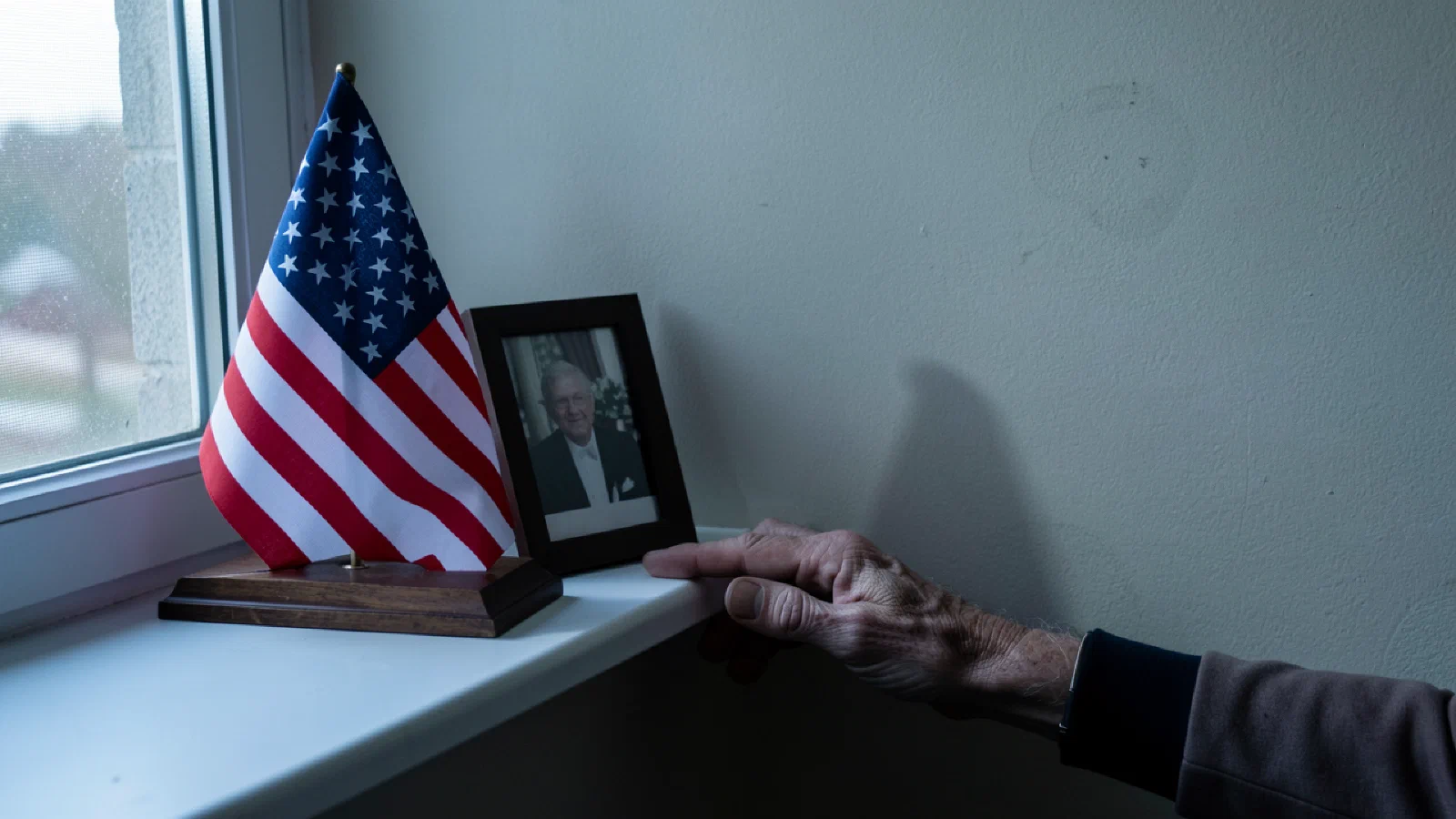
He is seventy-eight years old, a Vietnam veteran, and he is losing his memories.
Not all of them. Not yet. But the fog is settling. Names slip away. Conversations loop. His wife finds him standing in the kitchen, uncertain what he came for. The neurologist has diagnosed mild cognitive impairment, possibly early Alzheimer’s.
His wife asks the question that has been forming for months: “Could the war have caused this?”
The neurologist pauses. The answer is not yes. The answer is not no. The answer is that the war may have set in motion biological changes, more than fifty years ago, that are reaching forward into his brain today. The trauma did not cause the dementia. But it may have accelerated the path toward it. The research is increasingly clear: PTSD is not just a psychological condition. It is a risk factor for cognitive decline.
He survived the war. He survived the homecoming, which was its own kind of wound. Now he is losing the memories he spent fifty years trying to forget. The cruelty of this is not lost on anyone in the room.
What Trauma Does to the Brain
Post-traumatic stress disorder changes the brain. This is not metaphor. It is observable on imaging, measurable in biomarkers, documented across thousands of studies.
The stress response system, the HPA axis, becomes chronically activated. Cortisol, the stress hormone, remains elevated. The hippocampus, the brain region essential for memory formation and already vulnerable in Alzheimer’s disease, is particularly affected. Studies of people with PTSD show reduced hippocampal volume. The prefrontal cortex, which governs executive function and emotional regulation, also shows changes. Chronic inflammation, increasingly recognized as a driver of neurodegeneration, is elevated.
The overlap between PTSD-related brain changes and Alzheimer’s pathology is striking. Both conditions affect the hippocampus. Both involve chronic inflammation. Both are associated with elevated cortisol. The biomarkers are not identical, but the vulnerable brain regions are the same.
Epidemiological evidence from the VA system tells the story in numbers. Veterans with PTSD have significantly elevated dementia risk compared to veterans without PTSD, even after controlling for other factors. The relationship appears dose-dependent: more severe PTSD, higher risk; longer duration of symptoms, higher risk. This is not confounding. This is causation, or something close to it.
The mechanisms are still being mapped, but the broad picture is clear. Decades of hypervigilance, sleep disruption, stress hormone elevation, and chronic inflammation take a toll on the brain. The trauma does not disappear when the acute symptoms fade. It is written into biology.
Beyond Combat
Veterans are central to this story because the VA system generates the longitudinal data that makes the research possible. But trauma is not limited to war.
Childhood adverse experiences, measured through the ACE framework developed by Vincent Felitti and colleagues, predict a wide range of adult health outcomes, including cognitive decline. High ACE scores (reflecting experiences like abuse, neglect, household dysfunction, and parental incarceration) are associated with elevated dementia risk decades later. The child who grew up in chaos carries that chaos forward in their body.
Domestic violence and intimate partner violence create similar biological signatures. The chronic stress of living in fear activates the same systems that combat activates. Add to this the traumatic brain injuries that often accompany domestic violence, many of them undiagnosed because the victim never sought medical care or was not believed, and the cognitive toll compounds. The woman who spent years with an abusive partner carries that history in her brain as well as her memory.
Racial trauma, discussed in the previous installment, fits this framework. The daily experience of navigating discrimination, the hypervigilance required to move through spaces that are not designed for you, the accumulated injuries of microaggressions and macroaggressions alike: these are chronic stressors with chronic biological effects. The weathering hypothesis, the allostatic load research, all of it points to the same conclusion. Structural racism is a form of trauma, distributed across a lifetime, with consequences that include accelerated brain aging.
Poverty functions similarly. The neuroscience of scarcity shows that chronic economic uncertainty consumes cognitive bandwidth, activates stress responses, and forces the brain into survival mode. A lifetime of not knowing whether you can make rent, of choosing between medication and food, of never being secure: this is not just difficult. It is biologically damaging.
Chronic traumatic encephalopathy, CTE, represents a different pathway. Repeated head impacts, even subconcussive ones that do not cause immediate symptoms, accumulate over time. The research by Ann McKee and colleagues at Boston University has documented CTE in football players, hockey players, soccer players, and military personnel exposed to blast injuries. The symptoms, which emerge years or decades after the impacts, include cognitive decline, mood changes, and behavioral problems. CTE cannot be definitively diagnosed during life, but the pattern is increasingly recognized.
The VA System
For veterans, the VA represents both the best available care and a system under chronic strain.
The VA is the largest integrated healthcare system in the country, with longitudinal records spanning decades for millions of patients. It has expertise in PTSD treatment that few private systems can match. It funds research that generates much of what we know about trauma and cognitive aging. For a veteran navigating dementia with a history of PTSD, the VA can provide coordinated care that connects mental health, neurology, and primary care in ways that fragmented private systems often cannot.
The limitations are equally real. Wait times for specialty care remain a problem. Geographic access is uneven; a veteran in a rural area may be hours from a VA facility. The bureaucratic burden, the paperwork and phone calls and approvals required to access care, is substantial. For a veteran already struggling with cognitive decline, navigating the system can be overwhelming. For a caregiver, it can be exhausting.
The policy context matters. VA funding and access rules are subject to political debate. Proposals to privatize VA care, or to shift veterans into commercial insurance, would affect continuity and expertise. The specialized PTSD programs, the integrated care models, the research infrastructure: these exist because the VA is a dedicated system. Whether they would survive dispersion into the private market is uncertain.
What the VA knows, from decades of data, is increasingly informing dementia research beyond the veteran population. The trauma-cognition connection was first documented in VA studies. The understanding that PTSD is a modifiable risk factor for dementia emerged from this research. The insights are generalizable, even if the population that generated them is specific.
What Can Be Done
The most important thing to know is that it is not too late to treat PTSD, even in older adults.
Evidence-based therapies for PTSD, including Cognitive Processing Therapy, Prolonged Exposure, and EMDR, work in older adults. The myth that elderly people are too set in their ways for therapy, or that trauma that happened decades ago cannot be addressed now, is wrong. Studies show that older veterans respond to these treatments. Reducing PTSD symptoms improves quality of life, may reduce depression and anxiety, and potentially, though this is not yet proven, may reduce or delay cognitive decline.
The research on whether treating PTSD can slow dementia progression is ongoing. It is biologically plausible: if chronic stress drives neurodegeneration, reducing that stress might reduce the progression. But the studies have not yet been done at sufficient scale to answer the question definitively. What is clear is that treating PTSD improves life now, regardless of what it does to dementia risk.
Trauma-informed dementia care is an emerging framework for residential and home-based care. The core insight is that people with dementia who have trauma histories may experience care interactions as triggering. Being restrained, being undressed by strangers, being in unfamiliar environments, losing control over daily decisions: for someone with PTSD, these can activate the same responses the original trauma did. Agitation, aggression, and withdrawal may be trauma responses, not just dementia symptoms.
Trauma-informed care trains staff to recognize these dynamics, to approach patients with awareness of their history, to avoid triggers where possible, and to respond with de-escalation rather than restraint. This approach is not yet standard practice. It should be.
Screening is the simplest intervention. Many neurologists evaluating cognitive decline do not ask about trauma history. Many patients do not volunteer it, especially veterans who learned to compartmentalize. Integrating trauma screening into cognitive evaluation would identify patients for whom PTSD treatment might help and would inform care planning. The question is easy to ask. The failure to ask it is a systems failure.
What the Veteran’s Wife Needs to Know
She asked whether the war caused this. The honest answer is that the war may have contributed. The chronic stress of combat, the PTSD that followed, the decades of hypervigilance and poor sleep and elevated cortisol: all of these may have accelerated the path toward cognitive decline. The war did not act alone. Age, genetics, vascular risk factors, and chance all play roles. But the trauma is part of the story.
What this means practically: his PTSD, if it is still active, can still be treated. Reducing his symptoms now may not reverse the cognitive decline, but it may improve his quality of life and reduce the behavioral symptoms that make care harder. The caregiving ahead will be difficult regardless. It may be slightly less difficult if the trauma is addressed.
The broader message, for anyone reading this who carries trauma, is that the past is not separate from the present. What happened to you, whether in war or childhood or an abusive relationship or a lifetime of discrimination, is still happening in your biology. This is not a reason for despair. It is a reason for attention. The effects are real, and some of them may be modifiable. Treating trauma is not weakness. It is maintenance.
For the families of aging veterans, aging survivors of abuse, aging people who grew up in poverty or violence or oppression: the cognitive changes you are witnessing may have roots that stretch back decades. Understanding this does not change the prognosis. But it may change the meaning. What looks like pure bad luck may be the long reach of history. And knowing that may help, in some small way, with the weight of it.
How this article connects to others in Blue Gray Matters.
Sources cited in this article.
- Yaffe, Kristine, et al. "Posttraumatic Stress Disorder and Risk of Dementia Among US Veterans." Archives of General Psychiatry, vol. 67, no. 6, June 2010, pp. 608-613.
- Günak, Mia Maria, et al. "Post-Traumatic Stress Disorder as a Risk Factor for Dementia: Systematic Review and Meta-Analysis." British Journal of Psychiatry, vol. 217, no. 5, Nov. 2020, pp. 600-608.
- Felitti, Vincent J., et al. "Relationship of Childhood Abuse and Household Dysfunction to Many of the Leading Causes of Death in Adults." American Journal of Preventive Medicine, vol. 14, no. 4, May 1998, pp. 245-258.
- McKee, Ann C., et al. "The Spectrum of Disease in Chronic Traumatic Encephalopathy." Brain, vol. 136, no. 1, Jan. 2013, pp. 43-64.
- Bremner, J. Douglas. "Traumatic Stress: Effects on the Brain." Dialogues in Clinical Neuroscience, vol. 8, no. 4, Dec. 2006, pp. 445-461.
- U.S. Department of Veterans Affairs. "PTSD Treatment Programs in the U.S. Department of Veterans Affairs." National Center for PTSD, 2024, www.ptsd.va.gov.
- Justice, Nicholas J. "The Relationship Between Stress and Alzheimer's Disease." Neurobiology of Stress, vol. 8, Feb. 2018, pp. 127-133.
- Schnurr, Paula P., et al. "Cognitive Processing Therapy for Veterans With Posttraumatic Stress Disorder." JAMA Network Open, vol. 5, no. 2, 2022, e220265.
- Wolf, Erika J., et al. "Accelerated DNA Methylation Age: Associations With PTSD and Mortality." Psychosomatic Medicine, vol. 80, no. 1, Jan. 2018, pp. 42-48.