Community as Medicine
Programs That Actually Work Against Isolation
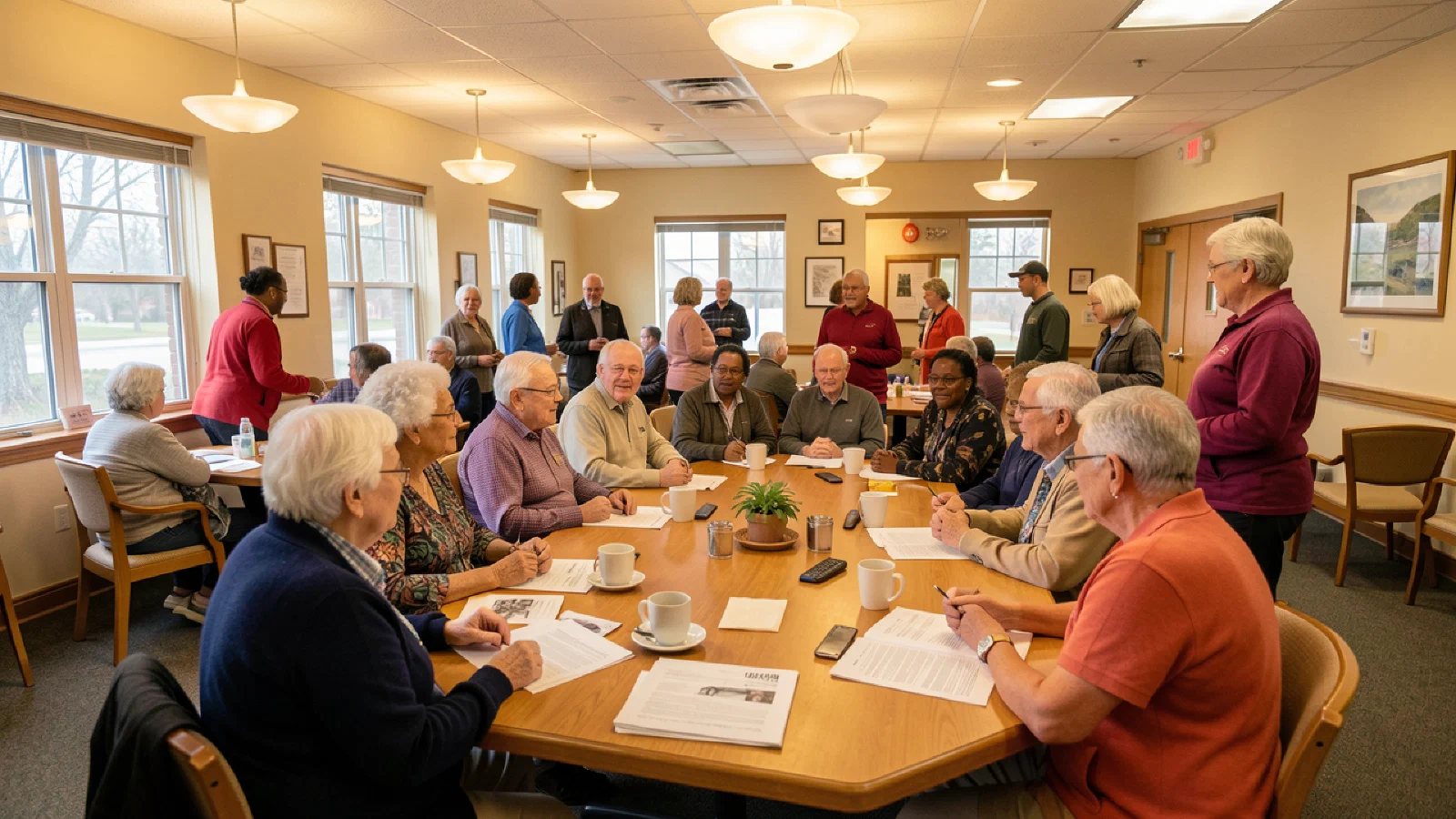
In 2002, a group of older adults in the Beacon Hill neighborhood of Boston did something unusual. Rather than wait for services to come to them, they built their own infrastructure for aging in place. They created a nonprofit, pooled their resources, and established a network of volunteer support: rides to appointments, help with groceries, home repairs, and regular social events. They called it Beacon Hill Village.
Twenty-three years later, there are roughly 300 Villages operating across the United States, with another 50 in development. The model has spread because it addresses a problem that government programs often miss: older adults do not just need services. They need community. They need to feel like participants rather than recipients. They need connection that comes with belonging somewhere.
The Village model is not the only approach that works. But it illustrates something important about what effective intervention looks like. The programs that succeed are not the ones that deliver services to passive older adults. They are the ones that give older adults something to be part of.
What the Research Shows#
The evidence on loneliness interventions is more robust than most people realize, though it comes with important caveats.
A 2024 systematic review of reviews in Frontiers in Public Health examined the quality and effectiveness of loneliness interventions for older adults. The researchers found that successful interventions tended to share certain features: they involved active participation rather than passive receipt of services; they often had an educational component; and they used group-based approaches that created ongoing relationships rather than one-time contacts.
A 2022 AARP Foundation review reached similar conclusions. The most effective interventions specifically targeted socially isolated individuals rather than offering general programming. They matched intervention type to the underlying cause of isolation. And they provided sustained engagement rather than brief, intensive bursts of activity.
The Village model embodies many of these principles. A cross-sectional study of over 1,700 members across 28 Villages found that deeper involvement was associated with greater perceived impact on quality of life, health, social connections, and mobility. Importantly, it was not just membership that mattered but active participation. People who engaged more frequently reported greater benefits.
This pattern appears across different types of programs. The Experience Corps research showed that high-intensity volunteering (15 hours per week) produced measurable changes in brain volume and cognitive function, while low-intensity engagement did not. Senior centers that offer drop-in programming show smaller effects than programs that build ongoing relationships and regular participation.
What Actually Works#
The interventions with the strongest evidence share several features.
Group-based programs that create ongoing relationships outperform one-time interventions. A friendly visitor who comes once produces less benefit than a group that meets weekly. The difference is not just frequency of contact but the accumulation of shared history that creates genuine belonging.
Programs that give participants a role, something to do, someone to help, work better than programs that position older adults as pure recipients of services. The Village model depends on member volunteers. Experience Corps puts older adults in classrooms as tutors. Men’s Sheds (discussed elsewhere in this series) organize around productive activity. The pattern is consistent: being useful matters.
Educational components appear to help, possibly because learning provides both cognitive stimulation and a shared project that brings people together. Computer training for isolated older adults has shown promise, particularly when delivered in group settings with instructors who provide encouragement.
Sustained engagement matters more than intensity. A program that offers weekly contact for a year produces more durable effects than a program that offers daily contact for two weeks. Loneliness is a chronic condition, and the interventions that work treat it as such.
Matching the intervention to the underlying cause of isolation improves outcomes. Someone isolated because they cannot drive needs different help than someone isolated because their spouse died. Someone whose hearing loss prevents comfortable conversation needs different support than someone who simply does not know their neighbors. The AARP Foundation framework emphasizes assessment before intervention, identifying which barriers are most significant for each individual.
The Village Model in Detail#
Villages are not facilities. They are networks. Members pay dues (often on a sliding scale) and receive access to volunteer services: rides, grocery runs, help with technology, assistance with minor home repairs. But the services are not the primary value. The social events, the sense of belonging, the experience of being part of something rather than alone, these are what members describe as most important.
As of 2024, an estimated 300 Villages were operational. They vary widely in size, geography, and structure. Some serve small towns; others serve urban neighborhoods. Most are run by older adults themselves, which distinguishes them from service programs administered by younger professionals. This consumer direction is considered central to the model’s appeal.
Research on Villages remains limited, with most data coming from self-reports rather than randomized controlled trials. But the available evidence suggests members experience improvements in social engagement, quality of life, and confidence about aging in place. Villages in the Washington, D.C., area have begun aggregating data on outputs: friendly visits, rides, deliveries, and referrals provided each year. This kind of systematic measurement is relatively new and may help build a stronger evidence base.
The model has limitations. Villages tend to serve populations that are relatively healthy, educated, and financially stable. Questions remain about whether the model can expand to serve people with disabilities, complex health conditions, or fewer resources. The volunteer-dependent structure means that capacity depends on the availability of volunteers, which can fluctuate.
What Communities Can Do#
For communities trying to address isolation among older residents, the research points toward several principles.
Invest in infrastructure that creates ongoing connection, not just one-time services. A senior center that offers programming people return to weekly produces more benefit than a crisis response team that visits once.
Create roles for older adults that position them as contributors. Intergenerational programs, volunteer opportunities, mentoring, tutoring, these give older adults something to offer rather than only something to receive.
Address the practical barriers to participation. Transportation is often the limiting factor. Programs that solve the transportation problem, whether through volunteer drivers, subsidized rides, or accessible transit, unlock participation that would otherwise be impossible.
Consider screening for isolation in primary care. The same way physicians screen for depression, they could screen for social isolation and loneliness, then connect patients with community resources. Several clinical tools exist for this purpose, including the Lubben Social Network Scale and UCLA Loneliness Scale.
Support Villages and similar grassroots efforts. The Village model depends on initial organizing energy, which can be difficult to generate without support. Communities that want to encourage these approaches can provide technical assistance, seed funding, or connections to existing resources.
The Honest Assessment#
Not every program works. Many well-intentioned efforts fail to produce measurable improvements in loneliness or isolation. A 2024 evidence gap map of in-person interventions found that 68% of systematic reviews were classified as critically low quality, with less than 5% high or moderate quality. The evidence base, while growing, remains uneven.
The programs that work share common features: sustained engagement, active participation, genuine relationships, and a sense of purpose or contribution. Drop-in services, brief interventions, and programs that treat older adults as passive recipients consistently underperform.
Community is not a pill you can prescribe once and expect lasting effects. It is more like exercise: effective only if sustained, better in company, and requiring infrastructure that makes regular participation possible. The programs that succeed are the ones that recognize this and build accordingly.
The residents of Beacon Hill who founded the first Village understood something that policy often misses. Older adults do not want services delivered to them by strangers. They want to belong somewhere. They want to be part of something. They want community.
Building that community requires investment, sustained attention, and respect for the agency of older adults themselves. It is not easy. But it is, according to the evidence, the thing that actually works.
How this article connects to others in Blue Gray Matters.
Sources cited in this article.
- AARP. "The Village Model: Current Trends, Challenges, and Opportunities." AARP Public Policy Institute, 2023.
- Braun, Kathryn L., et al. "Interventions for Loneliness in Older Adults: A Systematic Review of Reviews." *Frontiers in Public Health*, vol. 12, 2024, article 1427605.
- Chiu, Yi-Ting. "Socioeconomic Factors Influencing the Growth and Sustainability of the Village Movement." *Journal of Aging Research*, 2025, article 5295292.
- Graham, Carrie L., et al. "Healthy Aging Outcomes Research With Villages as Grassroots Community-Based Organizations: A Framework for Capacity Development." *The Gerontologist*, vol. 65, no. 7, 2025.
- National Academies of Sciences, Engineering, and Medicine. *Social Isolation and Loneliness in Older Adults: Opportunities for the Health Care System.* Washington, DC: The National Academies Press, 2020.
- Village to Village Network. "Engaging Villages as Key Partners for Healthy Aging Research." villagesresearch.org, 2025.
- Welch, Vivian, et al. "In-Person Interventions to Reduce Social Isolation and Loneliness: An Evidence and Gap Map." *Campbell Systematic Reviews*, vol. 20, no. 2, 2024, e1408.