Invisible and Aging
LGBTQ+ Elders and the Double Isolation
Michael is 79 years old. He lost his partner of thirty years to AIDS in 1994. In the decade that followed, he buried eleven more friends. He rebuilt a life after that, a network of survivors who understood what they had all come through together. Now those survivors are dying too, this time of the usual things: cancer, heart disease, strokes. The losses arrive differently now, less shocking but no less lonely.
He needs more help than he can manage alone. His daughter from a brief marriage decades ago is supportive but lives across the country. His remaining friends are scattered and aging themselves. He has looked at assisted living facilities in his area. The intake forms ask about “spouse” and assume grandchildren. The activity calendars feature Father’s Day brunches and Christmas sing-alongs. The staff are kind but oblivious.
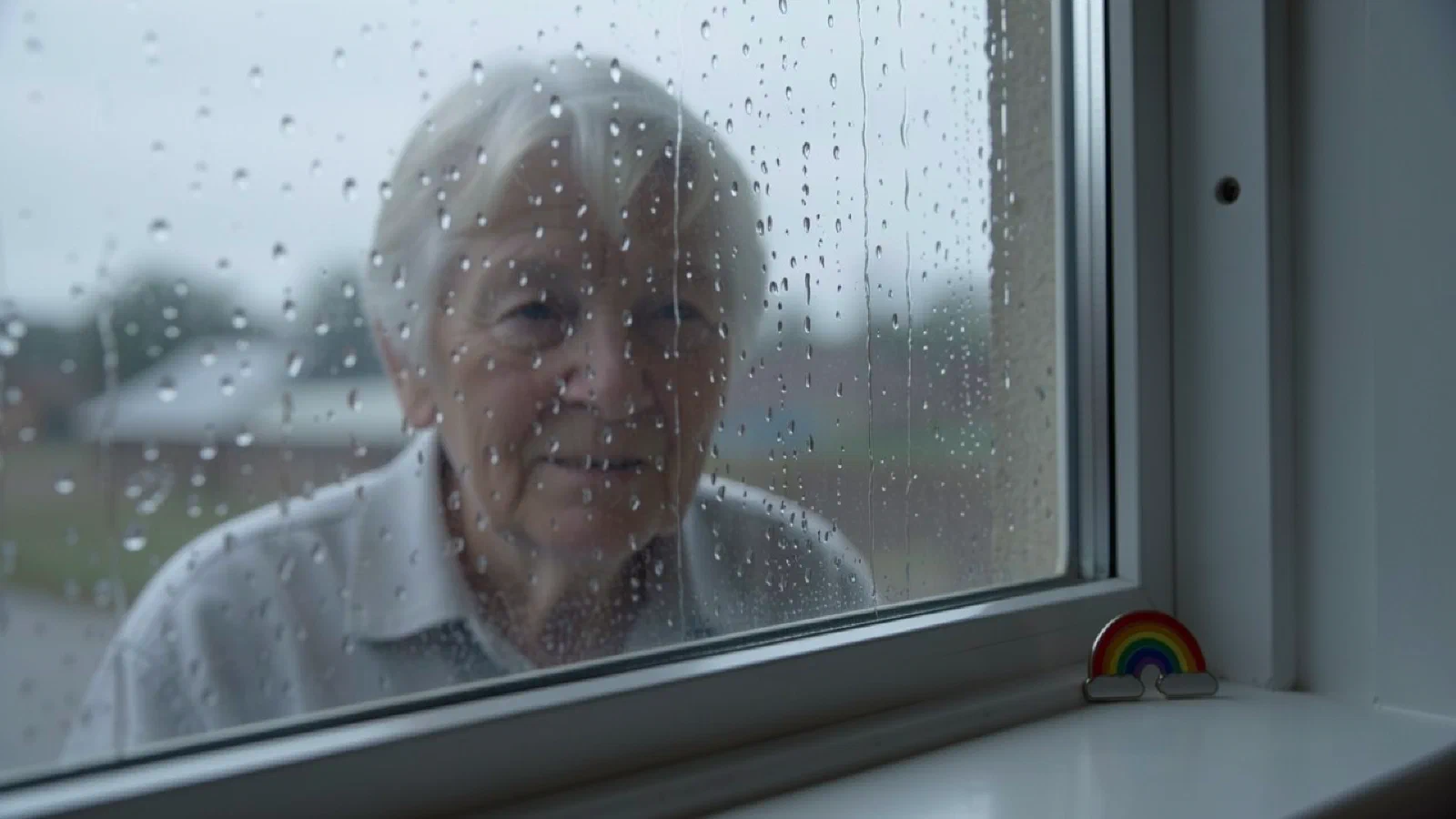
He is considering not disclosing his identity. He has done this calculation before, in workplaces and family gatherings, in doctor’s offices and hospitals. He thought that chapter of his life was over. At 79, he is contemplating going back into the closet.
The Numbers Behind the Silence#
There are an estimated 3 million LGBTQ+ adults over 50 in the United States today. That number is projected to reach 7 million by 2030 as younger generations, who identify as LGBTQ+ at higher rates, age into this demographic. This is not a niche population. It is a significant and growing portion of the aging population, facing compounded risks that most aging frameworks fail to account for.
The AARP Dignity 2024 survey, the most recent in a series tracking the experiences of LGBTQ+ older adults, found that 78% are concerned about having enough social support as they age. Half already feel socially isolated at times. Among transgender and nonbinary adults, the isolation rate rises to 63%. Nearly half (45%) report lacking companionship.
The structural vulnerabilities accumulate across a lifetime. LGBTQ+ older adults are twice as likely to live alone as their heterosexual peers and four times less likely to have children who might provide support. Many experienced decades of employment discrimination before legal protections existed, resulting in lower lifetime earnings and smaller retirement savings. Same-sex couples were excluded from marriage until 2015, meaning many were denied Social Security survivor benefits, inheritance rights, and the tax advantages that married heterosexual couples accumulated over decades. The economic consequences compound into old age.
Three in ten AARP survey respondents said they did not seek medical treatment in the past when they needed it. Almost a quarter (23%) reported problems with the quality of care they received. The fear of discrimination is not paranoia. It is grounded in experience.
The AIDS Generation’s Compounded Grief#
For gay men who came of age in the 1970s and 1980s, the AIDS epidemic was not simply a health crisis. It was a social annihilation.
In major cities, entire friendship networks were decimated. The “chosen families” that LGBTQ+ people had built to replace biological families who rejected them were themselves destroyed. A man might lose his partner, his best friends, his neighbors, his community anchors, all within a few years. The survivors carried this trauma largely unaddressed; there was no clinical framework for processing losses at that scale, and the broader society was often indifferent or hostile.
Those who lived through the crisis are now in their sixties, seventies, and eighties. They rebuilt lives. They found new partners, new friends, new communities. But the trauma of cumulative bereavement does not disappear. And now they are experiencing a second wave of loss as surviving friends die of age-related causes. The structure of grief repeats, but this time without the solidarity of a community facing a shared emergency. This time, it looks like ordinary aging, and the support systems for ordinary aging were never designed with them in mind.
The clinical literature on prolonged grief disorder, discussed elsewhere in this series, has barely begun to address the specific experience of survivors of mass bereavement events. For the AIDS generation, the grief that began in the 1980s has never ended. It has simply changed form.
Going Back Into the Closet#
The documented phenomenon of LGBTQ+ older adults concealing their identity in care settings reflects a rational calculation based on real risks.
Long-term care facilities, assisted living communities, and nursing homes are often structured around heteronormative assumptions. Intake forms ask about spouse and children. Social programming assumes conventional family structures. Staff may lack any training in LGBTQ+ competency. In many facilities, residents include people who grew up in an era of open hostility toward LGBTQ+ people and have not reconsidered those views.
For a gay man or lesbian who spent decades fighting for the right to be open, the prospect of returning to concealment at 80 is both painful and pragmatic. The calculation is not paranoid. Documented cases of discrimination, harassment, and inadequate care in long-term care settings give the fear a factual basis.
The February 2024 updates to the Older Americans Act regulations for the first time explicitly designated LGBTQ+ older people and older people living with HIV as “populations of greatest social need,” requiring the aging network to ensure accountability in serving these populations. The Long-Term Care Equality Index, a benchmarking program from HRC Foundation and SAGE, has surveyed 274 communities across 33 states on LGBTQ+ inclusion. These are signs of progress.
They are also incomplete. Most care facilities have not been assessed. Most staff have not been trained. And the current political environment has brought renewed uncertainty about whether federal protections will be enforced or expanded.
What Is Working#
SAGE, the national organization for LGBTQ+ aging advocacy, has provided SAGECare training to over a thousand healthcare providers on LGBTQ+ competency. In New York City, SAGE operates four LGBTQ+-affirming senior centers and two affordable housing buildings specifically designed for LGBTQ+ older adults. These spaces offer something that generic senior services often cannot: an environment where a person’s identity does not require explanation or defense.
Research on affirming provider access has shown real benefits. Studies have found that LGBTQ+ older adults with access to affirming providers have greater rates of preventive screening and better mental health management. The Diverse Elders Coalition has developed toolkits for culturally competent caregiving across multiple communities, including LGBTQ+ populations.
What is still needed is larger than what any advocacy organization can provide alone. More affirming housing, in more places. More trained providers, across all settings. Better data collection, since many health agencies still do not ask about sexual orientation or gender identity and therefore cannot measure disparities or target resources. And sustained political will to maintain and expand protections that remain fragile.
What You Can Do#
If you are an LGBTQ+ elder reading this, you survived things that should have killed you. The systems are slowly catching up to your existence, decades overdue. The isolation you feel is not a personal failing. It is a structural consequence of systems built without you in mind.
If you are not LGBTQ+ but know someone who is, the simplest intervention is the same one it has always been: show up. Ask. Do not assume. The married heterosexual couple in the apartment down the hall may have children visiting every weekend. The gay man at the end of the corridor may have outlived everyone who knew him before 1995. The circumstances look similar from the outside. They are not.
For care providers, the training that SAGE and similar organizations offer is available and practical. For policymakers, the designation of LGBTQ+ elders as populations of greatest social need is a starting point, not an endpoint. For families and friends, the task is simpler: notice who is alone, and do not leave them that way.
Michael, considering whether to hide who he is in order to access the care he needs, should not have to make that calculation. That he still does, in 2026, is a measure of how much work remains.
How this article connects to others in Blue Gray Matters.
Sources cited in this article.
- AARP Research. *Dignity 2024: The Experience of LGBTQ+ Older Adults.* Washington, DC: AARP, August 2024. doi.org/10.26419/res.00805.001.
- Burton, Cassandra Cantave. *A Deeper Dive into Dignity 2024: Qualitative Findings.* Washington, DC: AARP Research, June 2025. doi.org/10.26419/res.00887.001.
- Fredriksen-Goldsen, Karen I., et al. "The Aging and Health Report: Disparities and Resilience Among Lesbian, Gay, Bisexual, and Transgender Older Adults." Seattle: Institute for Multigenerational Health, University of Washington, 2011.
- HRC Foundation and SAGE. *Long-Term Care Equality Index 2025.* New York: SAGE, 2025.
- Movement Advancement Project and SAGE. *Improving the Lives of LGBT Older Adults.* New York: SAGE, 2010.
- U.S. Administration for Community Living. "Final Rule: Older Americans Act Programs." *Federal Register*, February 2024.