Men Who Disappear
The Gendered Loneliness Crisis
Richard retired from engineering at 68, after forty-one years at the same company. He had colleagues he’d eaten lunch with for decades, people he’d worked alongside through three building relocations, two mergers, and countless projects. He figured they’d stay in touch.
They didn’t. Nobody’s fault. Just the way it works.
His wife, Carol, died two years later. She had been the one who organized dinners, remembered birthdays, maintained the friendships with other couples, kept them connected to the neighborhood and the church. Richard hadn’t realized how much of his social world ran through her until she was gone.
He has a few golf buddies. They talk about golf. His children live in other states and call on Sundays, conversations that feel more like check-ins than connection. He attends a men’s breakfast at church sometimes, but he doesn’t know anyone well enough to say anything real.
Ask Richard how he’s doing, and he’ll tell you he’s fine. He’s managing. He keeps busy.
He’s not fine. He’s disappearing.
How Men Build Social Networks#
The sociology of male friendship in America has a particular shape. Researchers describe it as “shoulder to shoulder” rather than “face to face.” Men tend to form connections through shared activity: work projects, sports, hobbies, tasks that put them alongside other people doing things together. The activity provides the context; the friendship is incidental.
This is not a failure. These are real friendships. The men who worked together, played golf together, fixed cars together often cared deeply about each other, would help each other move or lend money in a crisis. But the structure is different from friendships built on direct emotional exchange, on sitting across from someone and talking about what you’re actually feeling.
The structural difference creates structural fragility. Remove the activity, and the friendship often dissolves. Not through any rupture. Just through the absence of the context that kept bringing people together.
Retirement is the great remover.
For many American men, particularly those who built their lives around work, the workplace was their entire social infrastructure. The colleagues were the community. The daily rhythm of showing up, the accumulated small talk of decades, the lunch companions and meeting partners and project teams: these constituted the bulk of their human contact outside the home.
When work ends, no one announces that the friendships are over. They just attenuate. The lunch partners don’t text because there’s no lunch to coordinate. The project teammates don’t call because there’s no project to discuss. Within a year or two, men who saw each other every day for decades might not have spoken at all.
The contrast is stark between those who retire into something and those who retire into a vacuum. Men who volunteer, join clubs with regular meetings, take up hobbies that require showing up alongside other people often maintain or even expand their connections. Men who retire into unstructured time at home often find themselves profoundly alone within months.
The Widower Effect#
When a wife dies, her husband often loses more than a partner. He loses a social coordinator.
In many American marriages, particularly among older generations, wives managed the couple’s social life. They organized the dinners, maintained the friendships, remembered the birthdays, kept the family connected to the broader network. Husbands participated in a social world their wives had built and maintained. They didn’t realize how much infrastructure was invisible until it vanished.
The widower mortality effect is one of the best-documented phenomena in social epidemiology. Research has consistently found that men who lose a spouse face elevated mortality risk for months and years afterward, substantially higher than the corresponding risk for widowed women.
A 2023 study of nearly one million Danish citizens found that in the year after losing a spouse, men were 70% more likely to die than similarly aged men who did not lose a spouse. Women faced a 27% increased risk. The widowhood effect is strongest in the first three months, when surviving spouses have a 66% increased chance of dying compared to those whose partners are still living.
The gap between men and women is not fully explained by health behaviors or pre-existing conditions. Part of it operates through isolation. Men tend to have smaller social networks than women and rely more heavily on their spouses for emotional support. When the wife dies, the network she maintained often collapses. The husband is left alone in a house full of memories, without the person who connected him to the outside world.
Researchers have noted that women often cultivate broader social networks before widowhood, relationships with other women, connections maintained independently of marriage. When a husband dies, these networks provide support. When a wife dies, her husband may have no equivalent resource to fall back on.
Why Conventional Interventions Fail#
The standard arsenal of loneliness interventions was not designed for older men.
Support groups. Social programs at senior centers. Community outreach. These tend to be built, often unconsciously, around female models of social engagement. They ask people to sit in circles and share feelings. They prioritize direct emotional disclosure. They treat talking as the primary mode of connection.
Many older men will not participate. Not because they don’t need connection. They need it desperately. But because the available formats don’t match how they connect.
The cultural expectations compound the problem. American masculinity, particularly among older generations, emphasizes self-sufficiency, stoicism, and not needing help. Admitting loneliness feels like admitting weakness. Asking for connection feels like confessing failure. The men most isolated are often the men least likely to identify themselves as lonely, even to themselves.
The result is a population that needs intervention but actively avoids it, not out of perversity but out of a mismatch between what’s offered and what works.
What Works for Men#
The intervention that has generated the most promising results for older men emerged not from clinical research but from Australia’s workshop culture.
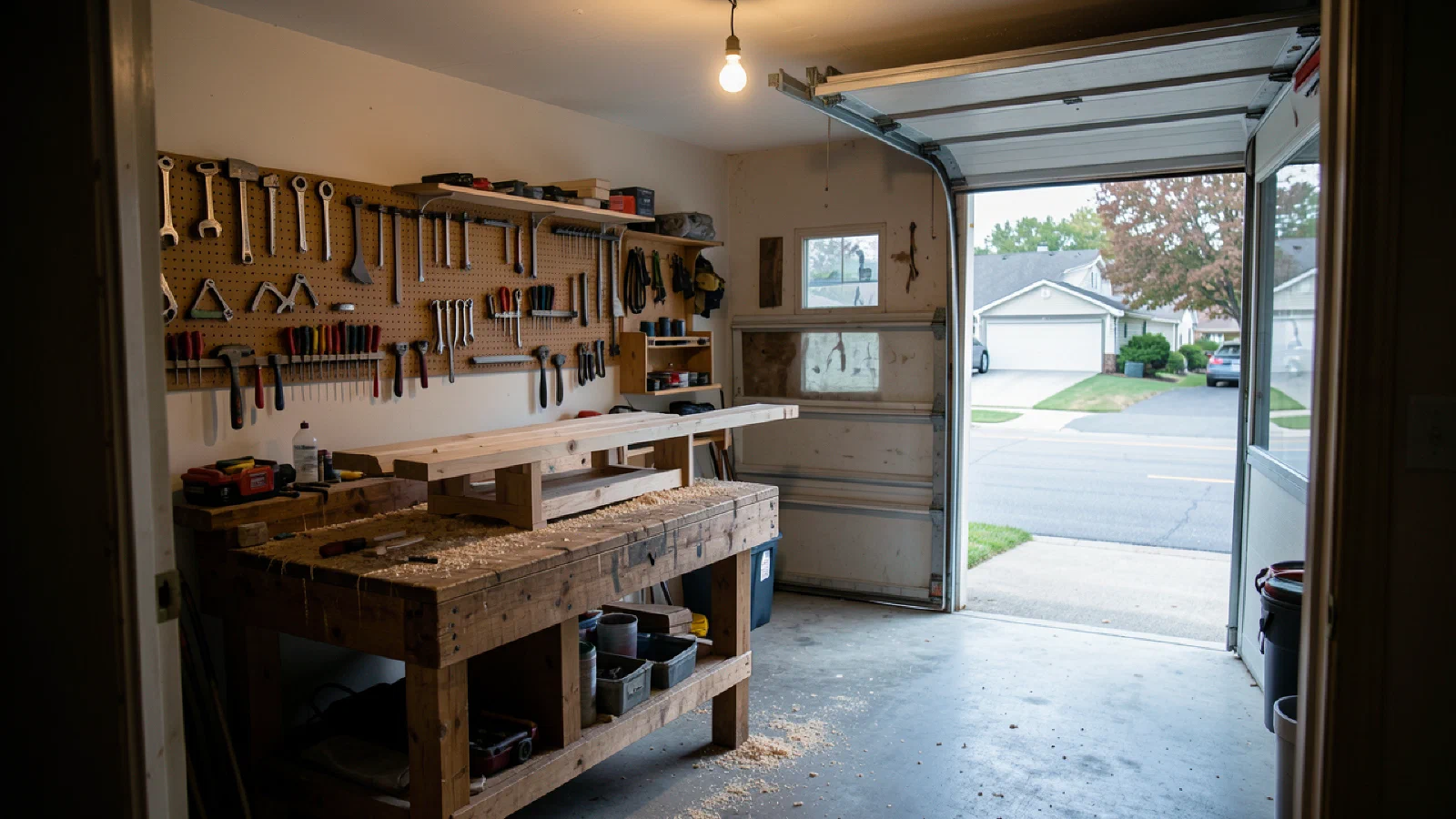
Men’s Sheds began in the 1990s as community spaces where men could come together to work on projects: woodworking, repair, building, tinkering. The social connection was incidental to the activity. Nobody sat in a circle. Nobody was asked how they felt. Men showed up, worked alongside other men, and talked while they worked.
The outcomes have been striking. Studies of Men’s Sheds participants report reduced isolation, enhanced self-esteem, development of skills, and connection to community. Family members describe partners who were previously withdrawn becoming engaged again. Researchers have noted something that seems obvious once stated: men will talk about difficult personal matters when given the right setting. The key is that the setting must not feel like therapy. An Australian motto captures it: “men talk shoulder to shoulder, not face to face.”
The Men’s Shed model has spread to the UK, Ireland, Canada, and increasingly the United States, though it remains significantly underscaled relative to need. The U.S. Men’s Sheds Association is growing but still small, with most Americans unaware that such programs exist.
The common thread across effective interventions for older men is purpose. Veteran peer mentoring programs work because they position the man as contributor rather than recipient. Coaching and mentoring programs for young people give older men a role that matters. Community gardens and tool libraries create contexts for practical collaboration. In each case, the man is doing something useful alongside other people. The connection follows.
The programs that fail are the ones that treat loneliness as the explicit target. Ask a man to come to a “loneliness support group,” and he’ll stay home. Ask him to come help build benches for the local park, and he might show up. Once he’s there, once he’s working, once he’s talking to the man next to him about wood grain and power tools, the loneliness begins to lift.
What Needs to Change#
The crisis of older male isolation is not going to be solved by telling men to be different. The cultural patterns that shape male friendship are deeply embedded, and lectures about emotional openness will not change them.
What can change is the infrastructure of connection.
Primary care physicians can screen for social isolation as routinely as they screen for depression, with referrals to activity-based programs rather than support groups. Communities can invest in Men’s Sheds and similar spaces that give older men somewhere to go and something to do. Employers can offer retirement transition programs that help workers build non-work social infrastructure before they leave.
At the family level, the most important intervention may be the simplest: notice. If you have a father, uncle, or grandfather who has recently retired or lost a spouse, pay attention to whether his world is shrinking. The men least likely to ask for help are often the men most in need of it. They won’t tell you they’re lonely. But you can see it in the smaller life, the empty calendar, the conversations that get shorter and further apart.
Richard, alone in his house with the television and the memories, will insist he’s fine. He has been trained his entire life to insist he’s fine. The question is whether anyone will look closely enough to see that he’s not.
How this article connects to others in Blue Gray Matters.
Sources cited in this article.
- Elwert, Felix, and Nicholas A. Christakis. "The Effect of Widowhood on Mortality by the Causes of Death of Both Spouses." *American Journal of Public Health*, vol. 98, no. 11, 2008, pp. 2092-2098. doi.org/10.2105/AJPH.2007.114348.
- Katsiferis, Alexandros, et al. "Sex Differences in Health Care Expenditures and Mortality After Spousal Bereavement." *PLOS ONE*, vol. 18, no. 3, 2023, e0282892. doi.org/10.1371/journal.pone.0282892.
- Milligan, Christine, et al. "Older Men and Social Activity: A Scoping Review of Men's Sheds and Other Gendered Interventions." *Ageing & Society*, vol. 36, no. 5, 2016, pp. 895-923. doi.org/10.1017/S0144686X14001524.
- Moon, J. Ryan, et al. "Widowhood and Mortality: A Meta-Analysis." *PLOS ONE*, vol. 6, no. 8, 2011, e23465.
- Willis, Paul, et al. "Loneliness, Coping Practices and Masculinities in Later Life: Findings from a Study of Older Men Living Alone in England." *Health & Social Care in the Community*, vol. 30, no. 5, 2022, pp. e2985-e2995. doi.org/10.1111/hsc.13732.
- Wilson, Nathan J., and Reinie Cordier. "A Narrative Review of Men's Sheds Literature: Reducing Social Isolation and Promoting Men's Health and Well-Being." *Health & Social Care in the Community*, vol. 21, no. 5, 2013, pp. 451-463. doi.org/10.1111/hsc.12019.