Shrinking Worlds
How Social Networks Contract, and What Falls Away with Them
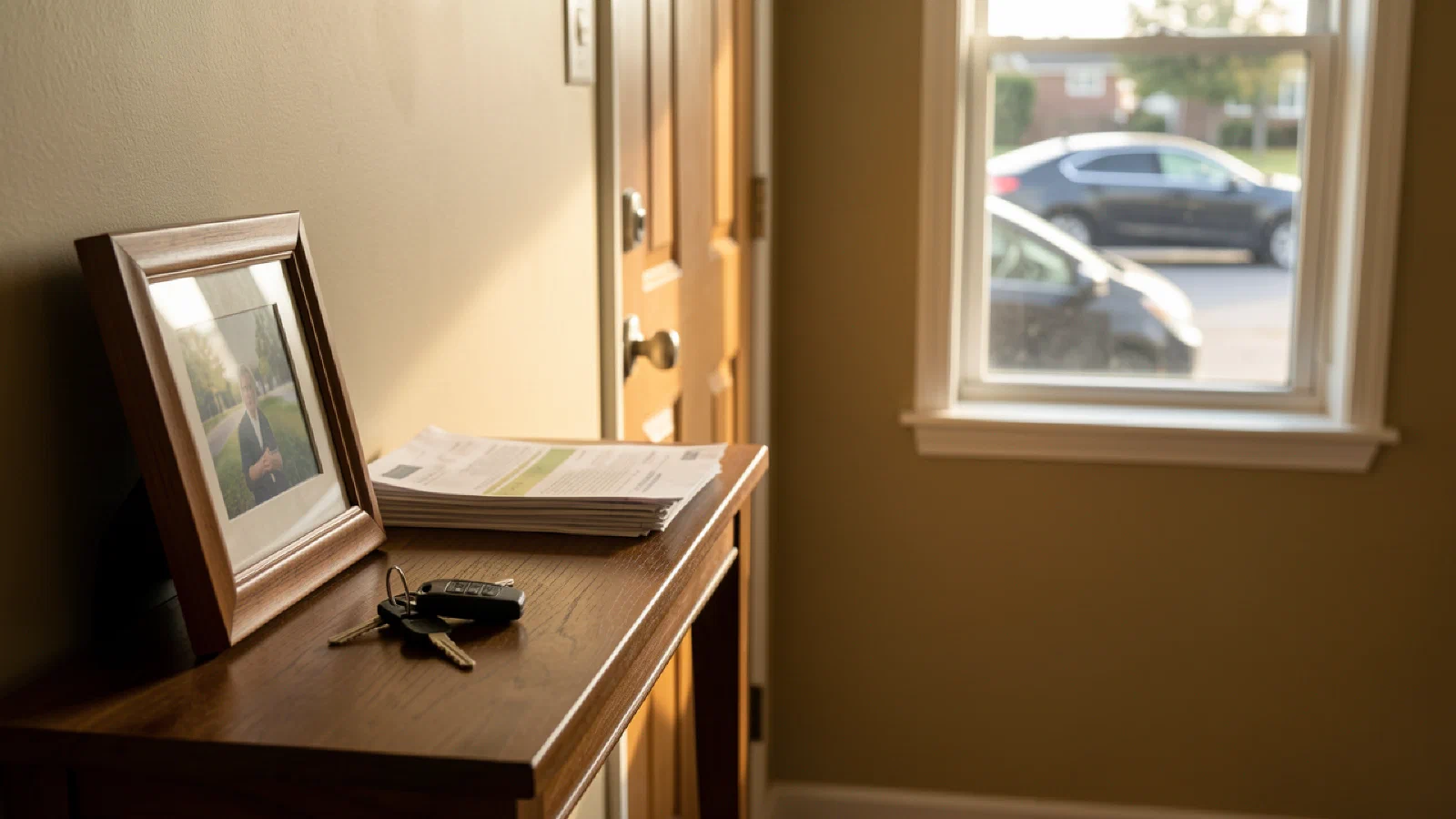
The house hasn’t changed, but the world around it has.
Walter is 78. He’s lived in this house for forty-two years, raised three kids here, buried two dogs in the backyard. The neighborhood used to be full of people he knew: the Hendersons next door, the couple who owned the hardware store two blocks over, the families from church. They’ve moved, or died, or landed in assisted living facilities an hour away. The people who live on his street now are younger, busy with children, and unfamiliar.
His wife Helen died three years ago. They had been married fifty-one years. She was the one who remembered birthdays, organized dinners, kept friendships warm. He didn’t realize how much of his social world ran through her until she was gone.
He stopped driving last year. A fender bender in a parking lot frightened him badly enough to hand over the keys. His son was relieved. Walter felt something close to grief.
He can hear the television if he turns it up, but when his grandson calls, the voice sounds muffled and distant. Asking “what?” over and over makes them both frustrated. The calls have grown shorter. They come less often.
On any given Tuesday, Walter might speak to no one at all.
The Social Network Life Cycle#
Psychologists who study social relationships describe something called the “social convoy”: the network of people who travel with us through life, surrounding us like ships moving together across time. The inner circle holds the closest relationships (spouses, children, intimate friends). Outer rings contain more distant connections (colleagues, acquaintances, neighbors). The convoy is not static. It changes at every major life transition.
The research of Toni Antonucci and others has tracked how these networks evolve. In early adulthood, convoys tend to expand: marriage, children, work colleagues, community involvement. In middle age, they stabilize or begin to thin as children leave and some friendships attenuate. In older adulthood, the thinning accelerates, driven by forces that are partly chosen (retirement, moving closer to family) and partly imposed (illness, death, sensory loss).
What matters is not only size but structure. Some people maintain small networks of deep, intimate relationships and thrive. Others build wide but shallow networks that collapse when the activity sustaining them ends. The person with three close friends and a strong marriage may weather aging with connection intact. The person with fifty work acquaintances and a weak marriage may arrive at 75 profoundly alone.
The difference matters because it shapes intervention. A person whose isolation stems from losing deep relationships needs something different from a person whose isolation stems from losing casual social infrastructure. Both are lonely. Neither will be helped by the same program.
Retirement as Social Amputation#
For many Americans, particularly men, the workplace is not just where they earn a living. It is where they see people every day, eat lunch with colleagues, share minor frustrations and small victories, belong to something larger than themselves. Retirement ends all of this at once.
The shift can be liberating for those who retire into something: volunteer work, community organizations, hobbies with social components, a second career. These people transition from one social infrastructure to another. They may lose colleagues, but they gain new connections built around new activities.
Others retire into a vacuum. They leave work on Friday with a party and a gift, and wake up Monday with nowhere to go and no one expecting them. Their calendar empties. Their phone stops ringing. The people they saw every day recede into Christmas cards and occasional emails, then fade entirely.
This is not weakness. It is structure. American workplaces, for all their flaws, provide automatic daily social contact. You don’t have to be good at friendship to have colleagues. You don’t have to organize anything to eat lunch with people. The workplace does that work for you. When it ends, the work transfers entirely to the individual, and many people discover they don’t know how to do it.
The problem is particularly acute for those who planned to “finally relax” after decades of labor. Relaxation sounds appealing at 64. At 74, after a decade of relaxing alone in a quiet house, it looks different.
The Senses and the Shrinking#
Nearly seven in ten Americans over 70 have measurable hearing loss. By 85, the proportion rises to nearly all. Yet fewer than 30% of those who would benefit from hearing aids use them.
This gap is not merely about vanity or denial. It is about money: traditional Medicare does not cover hearing aids, and prescription devices typically cost $2,000 to $4,000 per ear. It is about access: many people lack audiological services nearby, particularly in rural areas. And it is about friction: the path from “I’m having trouble hearing” to “I have a properly fitted hearing aid that I use consistently” involves multiple appointments, adjustments, and learning curves that many people never complete.
The consequences of untreated hearing loss ripple outward. Conversation becomes work. In group settings, the effort of trying to follow multiple voices against background noise is exhausting. People with hearing loss begin to avoid situations that require listening: dinner parties, church services, phone calls with grandchildren. Each avoidance shrinks the world a little more.
The ACHIEVE trial, a major randomized study published in The Lancet in 2023, tested whether hearing aids could slow cognitive decline in older adults. The results were nuanced: in the overall population, hearing intervention showed no difference from health education over three years. But in a pre-specified subgroup of older adults already at elevated risk for cognitive decline, hearing aids reduced the rate of decline by nearly half.
The finding suggests something important: hearing loss may not just correlate with cognitive decline. For people already vulnerable, untreated hearing loss may actively accelerate it, possibly through the mechanisms this series has already traced (social withdrawal, reduced stimulation, increased cognitive load from straining to hear).
Since 2022, over-the-counter hearing aids have been available without prescription for mild to moderate hearing loss, starting at a few hundred dollars rather than thousands. This is progress. But the OTC market remains confusing, flooded with devices of varying quality, and the people who would benefit most (older, lower-income, less digitally fluent) are often the last to find their way to effective products.
A $200 hearing aid, properly used, might do more for social connection and cognitive health than most supplements on the market. But the path to that hearing aid remains harder than it should be.
Driving Cessation and Transportation Deserts#
For much of America, particularly suburban and rural America, the car is the last bridge to the outside world. It takes you to church, to the grocery store, to the senior center, to your daughter’s house forty minutes away. When the car keys go, the bridge collapses.
A systematic review and meta-analysis examining driving cessation in adults 55 and older found that stopping driving nearly doubles the risk of depression. A study using National Health and Aging Trends data found that former drivers had twice the odds of being socially isolated compared to those still driving. These associations hold even after accounting for the health conditions that precipitated driving cessation.
The psychology here is compound. Driving represents independence, autonomy, control. Losing it can feel like losing adulthood itself, a regression to childhood dependence. But the practical consequences are equally devastating: without transportation, every activity outside the home requires coordination with someone else. Doctor’s appointments require rides. Church requires rides. The simple act of buying milk requires asking for help.
In urban areas with public transit, the blow is softened. In most of America, it is not. A 78-year-old in suburban Phoenix or rural Ohio who stops driving faces a geography built entirely around cars, with no safe way to walk to destinations and no buses within miles. Rideshare services help those comfortable with smartphone apps and able to afford regular fares. For many older adults, they remain unfamiliar, expensive, or both.
The result is that driving cessation becomes, for millions, a threshold beyond which the outside world effectively closes. The house that was once a home becomes a container.
The Compounding Effect#
None of these losses operates in isolation. They interact, each removing the workaround for the one before it.
Consider the cascade: Hearing loss makes phone calls exhausting. The daughter who used to call weekly now calls every other week because conversations have become frustrating for both of them. Mobility limitations make the walk to the neighbor’s house harder; eventually, Eleanor stops going. When driving ends, the trip to the senior center (where she might have found new connections) ends with it. The hearing loss that made phone calls difficult now makes even face-to-face conversation effortful, reducing the value of visits that do occur.
Each loss removes a coping mechanism for the previous one. Phone calls might have compensated for reduced in-person contact, but hearing loss undermines them. A senior center might have compensated for neighborhood turnover, but driving cessation blocks access. Each contraction makes the next one more damaging.
This is why single-point interventions often fail. Providing a hearing aid helps, but not if the person lacks transportation to the audiologist for follow-up adjustments. Offering a senior center program helps, but not if the person cannot get there. Encouraging phone contact helps, but not if hearing loss has made it exhausting.
Effective intervention requires seeing the cascade as a system and addressing multiple points simultaneously. A hearing aid plus transportation assistance plus a social program is a different proposition than any one of those alone.
At Your Kitchen Table#
If you recognize this shrinking in yourself or someone you love, the installments that follow will explore what can be done at each stage.
Some of the most effective interventions are also the simplest: addressing hearing loss before it becomes severe, planning for transportation alternatives before the keys are surrendered, building social connections outside of work before retirement arrives. Prevention at each transition point is easier than repair after the cascade has begun.
But even after contraction has occurred, reversal is possible. Series 4 will examine programs that show genuine evidence of success: intergenerational connections that provide purpose, technology that bridges distance when bodies fail, community models that rebuild infrastructure for those who have lost it.
Walter, sitting in his house on a Tuesday, speaking to no one, is not failing at aging. He is living the accumulated consequence of systems that do not screen for hearing loss, do not fund transportation alternatives, do not prepare people for the social architecture they will need when work ends and spouses die.
The shrinking was not inevitable. Neither is its continuation.
How this article connects to others in Blue Gray Matters.
Sources cited in this article.
- Antonucci, Toni C., et al. "Convoy Model of Social Relations: A Life Course Approach." *The Journals of Gerontology, Series B: Psychological Sciences and Social Sciences*, vol. 69, no. 7, 2014, pp. 857-862.
- Chihuri, Stanford, et al. "Driving Cessation and Health Outcomes in Older Adults." *Journal of the American Geriatrics Society*, vol. 64, no. 2, 2016, pp. 332-341. doi.org/10.1111/jgs.13931.
- Lin, Frank R., et al. "Hearing Intervention versus Health Education Control to Reduce Cognitive Decline in Older Adults with Hearing Loss in the USA (ACHIEVE): A Multicentre, Randomised Controlled Trial." *The Lancet*, vol. 402, no. 10404, 2023, pp. 786-797. doi.org/10.1016/S0140-6736(23)01406-X.
- Mahmoudi, Elham, et al. "Association Between Hearing Aid Use and Health Care Use and Cost Among Older Adults with Hearing Loss." *JAMA Otolaryngology–Head & Neck Surgery*, vol. 144, no. 6, 2018, pp. 498-505.
- Qin, Weidi, et al. "Driving Cessation and Social Isolation in Older Adults." *Journal of Aging and Health*, vol. 32, no. 9, 2020, pp. 962-971. doi.org/10.1177/0898264319870400.
- Reed, Nicholas S., et al. "Prevalence of Hearing Loss and Hearing Aid Use Among US Medicare Beneficiaries Aged 71 Years and Older." *JAMA Network Open*, vol. 6, no. 7, 2023, e2326320. doi.org/10.1001/jamanetworkopen.2023.26320.
- U.S. Food and Drug Administration. "FDA Finalizes Historic Rule Enabling Access to Over-the-Counter Hearing Aids for Millions of Americans." FDA.gov, 16 Aug. 2022.