The Caregiver's Vanishing World
When Taking Care of Someone Else Means Losing Yourself
Susan used to meet her friends for lunch on Thursdays. It was a small thing, three women who had known each other since their children were in elementary school together, catching up over sandwiches at the same café for fifteen years.
She can’t go anymore. Her husband, David, has moderate Alzheimer’s disease. She cannot leave him alone for the two hours it would take, and she cannot bring him because he gets agitated in restaurants, confused by the noise, sometimes saying things that embarrass her and frighten others. Her friends offered to come to the house instead, but the visits felt strained. David doesn’t always recognize them. He interrupts. He needs things. After a few awkward afternoons, the invitations slowed, then stopped.
Susan doesn’t blame her friends. She doesn’t know what she would do in their position. She also doesn’t have anyone to talk to anymore. The phone calls have tapered off. The neighbors wave but don’t stop by. Her daughter calls on Sundays, conversations that feel more like wellness checks than connection.
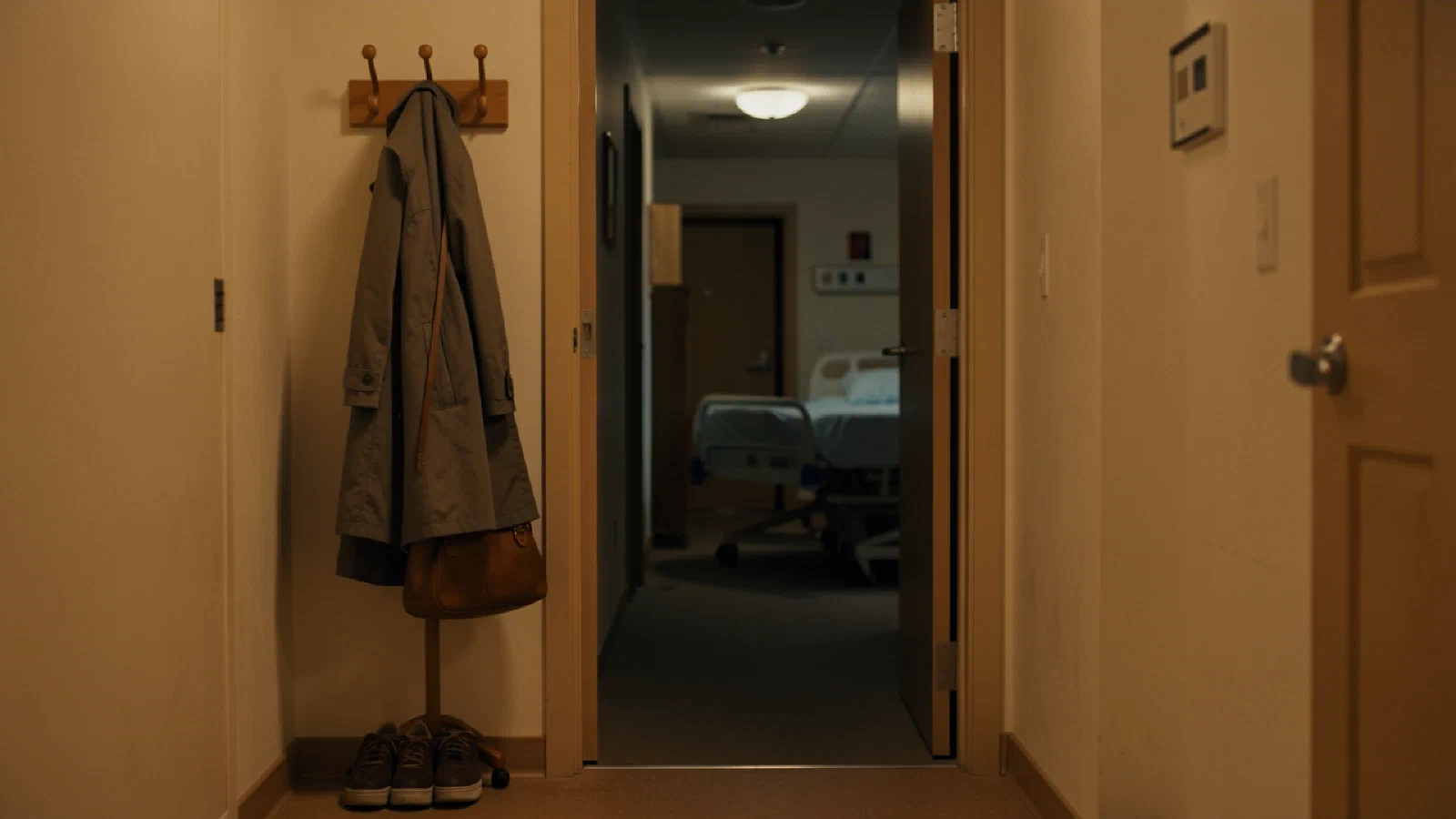
She is surrounded by David’s needs and her own silence. The world has shrunk to the size of their house, and she is the only person in it who remembers what her life used to look like.
The Geometry of Caregiver Isolation#
Sixty-three million Americans are family caregivers, according to the most recent national survey from AARP and the National Alliance for Caregiving. That is nearly one in four adults, a 45% increase over the past decade. Among those caring for someone with dementia, more than half report experiencing loneliness and social isolation. The numbers are not surprising to anyone who has lived them.
Caregiving restructures social life through mechanisms that operate almost invisibly. The caregiver cannot leave the house for long periods, so invitations that require sustained absence go unanswered. The caregiver’s schedule is unpredictable, governed by someone else’s needs, so plans made in advance frequently collapse. The caregiver is exhausted, and socializing begins to feel like another obligation rather than a relief. The caregiver’s emotional bandwidth is consumed by the person in their care, leaving little for anyone else.
Friends, meanwhile, do not know what to say. They feel helpless in the face of decline they cannot fix. Visits to the home are awkward when the care recipient is confused or agitated or simply not the person they used to be. After a few uncomfortable encounters, many friends drift away. They mean no harm. They simply do not know how to remain present in circumstances that have no script.
The result is a double withdrawal: the caregiver pulling inward, the social network pulling back. Both happen gradually, without anyone deciding that this is what should occur. And yet, over months and years, the caregiver finds herself profoundly alone.
The Guilt Trap#
Even when respite is available, many caregivers will not take it.
The cultural expectation, particularly for women, is that caregiving should be selfless. Good caregivers sacrifice. Good caregivers do not complain. Good caregivers certainly do not leave their loved ones with strangers so they can go have lunch with friends. The guilt that accompanies any moment of self-care can be intense, even paralyzing.
This is compounded by the practical reality that respite care is often inadequate or unavailable. Most caregivers know that programs exist. The Alzheimer’s Association has support lines. Adult day programs offer structured time. Respite services can provide temporary relief. But knowing resources exist and being able to access them are different things. Adult day programs may not be nearby, or may not accommodate the care recipient’s level of need. Respite care is chronically underfunded, with waiting lists that stretch for months. And even when services are available, the logistics of arranging them can feel like another burden layered onto an already overwhelming day.
The paradox is brutal: respite is essential for sustainable caregiving, but the people who most need it are the least likely to take it. They are too exhausted to plan, too guilty to go, and too isolated to have anyone pushing them toward help.
What Friends and Family Get Wrong#
The most common question people ask a caregiver is “How can I help?”
It is a kind question, genuinely meant. It is also, often, the wrong question.
The caregiver who is asked “how can I help?” must now generate a task, explain the context, and manage the helper’s involvement. This requires energy the caregiver does not have. It also places the burden of coordination on the person least equipped to carry it. Many caregivers, when asked how others can help, say “I don’t know” or “I’m fine” because articulating what they need feels like more work than just doing everything themselves.
The intervention that works best is often the simplest: someone who shows up without asking. Not “let me know if you need anything,” but “I’m coming over Thursday at 2 to sit with David so you can get out.” Not “call me anytime,” but an actual phone call, every Tuesday, at the same time, so the caregiver can count on hearing another voice.
Caregivers do not need more offers. They need more action. They need people who will take initiative, absorb the logistics, and show up reliably, week after week, for as long as it takes.
When the Caring Ends#
There is an aftermath to caregiving that receives little attention.
When the person dies, the caregiver often finds that years of isolation have left them without a social network to return to. The friends who drifted away have moved on. The routines that once structured life have dissolved. The caregiver’s entire daily existence revolved around another person’s needs, and without those needs, the emptiness is not just emotional but logistical. They don’t know what to do with a Tuesday anymore.
The grief is compounded by disorientation. The caregiver may have been longing for relief, even for the death that would bring it, and now feels guilty for that longing. They may have spent so long in crisis mode that they have forgotten how to live any other way. They may discover that their identity had become so fused with caregiving that they no longer know who they are without it.
Bereavement support programs exist, but they are designed for the grief of losing someone, not for the particular grief of losing oneself in the process of caring for them. The caregiver who emerges from years of service often needs help not just mourning the person who died but rebuilding a life that atrophied while they were away.
What Actually Helps#
The most effective support for caregiver isolation addresses the structural constraints, not just the emotional state.
Respite care, when adequately funded and accessible, does work. Adult day programs provide structured social engagement for the care recipient while giving the caregiver genuine time away. The Village-to-Village Network, a model of neighbor-to-neighbor support, has shown promise in creating systems where caregivers and care recipients both receive connection without requiring the caregiver to leave or the care recipient to be alone.
Technology has created new options. Online support communities for caregivers, particularly those caring for people with specific conditions like Alzheimer’s, offer connection without requiring the caregiver to leave the house. Structured video call programs can provide regular human contact. The Alzheimer’s Association 24/7 Helpline (1-800-272-3900) offers someone to talk to at any hour, which matters when 3 AM is the loneliest time and there is no one else to call.
But the honest assessment is this: most caregivers know these resources exist and still cannot access them. Time, guilt, logistics, and exhaustion all stand in the way. The system treats caregiving as a private matter rather than a public responsibility, and the isolation that results is a structural consequence of that choice.
What This Means#
If you are a caregiver reading this, the isolation you feel is not a personal failing. It is the predictable outcome of a system that asks you to do impossible work without adequate support, then acts surprised when you disappear from the world.
You deserve connection as much as the person you care for. You are not selfish for wanting it. You are not weak for needing it. And if you cannot access it right now, that is not your fault.
If you know a caregiver, don’t ask how you can help. Just help. Show up on Thursday. Call on Tuesday. Bring food that doesn’t require explanation. Sit with the person being cared for so the caregiver can leave the house for an hour. Do it again next week. And the week after that.
Susan, alone in her house with David and the silence, is not failing at caregiving. She is absorbing the cost of a system that offloads care onto families without providing the infrastructure to make it sustainable. The loneliness in her body is not a personal weakness. It is a policy failure she happens to be living.
How this article connects to others in Blue Gray Matters.
Sources cited in this article.
- AARP and National Alliance for Caregiving. *Caregiving in the U.S. 2025.* Washington, DC: AARP, July 2025. doi.org/10.26419/ppi.00373.001.
- Alzheimer's Association. "Caregiver Stress." alz.org/help-support/caregiving/caregiver-health/caregiver-stress.
- Hunter, Melissa. "Addressing Social Isolation and Loneliness of People Living With Dementia and Their Caregivers." RTI International, September 2025.
- National Alzheimer's and Dementia Resource Center. *Addressing Social Isolation and Loneliness of People Living With Dementia and Their Caregivers.* Administration for Community Living, 2025.
- Victor, Christina R., et al. "The Prevalence and Predictors of Loneliness in Caregivers of People with Dementia: Findings from the IDEAL Programme." *International Psychogeriatrics*, vol. 33, no. 12, 2021, pp. 1243-1253.
- Zhang, Y., et al. "Loneliness and Social Isolation Among Informal Carers of Individuals with Dementia: A Systematic Review and Meta-Analysis." *International Psychogeriatrics*, 2024. doi.org/10.1017/S1041610224000796.