Smart Homes, Stubborn Homes
What Technology Can and Cannot Do for Aging in Place
His daughter lives six hundred miles away. She gets alerts on her phone.
He got up at 2 AM. Normal for him; his prostate has opinions about sleep. He opened the refrigerator at 7 AM. Breakfast, probably. He hasn’t moved from the living room chair since 10 AM. Should she call?
She installed the sensors last Thanksgiving. The system cost four hundred dollars, plus a monthly subscription. It tracks motion in every room, learns his patterns, and flags deviations. She can see when he opens the medicine cabinet. She knows when he goes to bed.
He hates it. He agreed to it because she was afraid, and he loves her, and saying no felt like cruelty. But he knows what it means. He is being watched. His bathroom trips are data points. His mornings are monitored. The privacy he took for granted his whole life is now a variable that someone else controls.
She appreciates the information. She also knows he hates that she has it.
This is the trade that technology offers: safety in exchange for surveillance, independence extended by oversight. Whether the trade is worth it depends on who you ask and when you ask them.
What the Market Is Selling#
The aging-in-place technology market has exploded in the past decade. Venture capital poured into companies promising to keep older adults safe at home longer, and the products they built fall into a few broad categories.
Fall detection was the first and remains the most visible. Wearable devices like Apple Watch and Medical Guardian pendants claim to detect falls and summon help. In-home sensors, including ceiling-mounted radar systems like Nobi and motion-detection networks from companies like Current Health, promise to catch falls even when no wearable is worn. Camera-based systems can watch a room and identify when someone has gone down.
The accuracy of these systems varies more than the marketing suggests. Wearables that detect falls through impact and motion change work reasonably well for hard falls. But many falls in older adults are not hard falls. Slow slides from a chair. Collapses against a wall. The quiet crumple that leaves someone on the floor, conscious but unable to rise. These often go undetected. Meanwhile, normal activities trigger false alarms: bending to pick up the newspaper, sitting down abruptly, dropping the device in the sink. Studies have found that many seniors disable or remove fall detection devices after repeated false positives erode their patience.
Ambient monitoring takes a different approach. Systems from Best Buy Health, CarePredict, and Teal learn a person’s baseline activity patterns and alert caregivers when something changes. Less movement than usual. A shift in sleep timing. A day when the refrigerator never opened. These systems are better at detecting gradual decline than acute emergencies. Their value lies in flagging patterns that might go unnoticed for weeks until a crisis reveals them.
Medication management has its own market segment. Smart dispensers like Hero and MedMinder lock pills until it is time to take them, beep reminders, and notify caregivers of missed doses. They help with adherence. They do not solve polypharmacy, the problem of too many medications with too many interactions, which requires clinical judgment, not better dispensing hardware.
Voice assistants have become an interface layer for everything else. Alexa and Google Home can place calls, set reminders, control lights and thermostats, and answer questions. Adoption among adults over sixty-five hovers around 30 percent and is growing. These devices were not designed specifically for cognitive impairment, but adaptive features are emerging: simplified interfaces, routines triggered by time or behavior, integration with caregiver apps.
Telehealth expanded dramatically during COVID and has not contracted. Video visits reduce the need for transportation, one of the primary barriers to care for older adults who no longer drive. Medicare coverage expanded and has largely held. But telehealth integration with home monitoring remains fragmented. The blood pressure cuff in the kitchen does not automatically feed data to the doctor reviewing a video visit. Connecting the pieces requires technical sophistication that many patients and practices lack.
The Evidence Question#
Most of these products reached market without rigorous clinical trials. The FDA does not require evidence of efficacy for most wellness devices, and CMS does not require evidence before declining to cover them. The result is a market driven by plausibility and marketing rather than demonstrated outcomes.
What evidence does exist is mixed. Remote patient monitoring for specific conditions (heart failure, hypertension, diabetes) shows modest benefits in some studies and no benefit in others. The ACCESS model launching in July 2026 will provide the first dedicated Medicare payment pathway for tech-enabled chronic disease management, covering conditions including hypertension, diabetes, chronic kidney disease, cardiovascular disease, chronic pain, and depression. Whether this proves the case for remote monitoring or reveals its limits remains to be seen.
The broader category of ambient monitoring for general aging-in-place purposes has even thinner evidence. The technology is new, the outcomes that matter (delaying institutionalization, preventing falls, improving quality of life) take years to measure, and the companies selling the products have little incentive to fund studies that might show limited benefit.
What is clear is that technology acceptance matters as much as technology capability. Seniors adopt devices that solve problems they recognize. They reject devices that feel imposed, surveilling, or condescending. A medication reminder works if the person using it believes they need help remembering medications. It becomes a source of resentment if it was installed by an adult child who thinks they know better.
Who Gets Left Behind#
The digital divide is not just about smartphones. It is about broadband access, digital literacy, cost, and the support infrastructure that makes technology usable.
Rural seniors are least likely to have reliable high-speed internet and most likely to need remote support because local healthcare is scarce. Digital literacy varies enormously; many older adults never learned to navigate touchscreens or voice interfaces, and training programs are sparse and inconsistent. Cost remains a barrier: the most effective ambient monitoring systems run $100 to $400 per month plus installation, and Medicare covers almost none of it.
The people most likely to benefit from aging-in-place technology are often least able to access it. They are poor, rural, without family advocates to research options and set up systems, or cognitively impaired in ways that prevent learning new interfaces. The market serves those who can pay and those whose families can navigate complexity. Everyone else makes do.
The Privacy Bargain#
Every sensor in the house is a piece of autonomy traded away.
When ambient monitoring is installed, someone else learns your sleep schedule, your bathroom habits, your movements from room to room. When a smart lock is added so the home health aide can enter, someone else controls access to your door. When the medication dispenser locks until you take the pill, someone else decides when you have complied.
Who owns this data? Most commercial systems have permissive terms of service. Data may be used for product improvement, sold to third parties, or shared in ways the user never contemplated when they signed up. The regulatory framework for health-adjacent data is far weaker than for medical records. Your bathroom visits are not protected by HIPAA.
The family power dynamic is its own complexity. When an adult child installs monitoring, whose need is being met? The parent’s safety, certainly. But also the child’s peace of mind, the child’s ability to manage worry from six hundred miles away, the child’s sense of doing something in a situation that otherwise feels helpless. The motivations are genuine and mixed. The parent may experience the monitoring as care or as control, and often as both.
Small surrenders accumulate. First the sensors. Then the remote lock. Then the dispenser that will not open. Then the camera in the living room. Each step makes sense in isolation. Together, they transform a person from an autonomous agent into a monitored subject. The technology keeps you safe and alive. It also changes what safety and life mean.
Where the line should be drawn is not a question with a universal answer. Different people have different tolerances, different relationships, different circumstances. The conversation about what monitoring to accept and what to refuse should happen before the installation, not after. And the person being monitored should be the one who decides.
What Technology Cannot Build#
Technology can extend the runway of independence. It cannot build the runway.
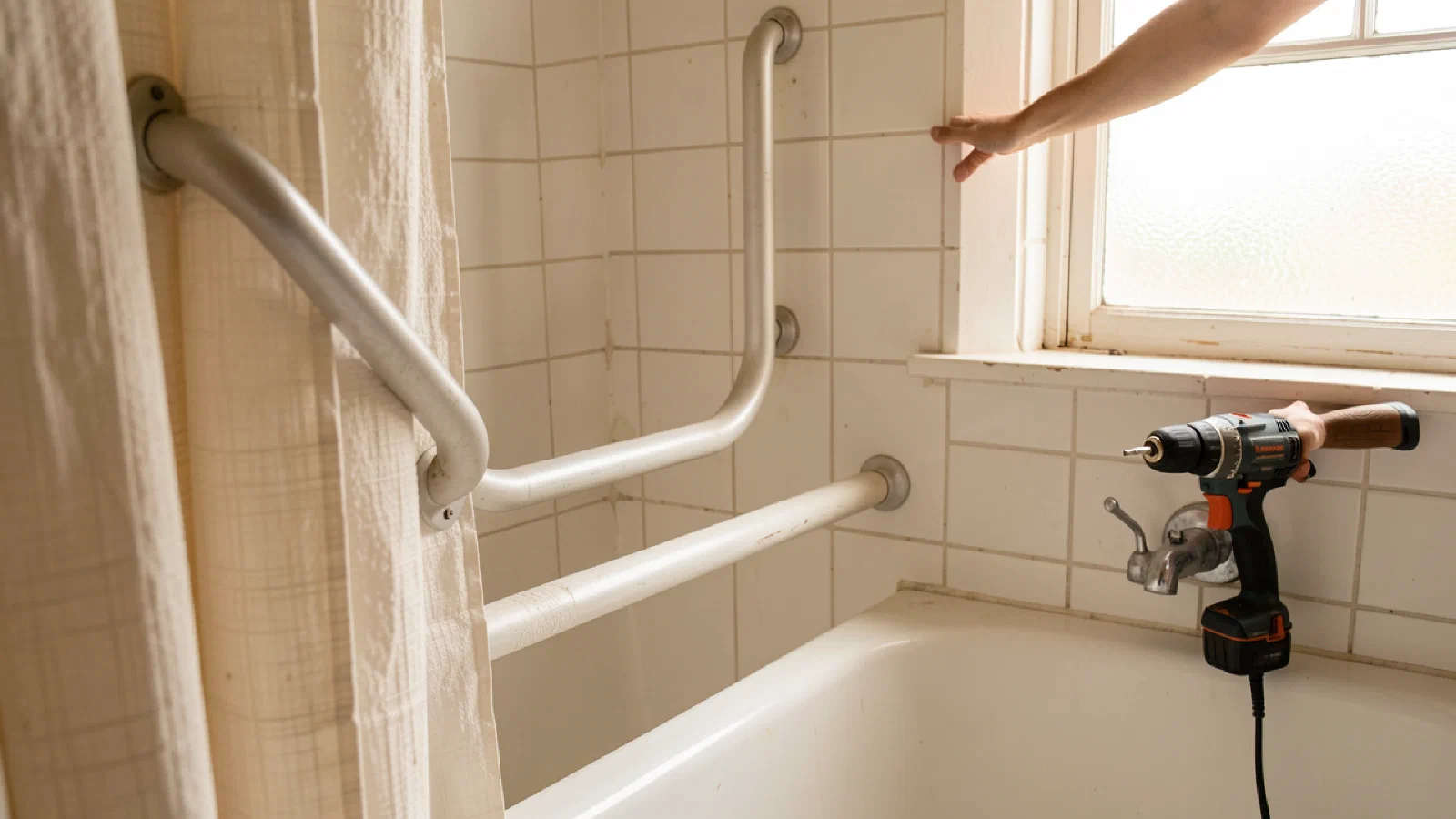
A home without grab bars, a neighborhood without sidewalks, a community without home health aides, a family without involvement: no app solves that. The physical infrastructure has to exist. The human relationships have to exist. The financial resources to pay for care have to exist. Technology is a supplement. It is never a substitute.
The man in the living room chair knows this. He knows that the sensors do not replace his daughter’s presence. He knows that the alerts she receives are not the same as a visit. He tolerates the monitoring because the alternative, moving somewhere closer to her, would mean leaving the house where his wife died, the garden they built together, the neighborhood where people still wave even if they do not stop to talk.
The technology buys him time. What he does with that time is still up to him.
How this article connects to others in Blue Gray Matters.
Sources cited in this article.
- AARP. "2024 Tech Trends and the 50-Plus." AARP Research, 2024. aarp.org/research/topics/technology.
- Center for Connected Health Policy. "State Telehealth Laws and Reimbursement Policies." CCHP, 2025. cchpca.org/telehealth-policy.
- Centers for Medicare and Medicaid Services. "Innovation Center Strategy Refresh." CMS.gov, 2024. cms.gov/priorities/innovation.
- Consumer Reports. "Fall Detection Devices: How Well Do They Work?" Consumer Reports, 2024. consumerreports.org.
- Czaja, Sara J., et al. "Factors Predicting the Use of Technology: Findings from the Center for Research and Education on Aging and Technology Enhancement (CREATE)." *Psychology and Aging*, vol. 21, no. 2, 2006, pp. 333-352.
- Federal Trade Commission. "Mobile Health App Developers: FTC Best Practices." FTC.gov, 2023. ftc.gov/tips-advice/business-center/guidance.
- Hawley-Hague, Helen, et al. "Older Adults' Acceptance of Wearable Devices for Falls Prevention: A Qualitative Systematic Review." *Digital Health*, vol. 7, 2021. doi.org/10.1177/20552076211005432.
- Lam, Kenny, et al. "Remote Patient Monitoring for Chronic Disease Management: A Systematic Review." *JAMA Network Open*, vol. 7, no. 3, 2024, e242354.