The Gig Economy After 65
Flexibility, Exploitation, and the New Retirement Job
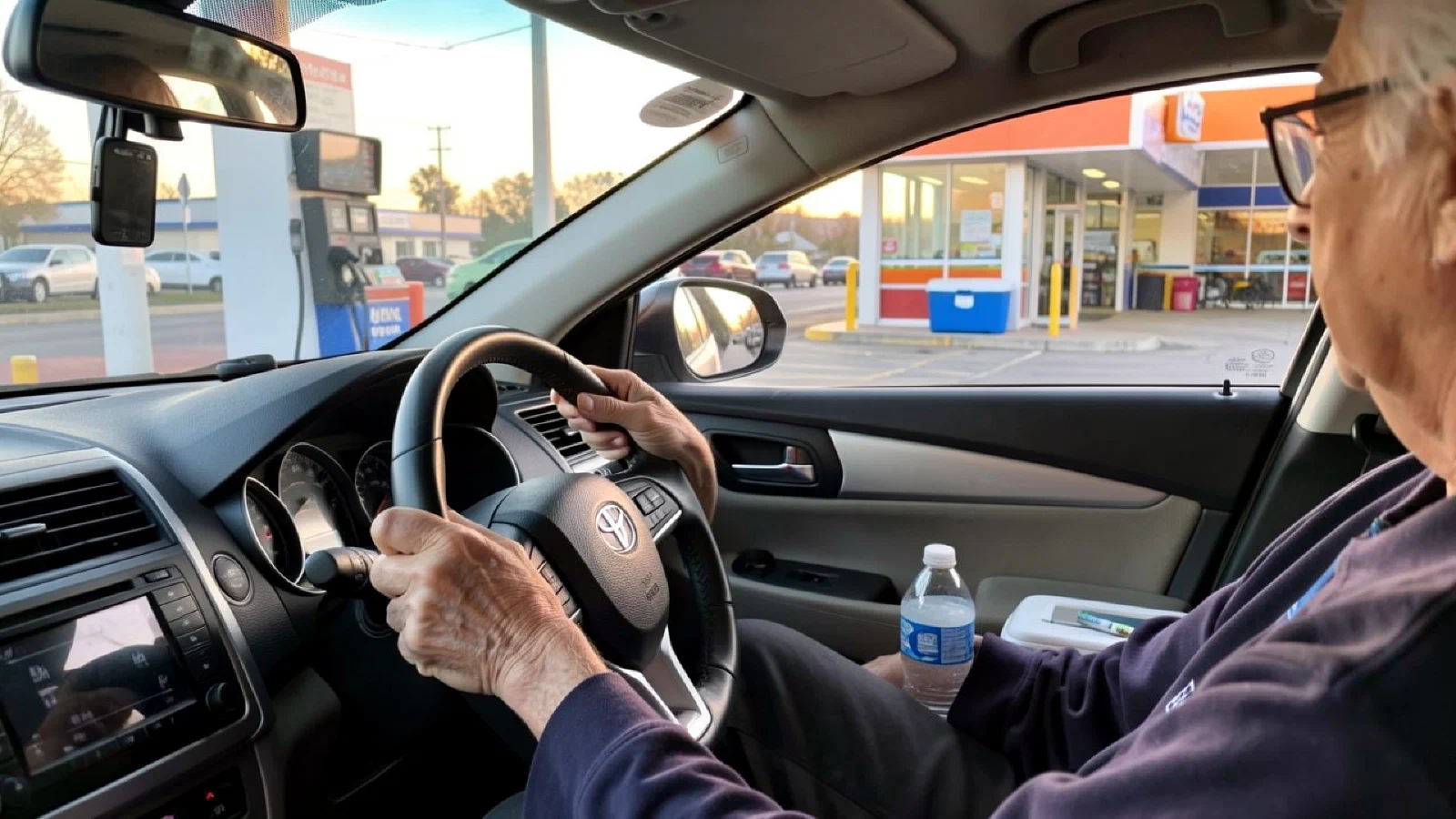
She drives for Uber three days a week. She retired from teaching four years ago, and the pension covers most of what she needs, but not quite all of it. The car was paid off. The app was easy enough to learn. The hours were hers to choose.
She is sixty-eight years old. She likes the flexibility. She likes the conversations with passengers, the slice of lives she would never otherwise see. She likes that no one asks her age or checks her resume or wonders if she can keep up.
She does not like the way her back feels after six hours in the driver’s seat. She does not like the way Uber can change the pay structure without asking her, the way surge pricing appears and disappears according to algorithms she does not understand. She does not like the way she has no idea what she will earn next month.
She is not an employee. She is not exactly an entrepreneur. She is something in between, and nobody has figured out what that means.
What Gig Work Looks Like#
The gig economy is not one thing. It is a collection of arrangements that share a common structure: work without employment, income without benefits, flexibility without security.
Platform work is the most visible category. Uber and Lyft for transportation. DoorDash and Instacart for delivery. TaskRabbit for odd jobs. Approximately 10 percent of gig workers are fifty-five or older, and the share is growing as traditional employment becomes harder to find and retirement savings prove insufficient.
Freelancing and consulting represent the higher-skill end of gig work. Writers, designers, accountants, project managers who sell their expertise by the hour or the project. This kind of work requires an existing reputation, a network of potential clients, and skills that translate across organizations. It is more lucrative than platform work but not more secure.
Online selling has become a category of its own. Etsy for handmade goods. eBay for resale. Amazon for third-party fulfillment. Some people build substantial businesses this way. Most earn supplemental income that would not survive as a primary source.
Tutoring and teaching have moved online. Platforms match tutors with students for test prep, language instruction, academic support. The work is flexible and plays to the strengths that experienced professionals bring. The pay varies widely.
And then there is the informal economy, which does not appear in statistics because it is not tracked. House-sitting. Pet-sitting. Informal elder care for neighbors and family friends. Handyman work paid in cash. This shadow economy has always existed. It absorbs people who have fallen out of formal employment and have no other options.
Why Older Workers Choose It#
The gig economy offers something that traditional employment often does not: control over time.
For someone managing chronic health conditions, the ability to work around medical appointments matters. For someone caring for a spouse or grandchildren, the ability to set hours that accommodate other responsibilities matters. For someone whose energy fluctuates, the ability to work more on good days and less on bad days matters. Flexibility is not an abstraction. It is the difference between work that fits a life and work that does not.
Barriers to entry are low in ways that favor older workers. No resume screening. No interviews where age becomes visible before skills do. If you can pass a background check and operate a smartphone, you can drive for Uber. For workers who have spent months sending applications into algorithmic voids, this accessibility is not trivial.
Supplemental income fills gaps that other sources do not cover. Social Security provides a foundation. Gig earnings add a layer on top. The combination may not be comfortable, but it can be functional in ways that either alone would not be.
Autonomy matters psychologically as much as financially. No boss. No performance reviews. No office politics. No hierarchy telling you what to do and when to do it. For someone who spent decades in corporate environments, or who was pushed out of one, the absence of institutional control feels like dignity restored.
And gig work allows a gradual transition that full retirement does not. Scale hours up when money is tight. Scale them down when health requires. Adjust as circumstances change. The cliff of full retirement, the sudden shift from working to not working, is softened into a slope.
The Costs Nobody Advertises#
The flexibility comes at a price, and the price is paid in protections.
No benefits. No employer-sponsored health insurance. No retirement contributions. No paid sick leave. No workers’ compensation if you are injured on the job. For workers over sixty-five, already on Medicare, the benefit gap is less catastrophic. For workers between fifty-five and sixty-four, it can be ruinous. One serious illness without coverage, one injury without workers’ comp, and the math of gig work collapses.
Income volatility makes planning difficult. Earnings fluctuate with demand, with algorithmic adjustments, with factors no individual worker controls. A good month does not guarantee the next month will be good. Budgeting requires a buffer that many gig workers do not have.
The physical toll is real and often underestimated. Driving for six hours is not gentle on an aging back. Delivering packages involves stairs, lifting, weather. Standing for a TaskRabbit gig accumulates stress that younger bodies absorb differently. The flexibility to choose hours does not eliminate the physical demands of the hours chosen.
Employment protections do not apply. Gig workers are classified as independent contractors, not employees. The Age Discrimination in Employment Act does not cover them. Unemployment insurance does not catch them if work dries up. The Americans with Disabilities Act does not require accommodations. The legal framework that protects employees stops at the edge of independent contractor status.
Algorithmic control replaces human bosses but does not eliminate power. Platforms set rates unilaterally. They can deactivate accounts without warning or meaningful recourse. They collect data on every transaction and use it in ways workers cannot see. The absence of a boss does not mean the absence of control. It means control has been automated.
The classification battles continue. California’s AB5 attempted to reclassify gig workers as employees, extending protections and benefits. The gig platforms spent hundreds of millions on Proposition 22 to exempt themselves. Federal rulemaking on independent contractor status is ongoing. The outcome will determine whether millions of workers gain protections or remain outside them.
Who Benefits and Who Is Trapped#
The retired teacher driving for Uber has Medicare, a pension, and a spouse with income. Gig work is supplemental. The flexibility genuinely benefits her. If she stopped driving tomorrow, she would be fine.
The fifty-eight-year-old with inadequate savings, no pension, and no healthcare is in a different position. Gig work is not supplemental. It is survival. The flexibility is not freedom. It is precarity with a marketing budget. If she stops driving, she cannot pay rent.
The question is not whether gig work is good or bad. It is: good or bad for whom, under what conditions, with what alternatives?
For someone with other resources, gig work can be a reasonable choice. Engagement without commitment. Income without obligation. A way to stay active and connected while maintaining control over time.
For someone without other resources, gig work is what remains after better options have been closed off. It is the labor market’s residual category, absorbing those who cannot find traditional employment and cannot afford to stop working. The language of flexibility obscures the absence of choice.
What This Reveals#
The gig economy did not create the retirement crisis. It is a symptom of it.
When traditional employment excludes older workers through discrimination and algorithmic screening, gig work becomes the alternative. When pensions disappear and savings prove insufficient, gig earnings fill the gap. When healthcare is tied to employment and employment is unavailable, the gig economy offers work without the coverage that work should provide.
For some, it is a reasonable trade. For others, it is the only trade available. The difference depends on everything else: health, wealth, family, luck. Calling it “freedom” without examining the conditions is dishonest. Calling it “exploitation” without acknowledging what it provides is equally so.
It is both, depending on who is holding the smartphone.
How this article connects to others in Blue Gray Matters.
Sources cited in this article.
- Bureau of Labor Statistics. "Contingent and Alternative Employment Arrangements." BLS.gov, 2024.
- California State Legislature. AB5: Worker Status. 2019.
- MBO Partners. "State of Independence in America." MBO Partners, 2024.
- Pew Research Center. "The State of Gig Work in 2024." PewResearch.org, 2024.
- Proposition 22. California Ballot Initiative. 2020.
- AARP. "Gig Workers Age 50+." AARP Research, 2023.
- U.S. Department of Labor. "Independent Contractor Status Under the Fair Labor Standards Act." Federal Register, 2024.
- Weil, David. *The Fissured Workplace: Why Work Became So Bad for So Many and What Can Be Done to Improve It.* Harvard University Press, 2014.