Downsizing: The Emotional and Financial Calculus
When and Whether to Sell the House
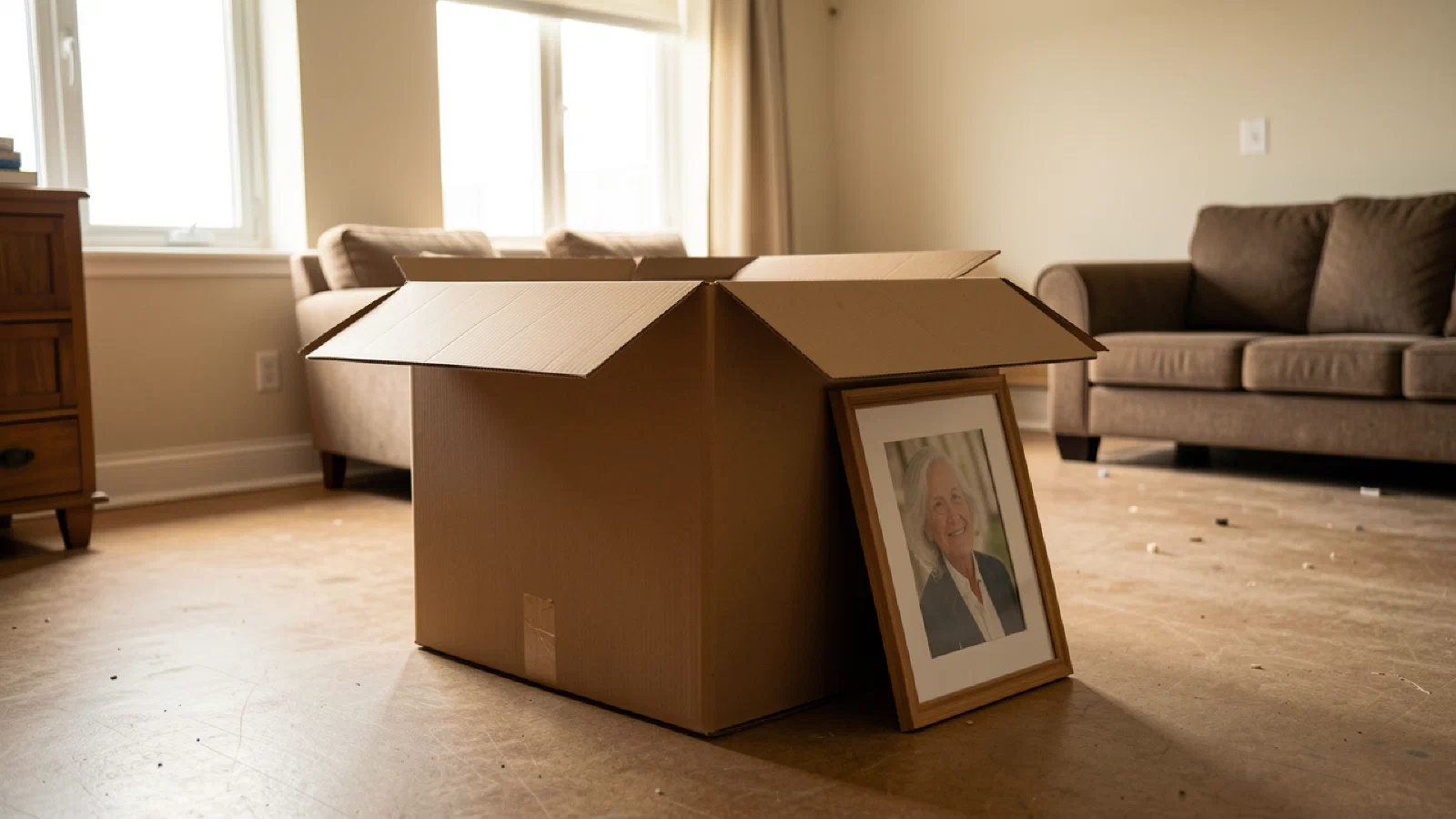
The house is empty now. Martin and Grace walk through it the day before closing, their footsteps echoing off bare walls. Four bedrooms for children who moved out decades ago. A backyard where grandchildren no longer play. The kitchen where forty years of Thanksgiving dinners were prepared, where homework was supervised, where the news of births and deaths arrived by phone.
The property taxes alone consume a month of their Social Security. The roof needs replacing. Martin cannot climb ladders anymore. The stairs to the second floor have become an obstacle course Grace navigates with one hand on the railing.
They know the decision is right. They are crying anyway.
The Financial Case for Downsizing#
The family home is usually the largest asset a retiring couple owns and the least liquid. You cannot spend a house. You cannot eat equity. Converting that equity into accessible funds can transform a tight retirement into a manageable one.
Consider the math. A couple sells their $450,000 home and purchases a $250,000 condo in a lower-cost area. After transaction costs of roughly 8 to 10 percent on the sale, they free approximately $150,000 to $175,000 in liquid assets. Invested conservatively, that sum generates $6,000 to $7,000 per year in additional income, indefinitely.
The ongoing cost reductions compound the benefit. A smaller space means lower utility bills, lower insurance premiums, and less maintenance. A condo or townhouse may eliminate exterior maintenance entirely: no lawn to mow, no roof to replace, no gutters to clean. Property taxes in the new location may be lower, particularly if moving from a high-tax state to a lower-tax one or from an expensive suburb to a more modest community.
Geographic arbitrage amplifies these effects. Selling a home in the San Francisco Bay Area, suburban New Jersey, or coastal New England and relocating to the Carolinas, Arizona, or the Upper Midwest can stretch retirement funds by decades. The same $500,000 that buys a modest condo in one market purchases a comfortable home with money left over in another.
For some people, the house has become the obstacle. It consumes resources needed for healthcare, travel, or simply living. The equity is theoretical wealth that provides no practical benefit while the property taxes, maintenance, and utilities drain real dollars every month.
The Financial Case for Staying#
The calculus is not always one-sided. There are circumstances where staying makes financial sense.
If the mortgage is paid off, the actual housing cost is property taxes, insurance, and maintenance. In many markets, this sum is lower than equivalent rent. Selling the house to become a renter means converting a fixed cost into an escalating one; rents rise, while property taxes on a long-held home often rise more slowly due to assessment caps or senior exemptions.
The current interest rate environment has created what planners call “golden handcuffs.” A homeowner with a 3 percent mortgage from 2020 or 2021 holds an asset that cannot be replicated. Selling that home and purchasing another means financing at current rates, often double or more. The low locked-in rate is effectively a subsidy worth thousands of dollars per year.
A reverse mortgage offers another path. Home Equity Conversion Mortgages, the federally insured version, allow homeowners 62 and older to tap equity without selling. You receive payments from the lender, either as a lump sum, a line of credit, or monthly installments, and the loan is repaid when you die, sell, or move out. The fees are substantial, and heirs receive less, but for someone determined to stay in their home, a reverse mortgage can provide income while preserving residence.
Finally, there is the tax consideration. When you die owning a home, your heirs receive it at the current market value, not your original purchase price. This “step-up in basis” eliminates capital gains taxes on decades of appreciation. Selling before death crystallizes those gains. For a home purchased at $100,000 that is now worth $500,000, the capital gains exclusion ($500,000 for married couples) may cover the difference. For more valuable properties or single owners with a $250,000 exclusion, the tax consequences of selling can be meaningful.
The Emotional Dimension#
The financial spreadsheet captures costs and benefits. It does not capture what the house means.
Home is identity. The place where you raised children, weathered crises, built a life. The walls hold memories that cannot be appraised. The neighborhood holds relationships built over decades: the neighbor who watched the kids, the mailman who knows your name, the route to church or synagogue walked so many times it requires no thought. Selling the house means leaving all of this behind.
Then there is the stuff. Forty years of accumulation must be sorted, donated, discarded, or moved. Every object carries a decision: keep it, give it away, throw it out. The wedding china used twice a decade. The children’s artwork stored in the attic. The furniture that will not fit in the smaller space. This sorting is physically exhausting and emotionally draining. Many people who intellectually accept that downsizing makes sense cannot face the process of actually doing it.
Community loss is real. Doctors who know your history. Friends who live nearby. The grocery store where you know which cashier to avoid. The library, the park, the coffee shop. Moving severs these ties. At 70, rebuilding a social network is harder than it was at 40. The isolation that can follow a move is a health risk, not just an inconvenience.
This is why so many seniors refuse to consider downsizing long past the point where it makes practical sense. The loss feels too great. The house is not just shelter. It is the physical container of a life.
A Framework for Deciding#
Some questions help clarify the decision.
Can you afford to stay? If ongoing costs exceed your budget, if maintenance has become physically impossible, if the house is literally unsafe due to stairs or layout, the question may answer itself. A home you cannot afford or cannot navigate is not serving you, regardless of its emotional significance.
Is the equity needed elsewhere? If retirement savings are insufficient and home equity is the largest asset, converting that equity to income may be necessary. This is not failure. It is using the resources you have.
What would you gain by moving? Proximity to family. A community designed for older adults. Freedom from maintenance. Access to better healthcare. A lower cost of living that reduces financial stress. These benefits are real and should be weighed honestly.
What would you lose? The house itself and everything it represents. The community you know. The doctors who know your history. The garden you planted. The neighbors who would notice if you did not pick up the newspaper.
Can you test the decision? Spending extended time in the potential new location, weeks rather than days, reveals what daily life would actually feel like. Visiting during different seasons matters; a place that seems charming in October may feel isolating in February. Similarly, imagining the house already sold, the money freed, the new life begun: does that vision feel like relief or like grief?
There is no universal right answer. There is only your answer, made with whatever clarity you can gather.
The Logistics#
If you decide to move, the mechanics matter.
Timing affects value. Selling in a strong market captures more equity, but the market may not align with your readiness. Waiting for the perfect moment can mean waiting forever.
Transaction costs take a significant bite. Real estate commissions of 5 to 6 percent, closing costs, moving expenses, potential capital gains taxes: the haircut can approach 10 percent of the sale price. A $400,000 sale may net $360,000 after all costs.
The destination requires thought. A smaller home in the same community preserves relationships while reducing costs and space. A 55-plus community offers built-in social infrastructure but may feel age-segregated. Moving near adult children provides family support but depends on relationships remaining stable. A continuing care retirement community offers a spectrum from independent living through nursing care, but entrance fees are substantial.
Getting help matters. Senior move managers specialize in downsizing transitions. Estate sale companies can handle the disposition of decades of belongings. Adult children can help, though family dynamics sometimes make professional assistance less fraught.
The Day After Closing#
Martin and Grace handed over the keys and drove to their new condo, three states away, near their daughter and her family. The condo has two bedrooms, one floor, and a balcony overlooking a small courtyard. The kitchen is half the size of the old one.
The first month was hard. Grace woke in the night disoriented, reaching for a light switch that was not where it had been for forty years. Martin missed his workshop, now reduced to a single closet. They did not know anyone. The grocery store felt foreign.
The third month was better. They found a church. Grace joined a book club. Their grandchildren visited on weekends. The property taxes were a quarter of what they had been. The roof was someone else’s problem.
The house is not just an asset. It is where you lived. The decision to sell is not just financial. It is a reckoning with time. Some people sell and thrive. Some sell and regret. Some stay too long and suffer. The right answer depends on circumstances that only you can weigh, held with as much grace as you can manage.
How this article connects to others in Blue Gray Matters.
Sources cited in this article.
- Consumer Financial Protection Bureau. "Reverse Mortgages: A Discussion Guide." CFPB, 2024, www.consumerfinance.gov/consumer-tools/reverse-mortgages/.
- Internal Revenue Service. "Publication 523: Selling Your Home." IRS, 2024, www.irs.gov/publications/p523.
- National Association of Realtors. "2023 Home Buyers and Sellers Generational Trends Report." NAR, 2023, www.nar.realtor/research-and-statistics/research-reports/home-buyer-and-seller-generational-trends.
- U.S. Department of Housing and Urban Development. "Home Equity Conversion Mortgages for Seniors." HUD, 2024, www.hud.gov/program_offices/housing/sfh/hecm/hecmhome.