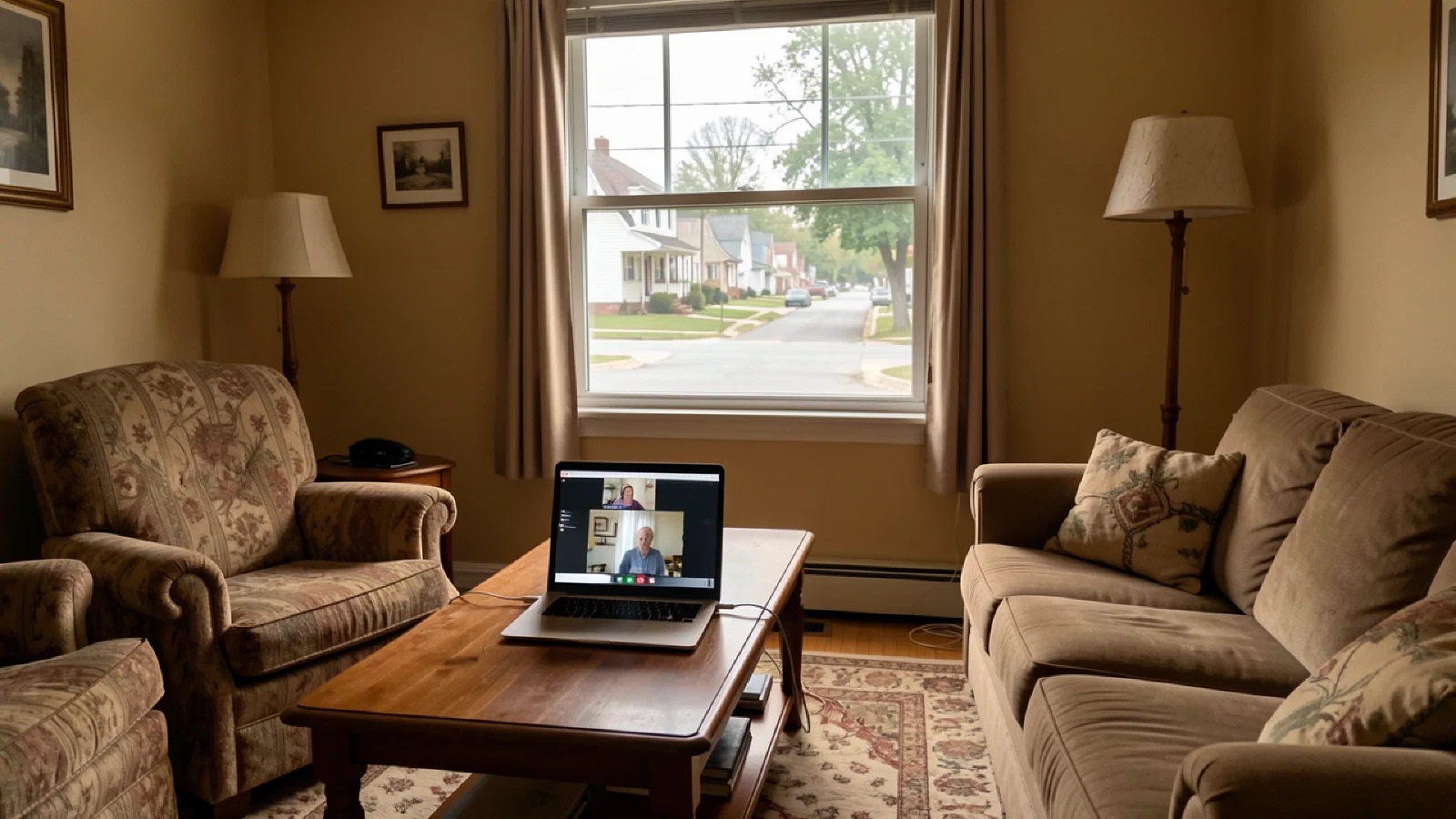
Telehealth Without Borders
Virtual Care and the Future of Cross-Border Healthcare
A woman in rural Kansas receives a cancer diagnosis. Her local oncologist, the only one within ninety miles, recommends aggressive surgery followed by chemotherapy. She is unsure. The decision will shape the rest of her life, however long or short that may be.
Through her hospital’s partnership with an academic medical center, her imaging and pathology results are uploaded to a secure platform. A specialist in Germany, a physician who sees thousands of cases like hers annually, reviews everything: the scans, the biopsy slides, the lab work, the treatment plan. Two weeks later, she receives a detailed second opinion suggesting a different approach, one that her local oncologist had not considered. Her doctor reviews it, adjusts the treatment plan, and proceeds with her consent.
She never leaves Kansas. The expertise came to her.
What Already Exists#
The borders that define medical tourism are becoming less relevant to expertise, even as they remain formidable barriers to care. International second opinions, AI-assisted diagnostics, and expanding telehealth capabilities are creating options that do not require passports or plane tickets.
Second-opinion programs have existed for years at major academic medical centers. Cleveland Clinic, Mayo Clinic, and Mass General Brigham all offer services where patients can submit medical records, imaging, and pathology for expert review without traveling to the facility. The process is straightforward: records are uploaded, specialists review them, and patients receive written or video consultations that provide additional perspective on their diagnoses and treatment options.
These programs work in both directions. American patients can access international specialists remotely, and international patients routinely access American experts without leaving their countries. The infrastructure for remote medical consultation exists. The question is who can access it, at what cost, and for what conditions.
The value is greatest for complex diagnoses where expert review can change outcomes: cancer, rare diseases, uncertain cases where initial recommendations may benefit from additional perspective. A second opinion cannot replace hands-on treatment, but it can confirm, refine, or challenge initial recommendations in ways that shape everything that follows.
The limitations are real. No physical examination occurs. The reviewing physician works only with the records provided and cannot order additional tests. The second opinion does not integrate automatically with local care teams. And for many conditions, particularly those requiring immediate intervention or ongoing management, remote consultation provides limited benefit.
AI Enters the Picture#
Artificial intelligence is reshaping what expertise means and where it can be delivered. AI diagnostic tools for radiology, pathology, dermatology, and ophthalmology have moved from research to clinical application, with dozens of systems now cleared by the FDA for specific uses.
The mechanics vary by application. In radiology, AI systems analyze X-rays, CT scans, and MRIs, flagging potential findings for physician review. In pathology, algorithms examine tissue samples to identify patterns associated with cancer or other conditions. In dermatology, image-analysis tools evaluate skin lesions and provide preliminary assessment. In ophthalmology, systems analyze retinal images to screen for diabetic complications.
The geographic implications are significant. An AI system trained on millions of images can theoretically be deployed anywhere. A rural hospital in Kansas can run the same algorithm as an academic medical center in Boston. The expertise embedded in the software travels at the speed of data transfer.
The limitations deserve equal attention. Regulatory approval varies by country and specific use case. Integration with local care systems remains uneven. AI tools are decision support, not replacements for clinical judgment; they flag possibilities rather than make diagnoses. Direct-to-consumer availability remains limited for good reasons: medical diagnosis requires context that algorithms cannot access independently.
The trajectory is clear, even if the timeline remains uncertain. AI-assisted diagnostics will become more capable, more available, and more integrated into routine care. Whether this narrows or widens healthcare disparities depends on implementation choices that remain contested.
Telehealth Across Borders#
Telehealth within the United States expanded dramatically during the COVID-19 pandemic. Medicare covered telehealth visits that previously required in-person attendance. Geographic restrictions eased. Patients discovered they could see specialists without driving hours to appointment.
Cross-border telehealth is more complex. Physicians are licensed by state in the United States and by country internationally. Practicing medicine across jurisdictions raises questions of licensure, liability, and payment that do not have clear answers. A dermatologist in California cannot easily provide routine care to a patient in Nevada, let alone a patient in Canada or Mexico.
What works, currently: established second-opinion programs with clear legal frameworks that define the consultation relationship; telehealth within integrated systems like Kaiser that operate across multiple states; concierge and self-pay arrangements that sidestep insurance requirements entirely.
What does not work yet: routine cross-border telehealth visits for ongoing care; international prescribing (your Canadian physician cannot write you a prescription that an American pharmacy will fill); integrated virtual care that crosses national boundaries the way data crosses them.
Medicare’s post-pandemic telehealth flexibilities, which removed geographic originating-site requirements and allowed patients to receive telehealth visits from their homes, have been extended but not made permanent. The regulatory future remains uncertain. A Congress or administration that views expanded telehealth favorably could codify these changes. One that does not could allow them to expire.
Equity and the Digital Divide#
The promise of virtual care is geographic democratization: expertise available to anyone with internet access, regardless of location. The reality includes the same equity barriers that shape every other aspect of healthcare access.
Access to telehealth requires broadband connectivity. Rural Americans disproportionately lack reliable high-speed internet. The same geographic isolation that makes virtual care most valuable also makes it least accessible.
Devices matter. Effective telehealth visits require smartphones, tablets, or computers with cameras. Not everyone owns suitable equipment.
Digital literacy determines who can navigate telehealth platforms, upload records, participate in video consultations, and interpret results. These skills correlate with education and age in ways that disadvantage exactly the populations most likely to need affordable care alternatives.
Paid services, including international second opinions and premium telehealth consultations, require money. The same economic barriers that make medical tourism inaccessible to many also limit access to virtual alternatives.
Over time, AI-powered tools could reduce the expertise gap between rich and poor, urban and rural, United States and developing countries. This is hypothesis, not guarantee. Technology amplifies existing distributions as often as it corrects them. Whether virtual care becomes a leveling force or another dimension of healthcare inequality depends on choices about regulation, reimbursement, and public investment that have not been made.
The Five-Year Horizon#
Prediction is hazardous, but reasonable extrapolation suggests several developments.
FDA clearances for AI diagnostic tools will continue to multiply. More conditions, more imaging modalities, more applications will receive regulatory approval. The pipeline is robust; deployment will accelerate.
Integration will improve. AI tools embedded in electronic health records, telehealth platforms, and patient portals will become common rather than exceptional. The friction of accessing these capabilities will decrease.
Global specialist networks, platforms connecting patients to specialists worldwide for specific conditions, will grow from their current early stage. The infrastructure exists; the business models and regulatory frameworks are evolving.
Cross-border telehealth regulations will face pressure to harmonize, both across U.S. states and potentially across countries. Progress will be slow; entrenched interests benefit from current restrictions. But the direction is toward more flexibility rather than less.
What will not happen in five years: revolutionary transformation that makes geography irrelevant to healthcare access. The changes will be incremental. They will help some people more than others. They will not solve the fundamental access problems that drive millions of Americans to seek care across borders.
What Persists#
The border is becoming less relevant to expertise. A specialist in Munich can review your scans. An algorithm trained on millions of images can assess your X-ray. A telehealth platform can connect you to a physician in another state, and eventually perhaps another country. These are real capabilities with real value for real patients.
None of this solves the fundamental access problem. Care costs money. Expertise costs money. The infrastructure that delivers virtual care to your home costs money. Not everyone has it.
What virtual care offers is a widening of options for those who can access them. A rural patient with internet connectivity and digital literacy and the resources to pay for a second opinion can now access expertise that previously required travel to an academic medical center. This is genuine progress. It is not universal progress.
For those who cannot access virtual care because they lack connectivity, devices, literacy, or money, the gap remains. They are left behind by medical tourism because they cannot travel. They are left behind by telehealth because they cannot connect. They are left behind by the American healthcare system because they cannot pay. The technology is different; the outcome is the same.
The Question This Series Asks#
This series began with Americans crossing borders for dental care they could not afford at home. It examined prescription drugs imported from Canada because the same pills cost four times less. It followed patients to surgical suites in Bangkok where joint replacements cost a fraction of American prices. It traced retirees to Ecuador and Portugal where Social Security checks buy dignity instead of poverty.
Each installment documented rational responses to irrational circumstances. Each described people finding alternatives that a functioning system would not require them to find. Each raised the question that underlies everything: Why should Americans have to leave their country to access healthcare they can afford?
Virtual care does not answer that question. It offers workarounds for some, just as medical tourism offers workarounds for others. The workarounds help the people they help. They leave untouched the system that makes workarounds necessary.
The border is becoming less relevant to expertise. It remains fully relevant to policy. Until American healthcare policy addresses the pricing structures, coverage gaps, and access barriers that drive millions of citizens to seek alternatives, those alternatives will persist: across borders, across internet connections, across whatever channels people can find to access care that their own country has priced beyond reach.
Patricia in Ecuador, James in Bangkok, Robert driving to Windsor, Linda in the dental chair in Los Algodones, the woman in Kansas receiving her second opinion from Germany: all of them found solutions that worked for them. None of them should have needed to find solutions at all. That is the story this series tells. The sequel, the one about policy that matches the problem, has not been written yet.
How this article connects to others in Blue Gray Matters.
Sources cited in this article.
- "FAQs on Prescription Drug Importation." KFF, 9 Aug. 2025, www.kff.org/health-costs/faqs-on-prescription-drug-importation/.
- "Medical Tourism Statistics and Facts (2026)." Market.us, media.market.us/medical-tourism-statistics/. Accessed 3 Mar. 2026.
- "Medical Tourism Trends 2025: Top Destinations & Innovations." Delveinsight, 9 Oct. 2025, www.delveinsight.com/blog/medical-tourism-trends-2025.
- Patients Beyond Borders. "Medical Tourism Statistics and Data." Patients Beyond Borders, www.patientsbeyondborders.com/media. Accessed 3 Mar. 2026.
- U.S. Food and Drug Administration. "Artificial Intelligence and Machine Learning (AI/ML)-Enabled Medical Devices." FDA, www.fda.gov/medical-devices/software-medical-device-samd/artificial-intelligence-and-machine-learning-aiml-enabled-medical-devices. Accessed 3 Mar. 2026.