The Right to Risk
Autonomy, Paternalism, and Self-Determination in Old Age
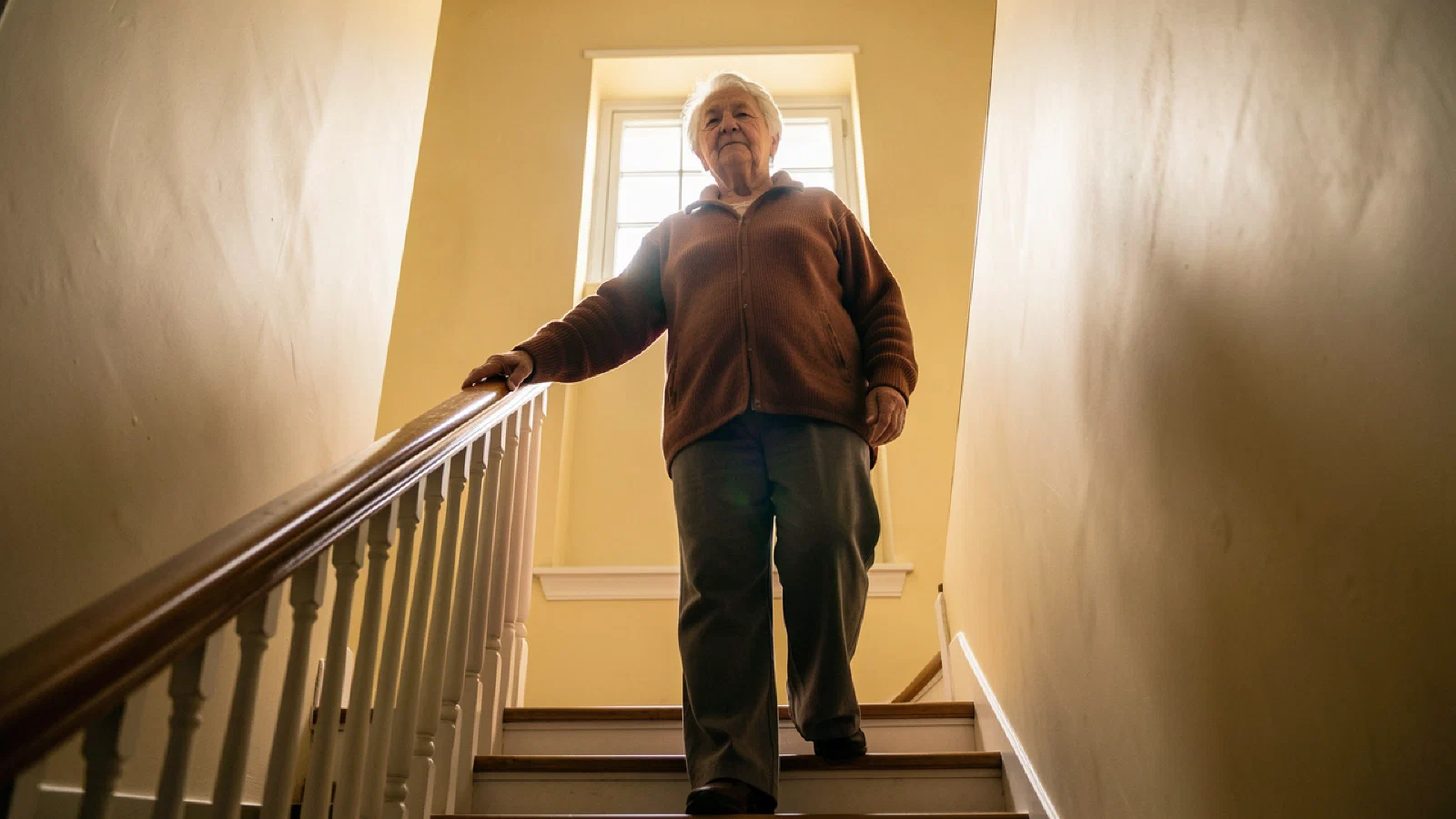
Harold Whitfield is seventy-eight years old, and he wants to live alone in the farmhouse where he raised his children.
He has fallen twice in the past year. Both times he was able to reach a phone. Both times he recovered fully. His daughter, Sarah, lives an hour away and worries constantly. She wants him in assisted living. He refuses. The house is his life: the land he worked, the rooms where his wife died, the view from the porch that he has watched change for fifty years. He does not want to leave.
Sarah petitions for guardianship. She presents the falls, the distance, her father’s stubbornness. A judge she has never met, in a hearing that lasts twenty minutes, grants her control over Harold’s finances, healthcare decisions, and place of residence. Harold is competent. He is furious. He is legally powerless.
He was protected from risk. He was also erased.
The Autonomy Principle#
Autonomy means the right to make one’s own decisions, including bad ones. It means the right to take risks, to choose what a good life looks like, to reject options that others consider obviously better. In philosophical terms, it is the Kantian principle that persons are ends in themselves, not objects to be managed for their own good.
In aging, autonomy carries particular weight because its loss is among the most feared aspects of growing old. To lose the ability to decide where you live, what you eat, how you spend your time, whether to accept medical treatment: this is not merely inconvenient. It is a fundamental assault on identity. The person who cannot make decisions about their own life is, in a meaningful sense, no longer fully a person.
The tension is real. Autonomy assumes capacity. What happens when capacity is uncertain, fluctuating, or limited to certain domains? What about the person with early dementia who insists on driving? The parent who gives money to obvious scammers? The patient who refuses treatment that would clearly extend their life? At what point does protection become necessary, and who gets to decide?
These are not abstract questions. They play out in millions of families, thousands of courtrooms, and countless conversations where love and fear and frustration collide with the older person’s insistence that they know what they want.
When Intervention Is Warranted#
Sometimes it clearly is.
A person with advanced dementia who cannot recognize danger, who wanders into traffic, who would give away their life savings to anyone who asks: this person needs protection. The question is not whether intervention is ever appropriate but how to distinguish cases that require it from cases where intervention is itself the harm.
The gray zones are vast. Cognitive impairment affects different domains differently. A person might be perfectly capable of deciding where they want to live while being unable to manage complex finances. A person might make choices that seem eccentric or unwise without being incapacitated. The line between a bad decision and an incapable one is not always clear, and the people drawing it have their own interests.
Family members who seek guardianship often act from love and genuine concern. They are also sometimes motivated by convenience, financial interest, or the simple desire to stop worrying. They may project their own anxieties onto a parent whose choices they find distressing. They may confuse eccentricity with incapacity, or assume that declining to take their advice indicates declining capacity.
Institutions have interests too. Hospitals want to discharge patients. Nursing homes want compliant residents. Liability concerns shape what facilities will tolerate. The professionals who assess capacity work within systems that have preferences about how older people should behave.
Courts have limited information and limited time. The hearing that determines whether Harold Whitfield keeps control of his life lasted twenty minutes. Judges make profound decisions about autonomy based on brief presentations, clinical reports of variable quality, and the assumption that someone petitioning for guardianship probably has a reason.
The Guardianship System#
Approximately 1.3 million American adults are currently under guardianship or conservatorship, controlling roughly $50 billion in assets. The actual number is uncertain because there is no national registry; the estimate comes from a handful of states that track data reasonably well.
Guardianship is a legal process in which a court appoints someone to make decisions for a person deemed incapacitated. It can be limited to specific domains (finances, healthcare) or plenary, meaning the guardian has total control over all aspects of the person’s life. A person under plenary guardianship cannot decide where to live, what medical treatment to accept, how to spend their money, or whether to marry. They have fewer legal rights than a child.
The problems with the system are well documented. Guardianship is sometimes imposed when less restrictive alternatives would suffice. Due process protections are weak in many jurisdictions; people lose their rights in hearings lasting minutes, often without adequate legal representation or even their own presence. Guardians, including family members, sometimes exploit, neglect, or financially abuse the people they are supposed to protect. And guardianship is extremely difficult to terminate, even when capacity improves or was never truly absent.
The reform movement has gained momentum, partly because of high-profile cases. Britney Spears’s conservatorship battle, though involving a younger person, focused public attention on how guardianship can be used to control people who may not need controlling. Congressional hearings, bipartisan legislation, and state-level reforms have followed. Some states are improving due process, increasing oversight, and recognizing alternatives.
Supported Decision-Making#
The emerging alternative to guardianship preserves autonomy while providing help.
Supported decision-making does not substitute someone else’s judgment for the person’s own. Instead, it creates a network of support that enables the person to make their own decisions. Supporters might include family, friends, and professionals who help the person understand options, think through consequences, and communicate choices. The person retains legal authority. The support makes it possible for them to exercise that authority effectively.
Texas was the first state to recognize supported decision-making in statute, in 2015. Approximately fifteen states now have laws or formal recognition. Research suggests that SDM can preserve autonomy for many people who might otherwise be placed under guardianship, particularly those with intellectual disabilities or early cognitive impairment.
The limitations are real. Supported decision-making requires willing and trustworthy supporters, which not everyone has. It may not work for people with severe impairment who genuinely cannot process information or communicate preferences. It is not available in all jurisdictions. And it requires cultural and institutional change: physicians, banks, and other institutions must be willing to accept decisions made with support, which some are not.
Still, the model represents a fundamental shift. Instead of asking “Is this person capable enough to make decisions?” it asks “What support would enable this person to make decisions?” The first question leads to substitution. The second leads to accommodation.
The Family Dynamic#
When families intervene, they usually act from love. Watching a parent decline is painful. Watching them make choices that seem obviously wrong is harder. Doing something, anything, feels better than watching helplessly.
But love is not always aligned with the older person’s preferences. Adult children have their own anxieties, their own convenience to consider, their own ideas about how their parents should live. The daughter who wants her father in assisted living may be right that it would be safer. She may also be projecting her own fear of his mortality, her own discomfort with his choices, her own desire to stop lying awake worrying.
The power shift is psychologically profound. The person who once made all decisions, who was the authority in the family, who raised the children now seeking authority over them: this person is now the subject of decisions made by others. The inversion can feel like betrayal even when it is genuinely protective.
Communication matters more than most families realize. The earlier families discuss preferences, values, and contingencies, the less likely crisis-driven decisions become. What does the older person want if their capacity declines? Under what circumstances would they accept help? What risks are they willing to take, and which ones concern them? These conversations are difficult, but they are easier than guardianship hearings.
The Dignity of Risk#
The concept comes from the disability rights movement: a meaningful life includes the possibility of failure, harm, and bad choices. Eliminating all risk eliminates agency.
Harold Whitfield might fall again. He might fall and not be able to reach a phone. He might die on the floor of his farmhouse, alone, because he chose to stay there rather than move to a place where someone would check on him. This is a real possibility, and his daughter is not wrong to fear it.
But Harold knows this too. He has weighed the risk against what he values, and he has chosen the farmhouse. He prefers the chance of dying there to the certainty of leaving. This is his calculation to make. The question is whether the system will let him make it.
The dignity of risk asks who decides what level of risk is acceptable. If a seventy-eight-year-old wants to live alone despite fall risk, whose standard applies? The family’s? The doctor’s? The liability insurer’s? The judge’s? Everyone has opinions about what Harold should do. Only Harold has to live with the consequences.
The parallel to disability rights is instructive. For decades, people with disabilities were “protected” into institutions, segregated from community life, denied the chance to make choices that might go wrong. The disability community has fought for the right to take risks, to fail, to live in the world rather than be sheltered from it. The same principle applies to aging: protection that removes agency is not protection. It is imprisonment with good intentions.
At Your Kitchen Table#
If you are older and feel the pressure to be “reasonable,” to accept help you do not want, to move somewhere you do not choose, this piece is for you. Your preferences matter. Your assessment of acceptable risk matters. Your vision of what makes your life worth living matters. You do not have to accept erasure dressed as care.
If you are a family member wrestling with a parent’s choices, this piece is also for you. Your concern is valid. Your fear is real. And the person you are worried about has the right to make choices you would not make. The goal is not to convince them to want what you want. It is to understand what they want, support it where you can, and accept that their life belongs to them even when their choices frighten you.
The conversation is hard. The alternative, the courtroom and the twenty-minute hearing and the judge who does not know your family, is harder. Talk now. Ask what they want. Listen to answers that are not the ones you hoped for. Write things down so the conversation does not have to happen in crisis.
What This Means#
Protection is sometimes necessary. It is also sometimes an excuse. The question is never simply whether someone might be harmed. It is who gets to weigh harm against autonomy, and according to whose values.
Harold Whitfield valued the farmhouse more than he valued safety. His daughter valued his safety more than she valued his preferences. A judge who met neither of them chose for both. The system worked exactly as designed, which is part of the problem.
A life without risk is also a life without choice. For older adults, the fight for self-determination is the fight to remain a person rather than becoming a problem to be managed. Harold lost that fight. Millions of older Americans are fighting it now, in living rooms and courtrooms and care facilities, against families and institutions and systems that know what is best for them.
Sometimes those families and institutions are right. Sometimes the older person genuinely cannot make safe decisions. But sometimes protection is paternalism, and paternalism is erasure, and erasure is a harm that no one counts because the person who suffers it has already been deemed incapable of knowing what they have lost.
Harold Whitfield knows. He sits in an assisted living facility that is clean and safe and staffed by kind people, and he looks out a window that does not show the land he worked for fifty years, and he knows exactly what he has lost. He was protected. He does not feel protected. He feels gone.
How this article connects to others in Blue Gray Matters.
Sources cited in this article.
- American Bar Association Commission on Law and Aging. "Guardianship and Supported Decision-Making." ABA, americanbar.org/groups/law_aging. Accessed 3 Mar. 2026.
- "Addressing Bias in the Guardianship Process." Justice in Aging, 25 Oct. 2024, justiceinaging.org/bias-in-the-guardianship-process/.
- "Guardianship Data Reform." Justice in Aging, 25 Oct. 2024, justiceinaging.org/guardianship-data-reform/.
- "Least Restrictive Alternatives to Guardianship." Justice in Aging, 25 Oct. 2024, justiceinaging.org/alternatives-to-guardianship/.
- National Council on Disability. Beyond Guardianship: Toward Alternatives That Promote Greater Self-Determination. NCD, 2018, ncd.gov/assets/uploads/reports/2018/ncd_beyond_guardianship.pdf.
- Tompkins, Joanne, et al. "Seize the Data: An Analysis of Guardianship Annual Reports." Journal of Aging & Social Policy, 2024. doi.org/10.1080/08959420.2024.2349494.
- "Unrepresented Adults Face Adverse Healthcare Consequences." PMC, 2021, pmc.ncbi.nlm.nih.gov/articles/PMC8286275/.