The Suburban Trap
How the Places Built for Families Fail Aging Bodies
Joan Whitfield moved to Briarwood Estates in 1974. She was 31, pregnant with her second child, and delighted. The house had four bedrooms, a two-car garage, a backyard with a swing set, and a cul-de-sac where the neighborhood kids rode bikes until the streetlights came on. The grocery store was a five-minute drive. The pediatrician was seven minutes. The school was around the corner.
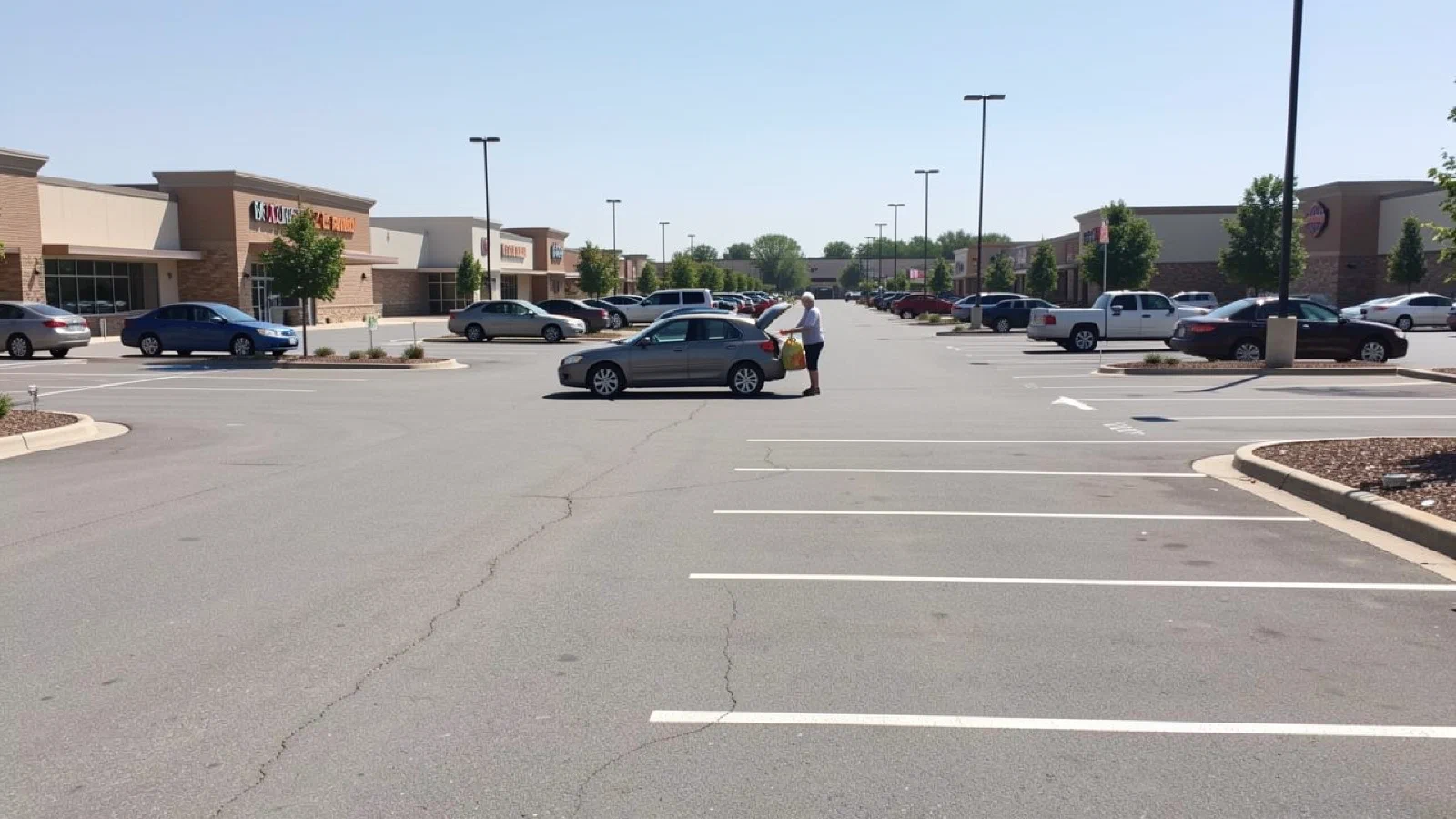
Joan is 82 now. The swing set is gone. The children are in other states. Her husband died in 2019. The house still has four bedrooms, but Joan uses only one. The grocery store is still a five-minute drive, but Joan stopped driving last year after she clipped a mailbox and frightened herself. The pediatrician’s office is now an urgent care clinic she has never visited. The school is still around the corner, but she has no reason to go there.
She stands at her picture window most mornings and watches the street. It is quiet. The young families who replaced the original neighbors leave for work before she wakes and return after dark. No one knocks. The phone rings on Sundays when her daughter calls. Between Sundays, the house is very still.
Joan is not sick. She is not poor. She is not neglected in any way that a social worker would flag. She is trapped by design.
What the Suburb Was Built to Do#
The American suburb was a postwar invention engineered for a specific household: two parents, multiple children, one breadwinner, one car (later two), and a wife whose unpaid labor made the whole arrangement function. The GI Bill, FHA mortgages, the interstate highway system, and exclusionary zoning practices created a landscape of single-family homes on generous lots, separated from commercial and civic life by deliberate distances that assumed everyone would drive.
The design worked for its intended users. Families with children got space, safety, privacy, and property. What the design assumed, without stating it, was that people would move when their circumstances changed. The suburb was a chapter, not a lifetime. Starter home, family home, downsizing. The house was for a stage.
Millions of Americans never left. They raised their children, paid off their mortgages, buried their spouses, and stayed. The suburbs built between 1950 and 1980 now contain some of the oldest populations in America, and the infrastructure around them has not adapted. The houses were not designed for aging bodies. The streets were not designed for people who cannot drive. The distances were not designed for people who cannot cover them.
When the Keys Disappear#
In car-dependent suburbs, the day you stop driving is the day your world contracts to the size of your house and whatever is within walking distance, which in most suburbs is nothing.
Research consistently links driving cessation in older adults to depression, social isolation, and accelerated health decline. A study in the Journal of Aging and Health using data from the National Health and Aging Trends Study found that driving cessation significantly increased social isolation among Medicare beneficiaries 65 and older. A 2024 study in BMC Geriatrics documented that approximately 20 percent of older adults who lose their license experience depression, and researchers have described the psychological impact as comparable to a grief reaction.
The numbers behind this are structural. In suburban communities, roughly 87 percent of all trips are made by car. There is no transit to substitute, because the population density is too low to support fixed-route bus or rail service. Paratransit (door-to-door service for people with disabilities) exists in many areas but requires advance booking, often 24 to 48 hours ahead, and operates within limited hours. It is a medical appointment service, not a life.
Every errand becomes a request. Groceries require asking a neighbor or scheduling a ride. A doctor’s appointment requires planning days in advance. Church, the hair salon, a friend’s house: each trip requires someone else’s time and willingness. For people who spent decades as the ones doing the driving, the dependence is not just inconvenient. It is identity-altering.
The Isolation No One Sees#
Suburban isolation operates differently from rural isolation. In rural America, the distance is visible. You can see how far the nearest town is. In suburbs, the isolation hides behind manicured lawns and closed garage doors. The suffering is invisible because the setting looks comfortable.
When Joan could drive, she went to a coffee shop where she knew the regulars, visited friends across town, attended a book club at the library, and ran her own errands on her own schedule. Each of those activities was an anchor of social connection. Each required a car. When the car disappeared, the anchors pulled loose one by one.
The health consequences follow the pattern that BGM-4A documents in detail. Social isolation activates the body’s inflammatory stress response. Chronic inflammation accelerates cardiovascular disease, metabolic dysfunction, and cognitive decline. Sleep deteriorates. Physical activity drops because there is nowhere to walk to and no one to walk with. Purpose erodes. The feedback loop between isolation and health decline tightens, and in a setting where no one can see it happening, it tightens without intervention.
This is not a problem of personality or resilience. Joan is not isolated because she failed to plan. She is isolated because the built environment she lives in was never designed to support a person without a car, and no one redesigned it when the demographics changed.
Why Fixing It Is So Hard#
The barriers to making suburbs work for aging residents are structural, political, and economic, and they reinforce each other.
Zoning is the foundation. Single-family zoning, which governs the majority of residential land in most American suburbs, prohibits accessory dwelling units (in-law suites, backyard cottages), prevents mixed-use development, and blocks the density that transit requires. The rules were written to preserve a specific character of neighborhood. They now preserve a specific kind of isolation.
Transit is an economics problem. Fixed-route buses and trains need ridership density that suburbs cannot provide. A bus line through a subdivision of half-acre lots will carry too few passengers to justify its cost. The geometry of sprawl defeats the geometry of public transportation.
Walkability requires destinations. Adding sidewalks to a subdivision helps, but only if there is somewhere to walk to. When the nearest grocery store, pharmacy, or coffee shop is two miles away across a six-lane arterial road, a sidewalk does not close the gap.
And then there is politics. Homeowners resist changes to their neighborhoods. Proposals for apartments, mixed-use buildings, or transit stops near single-family areas generate intense opposition. The people who would benefit from these changes (older residents losing mobility, younger residents priced out of housing) are typically outnumbered at zoning hearings by homeowners defending property values and neighborhood character. The result is that the communities most in need of adaptation are the communities most resistant to it.
What Is Changing, and How Fast#
Some of the structural barriers are beginning to shift. California, Oregon, and several other states have passed laws legalizing accessory dwelling units statewide, overriding local zoning restrictions. ADUs allow a homeowner to build a smaller unit on their property for a caregiver, a family member, or a renter, creating options that single-family zoning previously prevented.
The Village movement offers a grassroots alternative. Villages are membership-based, volunteer-driven organizations that provide transportation, social connection, errands, and referrals to community services for older adults who want to remain in their homes. The concept started with Beacon Hill Village in Boston in 2002. Today, more than 260 Villages operate across 43 states, serving approximately 40,000 older adults. They are a proof of concept that neighbor-to-neighbor mutual aid can partially fill the gap that infrastructure leaves open.
Some suburban communities are also retrofitting. Dead malls are being converted to mixed-use developments with housing, retail, and medical offices. Suburban downtowns are being densified with apartments above shops. A handful of transit-oriented developments are creating walkable nodes in otherwise car-dependent landscapes.
The pace matters. These changes are real, but they are happening at the speed of zoning fights, legislative cycles, and construction timelines. For Joan and the millions of suburban seniors in her situation today, the fixes will arrive too late. The ADU laws, the village networks, the suburban retrofits will serve the next generation of aging suburbanites better than they serve this one. That is worth saying plainly.
Living in the Meantime#
For people aging in suburbs now, the honest counsel is both practical and limited.
Assess the situation before crisis forces it. If you are 70 and still driving, the question is not whether you will stop but when. Identifying transportation alternatives, building relationships with neighbors, and exploring village networks or volunteer driver programs while you still have mobility is substantially easier than doing it after the keys are gone.
Consider moving before you have to. This is emotionally difficult counsel, and it is not universally right. But for some people, relocating to a walkable neighborhood, a continuing care community, or closer to family while the move is a choice rather than an emergency produces better outcomes than waiting until a fall or a health crisis forces a move under duress.
Talk to your family. The conversation about what happens when driving stops, when the house becomes too much, when the isolation starts to affect health, is easier to have at 72 than at 82. It is a conversation that many families avoid because it feels premature, and then have under crisis conditions because they waited too long.
And for communities: advocate for the changes that will help the next generation even if they cannot help this one. Zoning reform, ADU policies, village networks, transportation programs, walkable design. These are not abstract planning concepts. They are the difference between aging in a community and aging in a cage.
The Design Is the Problem#
The suburb is not inherently cruel. It was built with assumptions about who would live there and how long they would stay. Those assumptions held for a generation. They do not hold now.
Joan Whitfield did not make a mistake when she moved to Briarwood Estates in 1974. She made a reasonable choice for the life she was living. The mistake was made by a system that built millions of places like Briarwood and then changed nothing when the people inside them grew old. The house is the same. The street is the same. Joan is different, and nothing around her has adjusted to account for the difference.
The people trapped by suburban design are not failures of planning. They are evidence of a planning failure. The distinction matters, because it determines whether we respond with sympathy for individuals or with structural change for communities.
How this article connects to others in Blue Gray Matters.
Sources cited in this article.
- Qin, Weidi, et al. "Driving Cessation and Social Isolation in Older Adults." Journal of Aging and Health, vol. 32, no. 9, 2020, pp. 962-971, doi:10.1177/0898264319870400.
- Savoie, Camille, et al. "Transition from Driving to Driving-Cessation: Experience of Older Persons and Caregivers." BMC Geriatrics, vol. 24, no. 219, 2024, doi:10.1186/s12877-024-04835-3.
- Fenton, Melissa P., et al. "Associations between Driving Cessation and Mental Health among Rural and Urban Older Adults." Rural Mental Health, vol. 49, no. 1, 2025, pp. 65-76, doi:10.1037/rmh0000266.
- Village to Village Network. "VtVN One-Pager." Feb. 2025, www.vtvnetwork.org.
- Graham, Carrie, and Shannon Guzman. "The Village Model: Current Trends, Challenges, and Opportunities." AARP Public Policy Institute, Oct. 2022, doi:10.26419/ppi.00169.001.
- AARP. "Livability Index." AARP, 2024, livabilityindex.aarp.org.
- Strong Towns. "The Suburban Experiment." Strong Towns, www.strongtowns.org.