Aging Between Two Countries
Immigrants and the Geography of Belonging
Maria Santos left the Philippines forty-five years ago. She was thirty-two, a nurse, and she came to California because the hospitals were recruiting and the money would go further back home. She planned to stay five years, maybe ten. Save enough to build a house in Cebu. Return before her parents grew old.
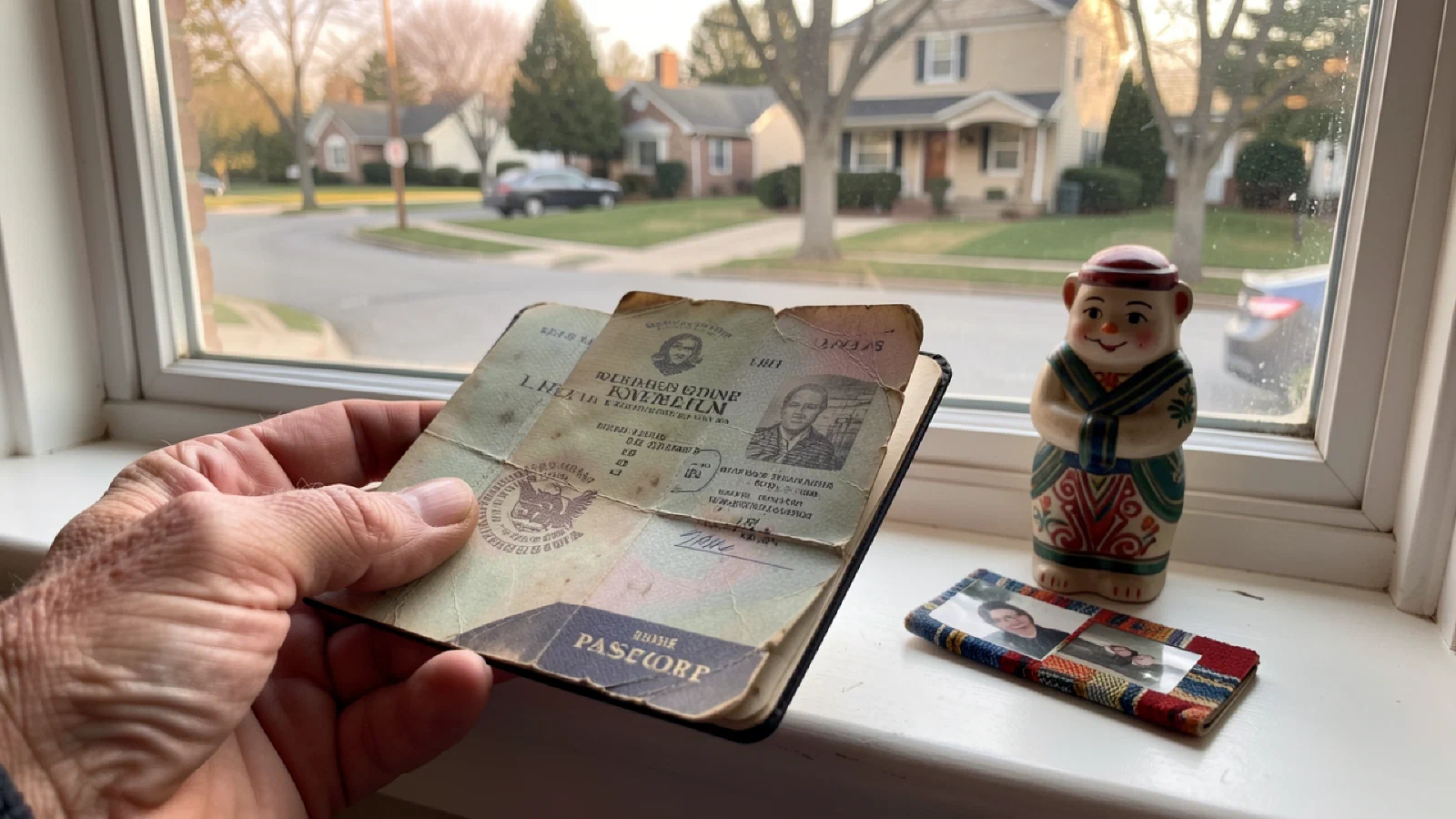
Her parents died while she was working double shifts in Los Angeles. She could not afford to leave. Her children were born here, grew up here, speak English as their first language. Her husband is buried in a cemetery in Pasadena. Now she is 77, and her siblings are aging without her in a country she has not lived in for nearly half a century. She thinks about going back. Her children beg her not to. She cannot afford both a round-trip flight and her rent. She belongs to two places and fits fully into neither.
This is what it means to age between two countries: to carry two sets of memories, two sets of losses, two incomplete homes.
The transnational life is common among immigrants who built lives in America while maintaining ties to their countries of origin. They sent remittances for decades, supporting siblings, parents, nieces and nephews with money earned in dollars and stretched into pesos, rupees, yuan. They attended funerals via video call. They watched their home countries change through the filter of news and photographs. They always meant to go back someday. Someday became later. Later became complicated.
Many immigrants planned return migration as a kind of retirement. Save enough, build a house back home, live out their final years where the cost of living is lower, where family remains, where death can occur in familiar soil. For some, this happens. For many others, the plan dissolves under the weight of circumstance.
Economic barriers are substantial. Social Security can be sent abroad to most countries, but it may not stretch as far as imagined. Healthcare is not covered. Medicare does not travel. An immigrant who retires to their country of origin must rely on local healthcare systems that may not meet the needs of someone with chronic conditions managed for decades with American medicine. The savings that seemed adequate may not survive a serious illness.
Family barriers complicate everything. American-born children and grandchildren are here. To return is to leave them. For Maria Santos, the idea of dying six thousand miles from her grandchildren is unbearable. But so is the idea of dying having never returned, of being buried in a country that never quite became home.
Legal status introduces another layer. Some long-term residents never naturalized. They hold green cards that allow them to live and work in the United States but not necessarily to leave and return freely without complication. Extended travel abroad can jeopardize permanent resident status. Immigration law is full of traps for people who do not know the rules, and the rules keep changing.
For those who arrived later in life, the adjustment is different but no less disorienting. Adult U.S. citizens can sponsor their parents for green cards, bringing elderly relatives to join them. These parents arrive in old age to a country they do not know. They do not speak the language. They cannot drive. The grocery stores are incomprehensible. They are dependent on their children for everything: transportation, translation, navigation of a world that makes no sense.
Under current law, legal permanent residents cannot access most federal benefits for five years after receiving their green card. This “five-year bar” means that sponsored parents often live in a kind of limbo: legally present but ineligible for Medicaid, food assistance, or most safety net programs. They depend entirely on the children who sponsored them. The affidavit of support those children signed is a legal commitment, and if the sponsored parent accesses means-tested benefits, the sponsor can be held liable.
The psychological dimension of late-life immigration is rarely discussed. Parents who were authorities become dependents. People who ran households are now unable to call for a plumber or read a prescription label. The loss of status is significant. Many elderly immigrants become depressed, isolated, trapped in apartments they cannot navigate because the world outside is incomprehensible.
Even for immigrants who arrived young and spent their working lives here, old age can bring a strange return of earlier identity. Dementia often strips away the most recently acquired language first. An immigrant who spoke English for fifty years may lose it as the disease progresses, returning to the mother tongue that no one around them shares. The grandson sits with his grandmother, and she speaks in a language he never learned. The caregiver arrives, and the patient cannot explain what hurts.
There is a word in Tagalog: “pagkahiwalay,” which means separation or detachment. It captures something of what Maria Santos feels, though she would not use the clinical language. She is separated from her country of birth by time and circumstance. She is separated from her country of residence by culture and memory. She belongs to both places in the way you belong to a place that shaped you. She belongs to neither in the way you belong to a place that claims you as its own.
What would help? Immigration reform that creates pathways for long-term undocumented residents would allow elders who have spent decades contributing to leave the shadows. Reducing or eliminating the five-year bar would acknowledge that elderly legal permanent residents need support and should not be made to wait. For those who wish to return to their countries of origin, some mechanism for healthcare portability would make retirement migration feasible for people who are not wealthy.
Culturally appropriate services matter too. Aging services in native languages, with staff who understand the cultures from which elderly immigrants come, can reduce the isolation that makes old age feel like exile. Ethnic community organizations, immigrant senior centers, and religious institutions that serve immigrant populations provide connection that mainstream services often cannot.
But there is also something that cannot be solved by policy. The grief of displacement does not heal simply because circumstances improve. The parents Maria Santos could not be with when they died are still dead. The decades she spent away from her siblings cannot be returned. The grandchildren in Manila she has never held will grow up without knowing her. This is the cost of migration, paid across a lifetime, compounding as the end approaches.
Maria Santos will probably stay in California. Her children are here. Her doctors are here. Her husband is buried here. She will call her sister in Cebu on Sundays and send money when she can. She will cook the dishes her mother taught her and try to teach them to grandchildren who prefer hamburgers. She will dream sometimes in Cebuano and wake up in English. This is her life: lived between, belonging nowhere fully, carrying two countries in her body until the body gives out.
To age between two countries is to carry a particular kind of homelessness that does not appear in any census. The immigrants who built this country spend their final years belonging to neither there nor here. They deserve not pity but recognition. Their displacement is part of the American story. So should their care be.
How this article connects to others in Blue Gray Matters.
Sources cited in this article.
- Treas, Judith, and Shampa Mazumdar. "Older People in America's Immigrant Families: Dilemmas of Dependence, Integration, and Isolation." Journal of Aging Studies, vol. 16, no. 3, Aug. 2002, pp. 243-258.
- Wilmoth, Janet M., and Jenjira J. Yahirun. "Older Immigrants and the Demography of Aging." Annual Review of Sociology, vol. 50, July 2024, pp. 451-470.
- Markides, Kyriakos S., and Sunshine Rote. "The Healthy Immigrant Effect and Aging in the United States and Other Western Countries." The Gerontologist, vol. 59, no. 2, Mar. 2019, pp. 205-214.
- Mukherjee, Sutapa, et al. "Mental Health Among Older Immigrants in the United States: A Scoping Review." Frontiers in Public Health, vol. 11, 2023, 1145833.
- Social Security Administration. "Your Payments While You Are Outside the United States." SSA Publication No. 05-10137, 2024.
- Mendoza, Fernando S. "Health Disparities and Children in Immigrant Families: A Research Agenda." Pediatrics, vol. 124, suppl. 3, Nov. 2009, S187-S195.
- Mehta, Kala M., et al. "Race/Ethnic Differences in AD Survival in US Alzheimer's Disease Centers." Neurology, vol. 70, no. 14, 1 Apr. 2008, pp. 1163-1170.
- Mehrotra, Chandra M., and Lisa S. Wagner. Aging and Diversity: An Active Learning Experience. 3rd ed., Routledge, 2018.
- U.S. Citizenship and Immigration Services. "Affidavit of Support Under Section 213A of the INA." USCIS, 2024.