Re-Closeted
LGBTQ+ Seniors and the Fear of Being Seen
David Chen keeps photographs of his late husband throughout his Chicago apartment. Robert died four years ago after forty-two years together: first in secret, then in cautious openness, then in legal marriage when they were both already in their seventies. The photographs document a lifetime. The two of them at Fire Island in 1978. At ACT UP demonstrations in the eighties. At their wedding in 2015, silver-haired and weeping.
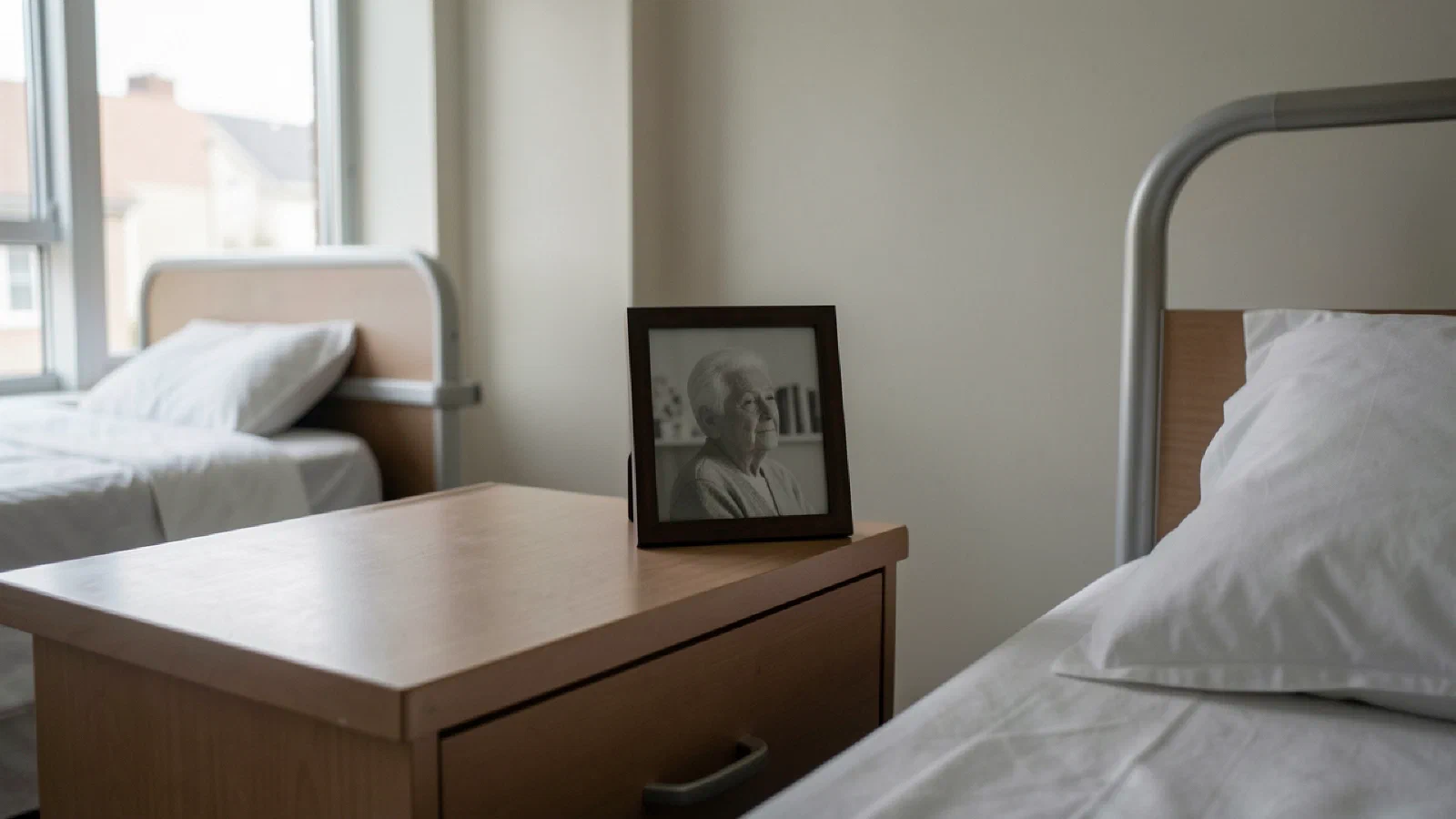
Now a home health aide comes three times a week to help David with bathing and meals. She is kind. She is efficient. David does not know what she believes about men who loved men. He does not know if her church teaches that he is damned. Before her first visit, he considered taking the photographs down. He decided against it. He came out forty years ago. He buried friends. He fought for the right to exist. He will not hide Robert now.
But he thought about it. That is the thing. He thought about hiding in his own home, at 76 years old, from a woman who is paid to help him.
Approximately 2.7 million Americans over 65 identify as LGBTQ+. The actual number is likely higher, because many in this generation never disclosed their identities to researchers, doctors, or sometimes even themselves. This is the generation that came of age when homosexuality was classified as a mental illness. When sodomy was criminalized in most states. When people lost jobs, housing, children, and lives for being discovered.
They survived. They fought. They buried a generation during the AIDS crisis and kept fighting. They won legal protections their younger selves could not have imagined. And now they are growing old in a country that has not decided whether it actually accepts them.
The fears that LGBTQ+ seniors carry are not abstract. Documented cases of discrimination in healthcare settings, assisted living facilities, and nursing homes are not rare. They include verbal abuse from staff and other residents. Refusal to acknowledge relationships. Deliberate misgendering of transgender patients. Physical mistreatment. Isolation. In surveys, LGBTQ+ seniors consistently report fear of discrimination when they think about needing care.
Many respond by going back into the closet. The term “re-closeting” describes what happens when people who lived openly for decades begin hiding their identities again as they enter care settings. They remove photographs. They refer to partners as “roommates” or “friends.” They do not correct assumptions. They become invisible again, after spending their lives fighting to be seen.
The psychological toll is significant. Hiding is stressful. It requires constant vigilance, constant performance, constant calculation about what is safe to reveal. Research shows that concealment is associated with depression, anxiety, and worse health outcomes. For people who came out at great personal cost, returning to concealment is a particular kind of grief.
Legal protections vary wildly by geography. Marriage equality became federal law in 2015, but protections against discrimination in healthcare, housing, and public accommodations depend on state and local law. Approximately twenty-three states have explicit LGBTQ+ nondiscrimination protections. The rest do not. A gay couple aging in California has different legal protections than one aging in Tennessee.
For transgender elders, the vulnerabilities are compounded. Identity documents may not match presentation, creating friction in every interaction with medical systems. Healthcare providers may be unfamiliar with hormone therapy or transition-related care. Housing discrimination is well documented. Poverty rates among transgender people are elevated, leaving less buffer against crisis. The fear of nursing home placement is particularly acute: stories of forced placement with one’s birth-assigned gender, of deadnaming and misgendering by staff, of abuse and neglect circulate through transgender communities. These are not hypotheticals. They are testimony.
One of the distinctive challenges for LGBTQ+ seniors is the structure of their support networks. They are more likely to live alone than their heterosexual peers. They are less likely to have children. They may be estranged from biological families that rejected them decades ago. The people who would care for them in crisis are often “chosen family”: friends, former partners, community members who became kin through shared struggle.
Chosen family is powerful. It represents the capacity to build love and support outside conventional structures. But legally, chosen family may have no standing. Without proper documentation (healthcare proxy, durable power of attorney, designated beneficiaries), biological relatives who were absent for decades can override the people who were present. In medical crises, estranged siblings can make decisions that contradict the wishes of the partner who shared thirty years of life. This is not theoretical. It happens.
Organizations like SAGE (Services and Advocacy for GLBT Elders) provide programming, housing, and support specifically for LGBTQ+ seniors. LGBTQ+-affirming care facilities exist, some certified through programs designed to ensure cultural competency. These resources are disproportionately available in urban areas with large LGBTQ+ populations. Rural LGBTQ+ elders may have no community at all.
The isolation compounds. A gay man who lived his entire adult life in San Francisco, surrounded by community, may find himself in a nursing home in a suburb where no one shares his history. A lesbian who was part of a vibrant women’s community now lives alone, her friends dead or dispersed, invisible among neighbors who assume she was always single. The networks that sustained people through their fighting years do not always survive into their frail years.
What would help is not complicated. National nondiscrimination protections in healthcare and long-term care would provide a floor of legal safety regardless of state. Cultural competency training for healthcare workers and long-term care staff, required rather than optional, would improve the care environment. Explicit recognition of chosen family in healthcare decision-making would honor the relationships that actually exist. Sustained funding for LGBTQ+ senior services, especially in underserved areas, would extend resources beyond coastal cities.
And something less tangible: acknowledgment that LGBTQ+ seniors earned the right to be themselves, that they should not have to earn it again in their final years, that the closet they fought so hard to escape should not be waiting for them at the end.
David Chen has made his choice. The photographs stay. If the aide has a problem with two old men holding hands in a picture frame, that is her problem. He is too tired and too old and too much himself to pretend otherwise.
But he knows others who made different choices. Friends who never came out to their doctors. A neighbor who removed every trace of her partner before the home health agency sent someone over. People who survived decades of hostility and now, at the end, are hiding again.
LGBTQ+ seniors spent their lives fighting to be seen. Now many fear that being seen will endanger them. The prospect of aging in a closet they worked so hard to escape is a particular cruelty. What they need is what everyone needs: care that recognizes who they are, delivered by people who respect the lives they lived. That should not be too much to ask.
How this article connects to others in Blue Gray Matters.
Sources cited in this article.
- Choi, Soon Kyu, and Ilan H. Meyer. "LGBT Aging: A Review of Research Findings, Needs, and Policy Implications." Williams Institute, UCLA School of Law, Aug. 2016.
- Fredriksen-Goldsen, Karen I., et al. "The Aging and Health Report: Disparities and Resilience Among Lesbian, Gay, Bisexual, and Transgender Older Adults." Institute for Multigenerational Health, University of Washington, 2011.
- Fredriksen-Goldsen, Karen I., et al. "Physical and Mental Health of Transgender Older Adults: An At-Risk and Underserved Population." The Gerontologist, vol. 54, no. 3, June 2014, pp. 488-500.
- Movement Advancement Project and SAGE. "Understanding Issues Facing LGBT Older Adults." MAP, May 2017.
- Frost, David M., and Ilan H. Meyer. "Minority Stress Theory: Application, Critique, and Continued Relevance." Current Opinion in Psychology, vol. 51, June 2023, 101579.
- Stein, Gary L., et al. "Experiences of Lesbian, Gay, Bisexual, and Transgender Patients and Families in Hospice and Palliative Care: Perspectives of the Palliative Care Team." Journal of Palliative Medicine, vol. 23, no. 6, June 2020, pp. 817-824.
- Movement Advancement Project. "Equality Maps: State Nondiscrimination Laws." MAP, 2024.
- Caceres, Billy A., et al. "Past-Year Discrimination and Cigarette Smoking Among Sexual Minority Women." American Journal of Public Health, vol. 109, no. S3, Apr. 2019, S205-S211.