The Black Church as Safety Net
When Formal Systems Fail
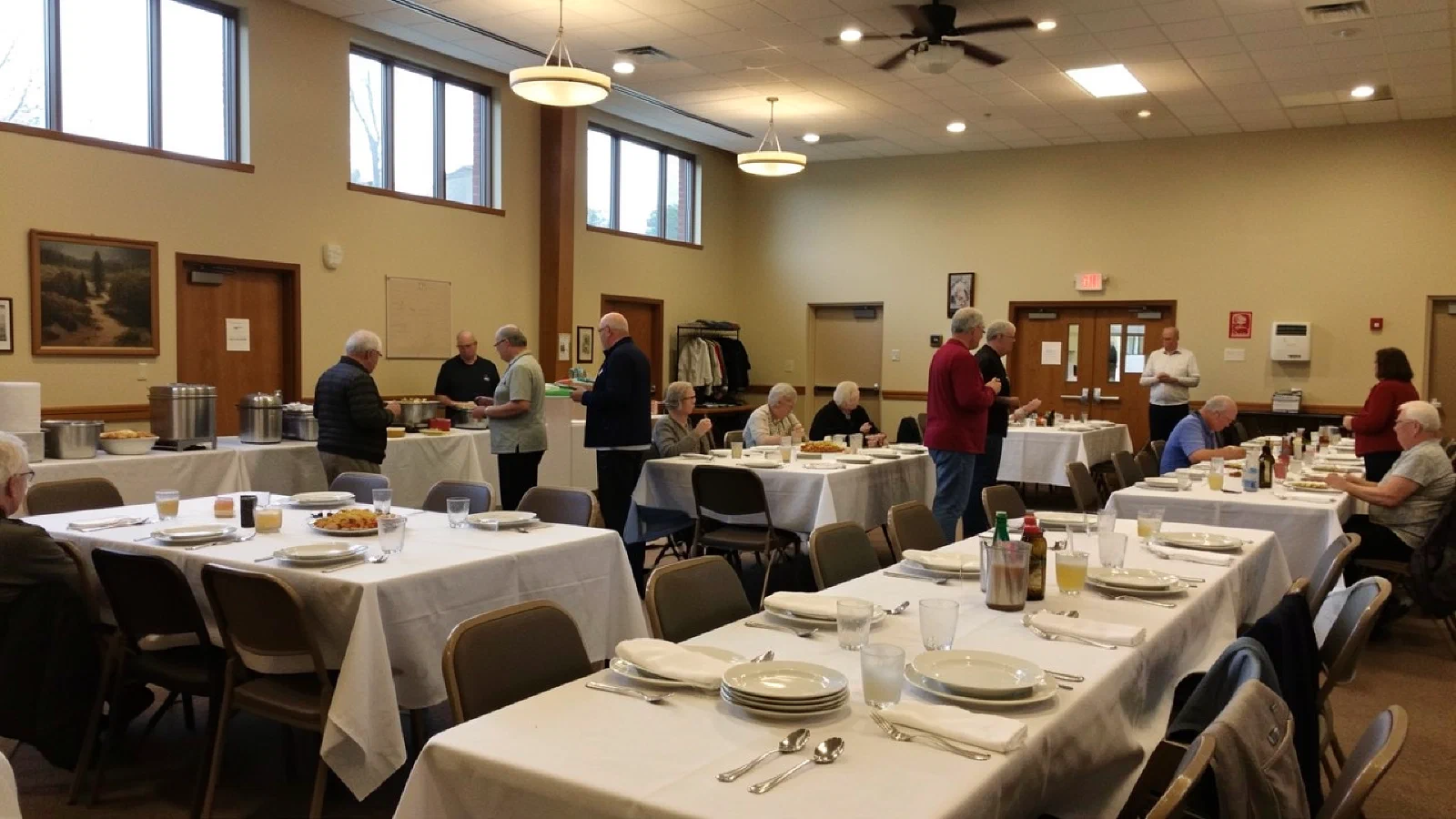
Every Sunday after the eleven o’clock service at Mount Zion Baptist Church in Baltimore, Sister Eunice Patterson sets up her table in the fellowship hall. She is 74 years old and has been a registered nurse for fifty years. Beside her are a blood pressure cuff, a clipboard, and a plastic tub of pamphlets about diabetes management. The line starts forming before she finishes arranging her supplies.
The congregants who come to her table are not here because they cannot afford medical care. Most have Medicare. Some have private insurance. They come because Sister Patterson knows them. She remembers that Mr. Williams’s pressure spikes when his son is in trouble. She knows that Mrs. Crawford tends to stop taking her medication when money is tight, even though she will not admit it to her doctor. She speaks plainly, listens carefully, and follows up with a phone call on Wednesday if something seemed off. This is not what most people think of as healthcare. But for the elders of Mount Zion, it often works better than what happens in the clinic.
The Black church has been providing what American institutions would not since before there was a formal healthcare system to speak of. During slavery, the church was the only space where Black people could gather without white supervision. During Jim Crow, it was the center of civic life in communities locked out of white institutions. The church was where people organized, grieved, celebrated, and survived. It was never just about religion.
For elders in Black communities, the church remains a safety net that no government program has replicated. Health ministries like Sister Patterson’s exist in thousands of congregations. Some churches run formal senior meal programs; others coordinate informal meal trains when a member is homebound. Transportation ministries give rides to appointments, to grocery stores, to the church itself. Deacons visit the sick and the shut-in. Pastors provide counseling that would cost hundreds of dollars an hour elsewhere. Benevolence funds help with rent, utilities, and medical bills when emergencies hit.
None of this appears in any formal service delivery system. There is no billing code for Sister Patterson’s blood pressure checks. The meals delivered by the women’s auxiliary do not generate Medicaid reimbursement. The hours spent visiting homebound elders are not counted in any federal report on long-term care. But the care is real, and for many Black seniors, it is the care that matters most.
The church provides something else that formal systems rarely deliver: community. In most American spaces, age brings invisibility. Elders are sidelined, ignored, or warehoused. In the Black church tradition, elders hold positions of honor. They are mothers and deacons, trustees and choir directors. Their presence is expected, their wisdom valued, their absence noticed. For people who spend much of their week being overlooked, the church is where they are seen.
This matters for health in ways that medicine is only beginning to understand. Social connection reduces mortality risk. Belonging protects against depression. Having a role, a purpose, and people who would notice if you disappeared: these are not soft benefits. They are survival.
But there are limits to what any volunteer institution can carry. The nurses’ guild can screen blood pressure, but it cannot perform cardiac catheterization. The deacons can visit, but they cannot provide skilled nursing care. The benevolence fund can cover one emergency, but not the sustained costs of chronic illness. Churches rely on volunteers who are often themselves elderly. The capacity is finite. The sustainability is questionable.
And not every church has the resources that Mount Zion has. Wealthier congregations in stable neighborhoods can support robust ministries. Struggling churches in declining communities, the ones where need is greatest, often cannot sustain even basic programs. The assumption that Black communities will care for their own rests on uneven ground.
There is also the question of who falls outside the church’s circle. The unaffiliated. The estranged. The people who left organized religion or never joined. The church serves its congregation and often extends to the surrounding community, but it cannot serve everyone. Those outside its reach may have nowhere to turn.
The deeper problem is what the church’s role reveals about the systems that are supposed to exist. When a congregation runs a food pantry, it means the food assistance system has failed. When church volunteers transport elders to medical appointments, it means the transit system does not work for people who cannot drive. When pastoral counseling addresses depression and grief, it means mental health services are out of reach. The church fills gaps that should not exist.
This is not strength; it is compensation. It is communities doing what communities do when government and markets refuse. Celebrating the resilience of Black churches without acknowledging the failures that make that resilience necessary is a kind of complicity. It allows policymakers to assume that someone else is handling the problem.
History bears this out. During the crack epidemic, churches buried the dead while politicians talked about personal responsibility. During the HIV crisis, Black churches (eventually, imperfectly, but meaningfully) provided care that public health systems were too slow to offer. During the pandemic, churches became vaccination sites and food distribution centers. Each crisis confirmed the same pattern: when formal systems fail Black communities, the church steps in.
But the church was never designed to be the primary safety net. It was designed to be a place of worship, community, and spiritual sustenance. Asking it to also be a substitute for healthcare, transportation, housing assistance, and mental health services is asking too much. The volunteers tire. The budgets strain. The needs grow faster than the capacity to meet them.
What would it look like if the church could be one support among many instead of the support of last resort? It would mean Medicare actually delivering on its promises: access to providers who take the insurance, appointments available when needed, care that respects the patient. It would mean transportation systems that work for people who do not drive. It would mean mental health services that are affordable, accessible, and culturally competent. It would mean a social safety net that does not require a congregation to hold the weight.
Sister Patterson will be at her table next Sunday, as she has been for twenty years. The line will form. The blood pressure will be checked. The conversations will happen. This is what community looks like. It is also what abandonment looks like: people with nowhere else to go, doing for each other what their country will not do for them.
The Black church is not a substitute for functional public policy. It is a community doing what communities have always done when systems fail. The strength is real. The devotion is real. The care is real. And so is the injustice of requiring it. Until we address the failures that make churches necessary as safety nets, we are not honoring their work. We are exploiting it.
How this article connects to others in Blue Gray Matters.
Sources cited in this article.
- Lincoln, Karen D., et al. "The Black Church and Aging in the United States: Examining the Functions of Religious Participation." Research on Aging, vol. 36, no. 4, July 2014, pp. 464-486.
- Chatters, Linda M., et al. "Religion and Health: Public Health Research and Practice." Annual Review of Public Health, vol. 35, 2014, pp. 159-175.
- Holt-Lunstad, Julianne, et al. "Social Relationships and Mortality Risk: A Meta-Analytic Review." PLoS Medicine, vol. 7, no. 7, 27 July 2010, e1000316.
- Lincoln, C. Eric, and Lawrence H. Mamiya. The Black Church in the African American Experience. Duke University Press, 1990.
- Pew Research Center. "Faith Among Black Americans." Pew Research Center, 16 Feb. 2021.
- Campbell, Marci Kramish, et al. "Church-Based Health Promotion Interventions: Evidence and Lessons Learned." Annual Review of Public Health, vol. 28, 2007, pp. 213-234.
- Taylor, Robert Joseph, et al. Religion in the Lives of African Americans: Social, Psychological, and Health Perspectives. SAGE Publications, 2004.
- DeHaven, Mark J., et al. "Health Programs in Faith-Based Organizations: Are They Effective?" American Journal of Public Health, vol. 94, no. 6, June 2004, pp. 1030-1036.