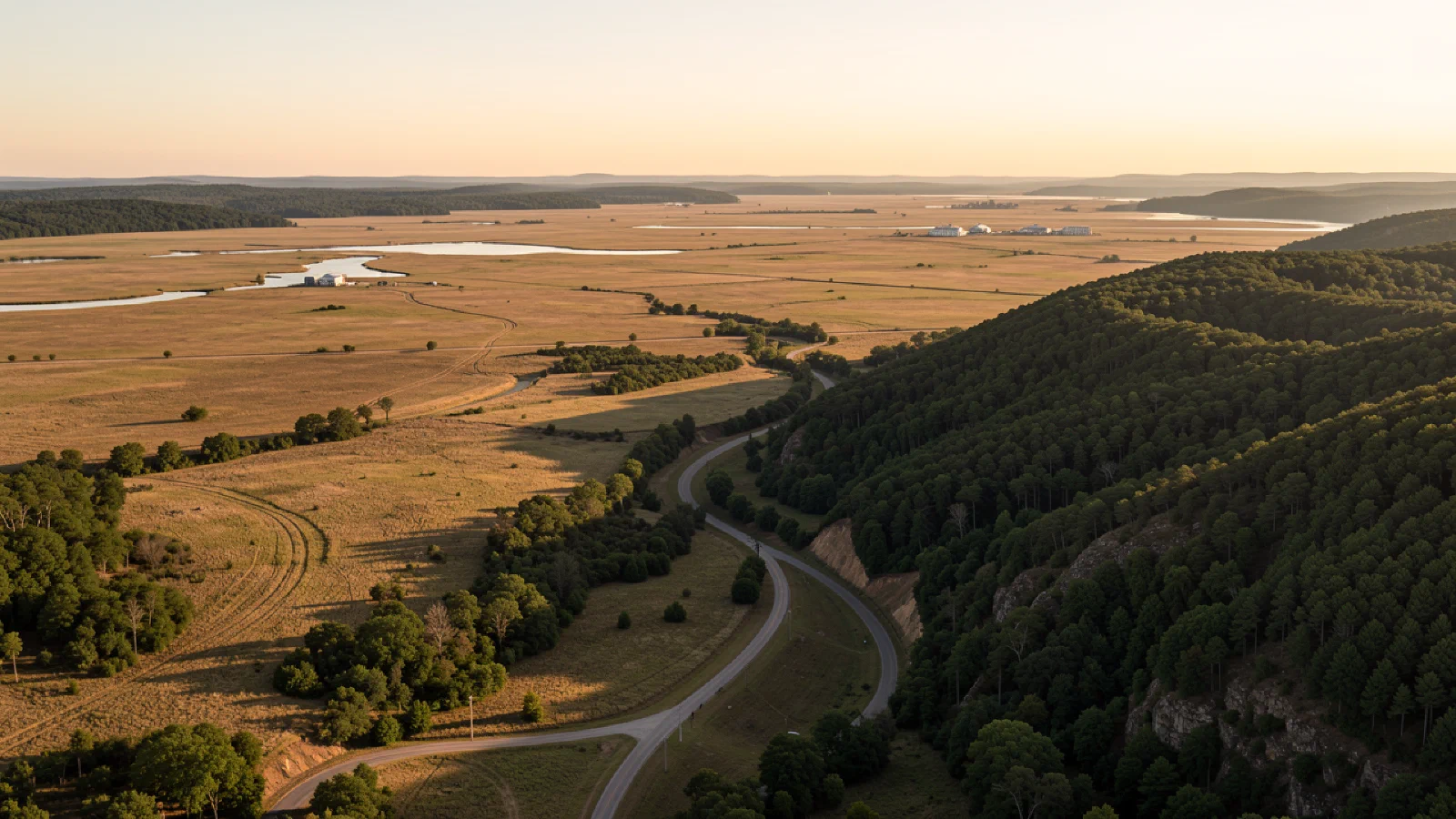
The Delta, the Reservation, the Holler
Aging in the Places America Forgot
Three elders in three places the country forgot.
In Sunflower County, Mississippi, Dorothy Mae Jackson is 73 years old and has not seen a doctor in fourteen months. Her diabetes requires monitoring she cannot get. The nearest hospital closed two years ago. The clinic that replaced it is open three days a week, overwhelmed, and forty minutes away. She does not drive. Her daughter works in a catfish processing plant two counties over and cannot take time off. Dorothy Mae checks her blood sugar with strips she buys at the Dollar General and adjusts her insulin by feel. She has done this before. She knows the signs when her numbers are off. She does not know what she will do when the signs are not enough.
In McDowell County, West Virginia, Earl Combs is 68 years old and breathes with the help of an oxygen concentrator that runs twenty hours a day. The black lung came from thirty-two years underground. The coal company is gone now, bankrupt, its obligations to miners dissolved in court. The hospital in Welch closed. The nearest one is an hour away over mountain roads that ice over in winter. Earl’s wife drives him to appointments when the weather permits. When it does not, they wait. He sits on the porch and watches the hollow, thinking about the men he worked with, most of them dead now, most of them from the same thing.
In Starr County, Texas, Gloria Ramirez is 71 years old and lives in a colonia where the water is not safe to drink without boiling it first. The house has no sewage system; they use a septic tank that backs up in heavy rain. Her hypertension has been uncontrolled for years. She sees a community health worker when one is available. She does not have Medicare because she never had papers, never had a Social Security number, worked her whole life cleaning houses and caring for other people’s children off the books. Her own children are citizens, born here, but they cannot lift her into the systems she was locked out of. She ages in the shadow of a country that used her labor and denied her care.
These three elders live in different places, come from different backgrounds, carry different histories. But they share something that transcends their differences: they were forgotten.
The United States Census Bureau identifies over three hundred “persistent poverty counties,” places where twenty percent or more of the population has lived in poverty for at least thirty years. These counties cluster in specific regions: the Mississippi Delta, central Appalachia, tribal lands across the West, and the colonias along the Texas-Mexico border. The geography varies. The cultures are distinct. The populations are Black, white, Native American, Hispanic. But the patterns repeat.
In persistent poverty counties, chronic disease is concentrated. Diabetes rates that would be alarming anywhere else are simply normal here. Heart disease, stroke, obesity, substance use disorder. These are the diseases of poverty: of stress, of limited food options, of untreated conditions that compound over years. People die younger. The gap between life expectancy in these counties and the national average is measured in years.
Healthcare infrastructure has collapsed or never existed. Rural hospitals have closed at rates that accelerated over the past decade. In many persistent poverty counties, there are no hospitals at all. Primary care physicians are scarce; specialists are scarcer. Ambulance response times stretch into dangerous territory. Telehealth could help but requires broadband that many of these places do not have. The promise of healthcare exists; the reality does not.
Economic abandonment underlies everything. In the Delta, plantation agriculture gave way to mechanization, and the jobs disappeared. In Appalachia, the coal industry declined, and nothing replaced it. On reservations, the economy was crippled by design through a century of policies intended to destroy tribal self-sufficiency. Along the border, colonias grew as informal settlements where people who could not afford anything else built what they could. In each case, the young people who could leave did. Those who remained are older, sicker, poorer.
The infrastructure failures extend beyond healthcare. Roads in these regions are often poorly maintained. Public transportation is usually nonexistent. Water and sewer systems may be inadequate or absent entirely. Broadband access lags decades behind urban areas. These are places where the basic infrastructure that other Americans assume is simply not present.
What sustains people in these places is each other. Mutual aid is not a trendy concept here; it is a survival strategy. Neighbors check on neighbors. Churches run food pantries. Family networks stretch to cover whoever needs covering. People survive because they help each other, because there is no one else coming to help.
This resilience is real and should not be romanticized. It emerges from necessity, not choice. The fact that people help each other does not mean they should have to. The grandmother who shares her insulin with her neighbor is making an impossible choice between two people who both deserve care. The son who drives his father an hour each way to the nearest hospital is sacrificing work hours he cannot afford to lose. The community health worker who stretches her caseload beyond what is sustainable does so because the alternative is that people die.
These places have histories that explain their present. The Delta is a monument to slavery, sharecropping, Jim Crow, and a hundred years of extraction that took the wealth of Black labor and left nothing behind. Appalachia was strip-mined, literally and economically, by industries that took the coal and abandoned the miners. Reservations exist because the federal government broke treaties and confined Native peoples to land no one else wanted, then underfunded every promise made in exchange. The colonias grew in the gaps where people who fell between legal and economic categories built shelter as best they could.
To pretend that these regions are poor because of the failures of their residents is to ignore everything that history teaches. They are poor because policy made them poor and kept them that way. The wealth generated in these places, whether from cotton, coal, or cheap labor, enriched other parts of the country. What remained was exhaustion.
If the country wanted to address what happens in persistent poverty counties, the tools exist. Sustained federal investment in infrastructure: roads, water, broadband, healthcare facilities. Rural hospital stabilization programs that prevent closures and restore what has been lost. Community health worker programs that reach people where they are. Medicaid expansion in states that have refused it. IHS funding that actually meets the obligations made in treaties. Economic development strategies that create jobs without requiring people to leave.
None of this is happening at the scale required. The politics of neglect are durable. These are places with small populations, limited political power, and no lobbyists. They do not produce swing votes in presidential elections. They do not generate campaign contributions. They exist at the margins of American attention, visible only when a disaster makes the news, forgotten again as soon as the cameras leave.
The elders in these places age without the resources that other Americans assume. They manage chronic conditions without specialists. They get by without transportation systems. They navigate healthcare deserts and food deserts and broadband deserts. They watch their communities shrink as the young leave and the infrastructure crumbles. They survive because they have always survived, because survival is what they know.
Dorothy Mae Jackson in the Delta, Earl Combs in Appalachia, Gloria Ramirez in the colonia: they do not know each other. They would not recognize each other’s landscapes. But they share a fate that the country imposed and then ignored.
If we want to know what America values, look at who it abandons. These places and these people are the answer. They are American. They built the country, extracted its resources, picked its cotton, mined its coal, raised its children. They were promised that the work would be worth something. The promise was broken.
Their survival is testament to their strength. Their suffering is testament to the nation’s choice. The Delta, the reservation, and the holler are not the same place. But they share a common abandonment. Addressing it would require acknowledging that it exists. That acknowledgment is the first step. It has not yet been taken.
How this article connects to others in Blue Gray Matters.
Sources cited in this article.
- U.S. Department of Agriculture Economic Research Service. "Rural Poverty & Well-Being." USDA ERS, 2024.
- Singh, Gopal K., and Mohammad Siahpush. "Widening Rural-Urban Disparities in Life Expectancy, U.S., 1969-2009." American Journal of Preventive Medicine, vol. 46, no. 2, Feb. 2014, e19-e29.
- Cecil G. Sheps Center for Health Services Research. "Rural Hospital Closures." University of North Carolina at Chapel Hill, 2024.
- Garcia, Macarena C., et al. "Reducing Potentially Excess Deaths from the Five Leading Causes of Death in the Rural United States." Morbidity and Mortality Weekly Report Surveillance Summaries, vol. 66, no. 2, 13 Jan. 2017, pp. 1-7.
- Case, Anne, and Angus Deaton. Deaths of Despair and the Future of Capitalism. Princeton University Press, 2020.
- Henning-Smith, Carrie. "The Unique Impact of COVID-19 on Older Adults in Rural Areas." Journal of Aging & Social Policy, vol. 32, no. 4-5, Aug.-Oct. 2020, pp. 396-402.
- Olshansky, S. Jay, et al. "Differences in Life Expectancy Due to Race and Educational Differences Are Widening, and Many May Not Catch Up." Health Affairs, vol. 31, no. 8, Aug. 2012, pp. 1803-1813.
- Wallace, Susan, et al. "Examining the Geographic Distribution of Persistent Poverty Counties in the United States." U.S. Census Bureau, Apr. 2023.
- Catlin, Beth B., et al. "Persistent Poverty Across America's Counties." Health Affairs Forefront, 2023.