The Long Road Home
Veterans Aging with the Weight of Service
James Patterson has not slept through the night since 1969. He was nineteen years old when the mortar hit his position outside Da Nang. He does not remember the blast, only waking up in a field hospital with his ears ringing and three of his squad dead. Now he is 74, and some nights he wakes to the sound of incoming fire that no one else can hear. His wife, Eleanor, has learned how to wake him without startling him. She has learned not to approach from behind. She has learned that some nights, sleep will not come for either of them.
His hands shake. The VA neurologist in Houston says it is Parkinson’s disease, possibly related to Agent Orange exposure. The herbicide was sprayed over the jungles where James patrolled, and it is still working its way through his nervous system half a century later. He takes his medications, sees his doctors, tries to keep moving. Some days are better than others. None of them are free from the war.
Approximately seventeen million veterans live in the United States today. The median age is rising as the large cohorts from Vietnam and the post-Vietnam era grow older. These men and women carry the long tail of service: conditions that began during their military years and have followed them ever since. Some of these conditions are visible. Many are not.
Post-traumatic stress disorder affects between ten and thirty percent of veterans, depending on era and combat exposure. The symptoms can remain dormant for years before emerging, triggered by retirement, loss of a spouse, or cognitive changes that loosen the controls that kept memories contained. Veterans who managed their trauma through work and activity may find that aging removes those structures. What was buried resurfaces.
Traumatic brain injury is another signature wound, particularly among those who served in Iraq and Afghanistan, where improvised explosive devices caused blast injuries that medicine is still learning to understand. But TBI is not new to war. Concussions from vehicle accidents, falls, and combat have always been part of military service. The cumulative effects of these injuries on aging brains are only now becoming clear.
And then there are the exposures. Agent Orange in Vietnam, linked to cancers, diabetes, Parkinson’s disease, and heart conditions that show up decades after the last helicopter left Saigon. Gulf War illness, the chronic multi-symptom condition that affects veterans of the 1991 war and that military medicine took years to acknowledge was real. Burn pits in Iraq and Afghanistan, where everything from batteries to medical waste to human remains was incinerated in open-air fires, and soldiers breathed the smoke day after day. The PACT Act, passed in 2022, finally expanded VA coverage for toxic exposure conditions. For many veterans, the recognition came after years of being told their symptoms were in their heads.
There is another wound that does not appear on any medical chart. Moral injury refers to the psychological damage that occurs when a person does something, or fails to do something, that violates their own moral code. A soldier who kills a child because the child was wearing a vest. A medic who could not save a friend. A commanding officer who sent men into an ambush that should have been avoided. These are not failures of mental health in the clinical sense. They are wounds to the soul. They do not respond to conventional PTSD treatments. They require something more like confession, or forgiveness, or a witness who will sit with what cannot be undone.
The VA system exists to care for veterans, and in many ways it does this better than any other healthcare system in the country. The VA has specialized expertise in veteran-specific conditions: PTSD treatment programs, polytrauma units, research into service-connected diseases. The system is integrated; records follow patients across facilities. For eligible veterans, care is free or low cost.
But the VA also has significant limitations. Access varies by geography. Rural veterans may live hours from the nearest VA facility. Wait times for appointments have been a chronic problem, subject to scandals, reforms, and ongoing struggles. The Community Care program, which allows veterans to see non-VA providers when VA care is not accessible, has improved access but introduced coordination problems. And the bureaucratic complexity of the VA can be overwhelming: enrollment, eligibility determinations, disability ratings, and appeals processes that seem designed to exhaust applicants.
Women veterans face particular challenges. They are approximately ten percent of the veteran population and the fastest-growing segment. The VA was designed for men. Its facilities, its culture, and its clinical expertise reflected that for decades. Women’s health services have expanded significantly in recent years, but coverage is still uneven. Not all VA facilities have comprehensive women’s health programs. Some women veterans feel out of place in waiting rooms full of men and decorated with imagery that does not include them.
Military sexual trauma is a specific concern. Approximately one quarter of women veterans report experiencing sexual assault or harassment during their service. The VA provides specialized treatment, but the nature of the trauma (assault by the institution meant to protect you) complicates everything. Trust, help-seeking, and identity are all affected.
The transition from military to civilian life is difficult for many veterans, and aging can complicate it further. Military service provides structure, purpose, identity, and community. Retirement from civilian work can trigger a second transition, one that removes the scaffolding that held life together. For veterans whose identity was built around physical capability and mission, the losses of aging can feel like failure rather than the natural course of things.
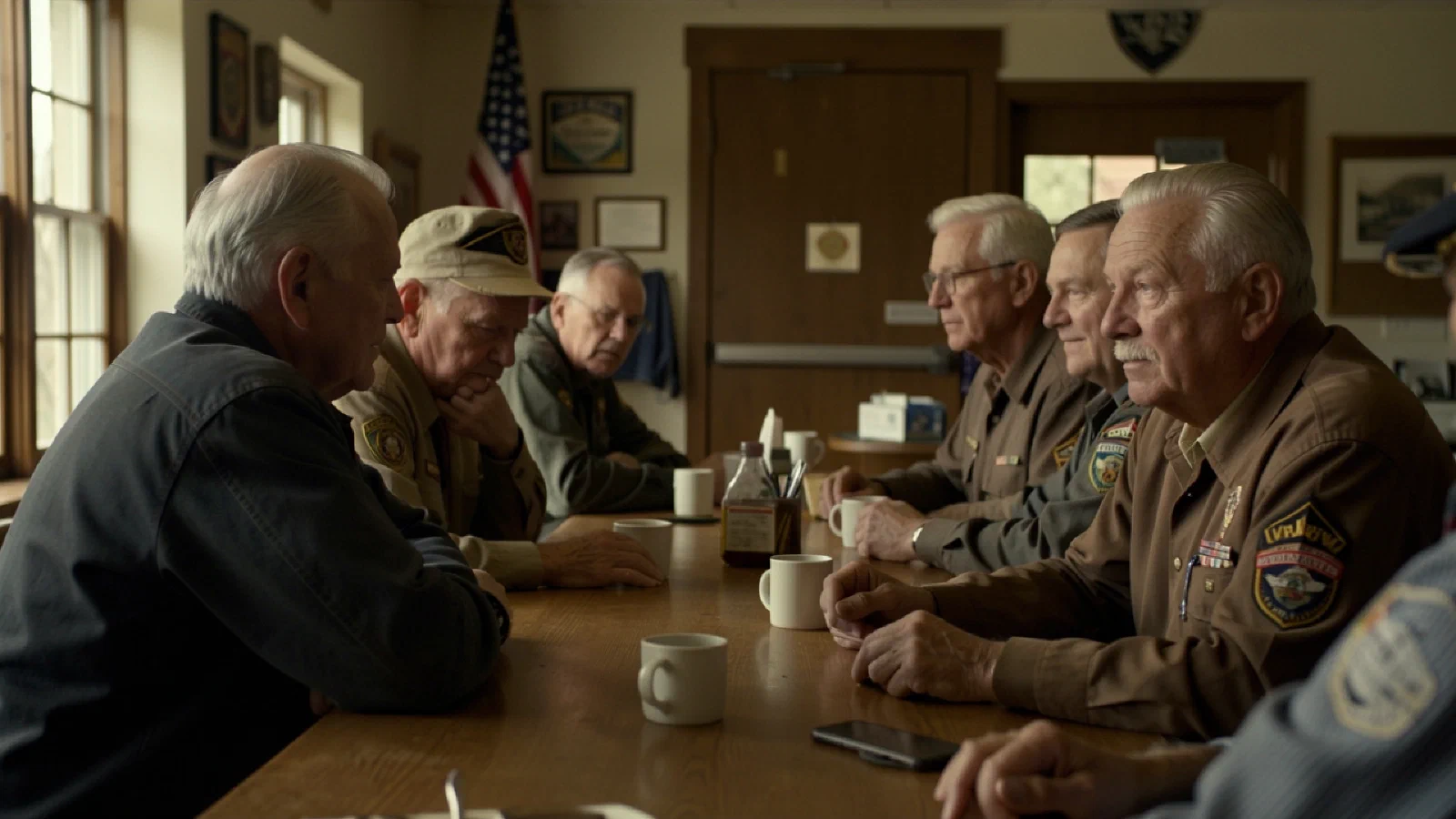
Veteran communities offer connection. The VFW, the American Legion, and informal networks of fellow veterans provide spaces where people understand each other without explanation. But these organizations are themselves aging. The members who built them are dying. Younger veterans often do not join. The support structures that sustained earlier generations may not survive to sustain the next.
Isolation is a risk. Veterans who struggle with the transition, who never found community after leaving service, who carry trauma they have not processed, may withdraw from the world. Suicide rates among veterans are elevated, particularly among older veterans. The cliche of thanking veterans for their service coexists with a society that often does not know what to do with them once the parade is over.
What would help is an expansion of what already exists but remains insufficient. More VA facilities, especially in rural areas. Telehealth infrastructure that brings specialists to veterans who cannot travel. Continued implementation of the PACT Act for toxic exposure conditions. Sustained investment in women’s health services until they match the services available to men. Mental health programs that address not only PTSD but moral injury, that offer veterans the space to speak what cannot be unsaid.
And something harder to provide: a culture that takes seriously what veterans gave. Not in the hollow form of “thank you for your service,” but in the substantive form of healthcare, benefits, and community that make aging possible with dignity. They carried the weight. It is time to share it.
James Patterson will see his VA doctor next month. He will describe the tremor in his hands, the nightmares that still come, the fatigue that has gotten worse. He will not describe everything. There are things he has never told anyone, things from fifty-five years ago that he will take to his grave. But he will show up, because the VA is the place that knows what he has been through, even if it cannot fix what was broken.
Veterans gave the country something that cannot be repaid. The least the country can do is care for them as they age. The VA is imperfect but irreplaceable. What veterans need is not gratitude alone but the resources that allow them to live the rest of their lives with dignity. The war ended a long time ago. Its consequences have not.
How this article connects to others in Blue Gray Matters.
Sources cited in this article.
- U.S. Department of Veterans Affairs. "Profile of Veterans: 2017." National Center for Veterans Analysis and Statistics, Mar. 2019.
- Schnurr, Paula P., et al. "Cognitive Processing Therapy for Veterans With Posttraumatic Stress Disorder: A Comparison Between Outpatient and Residential Treatment." JAMA Network Open, vol. 5, no. 2, 2022, e220265.
- Yaffe, Kristine, et al. "Posttraumatic Stress Disorder and Risk of Dementia Among US Veterans." Archives of General Psychiatry, vol. 67, no. 6, June 2010, pp. 608-613.
- Litz, Brett T., et al. "Moral Injury and Moral Repair in War Veterans: A Preliminary Model and Intervention Strategy." Clinical Psychology Review, vol. 29, no. 8, Dec. 2009, pp. 695-706.
- Institute of Medicine. Veterans and Agent Orange: Update 2014. National Academies Press, 2016.
- U.S. Congress. "Sergeant First Class Heath Robinson Honoring Our Promise to Address Comprehensive Toxics Act of 2022 (PACT Act)." Public Law 117-168, 10 Aug. 2022.
- U.S. Department of Veterans Affairs. "Military Sexual Trauma." Office of Mental Health and Suicide Prevention, 2024.
- U.S. Department of Veterans Affairs. "2023 National Veteran Suicide Prevention Annual Report." Office of Mental Health and Suicide Prevention, Nov. 2023.
- Tanielian, Terri, and Lisa H. Jaycox, eds. Invisible Wounds of War: Psychological and Cognitive Injuries, Their Consequences, and Services to Assist Recovery. RAND Corporation, 2008.