Weathering
The Biology of Lifelong Racism
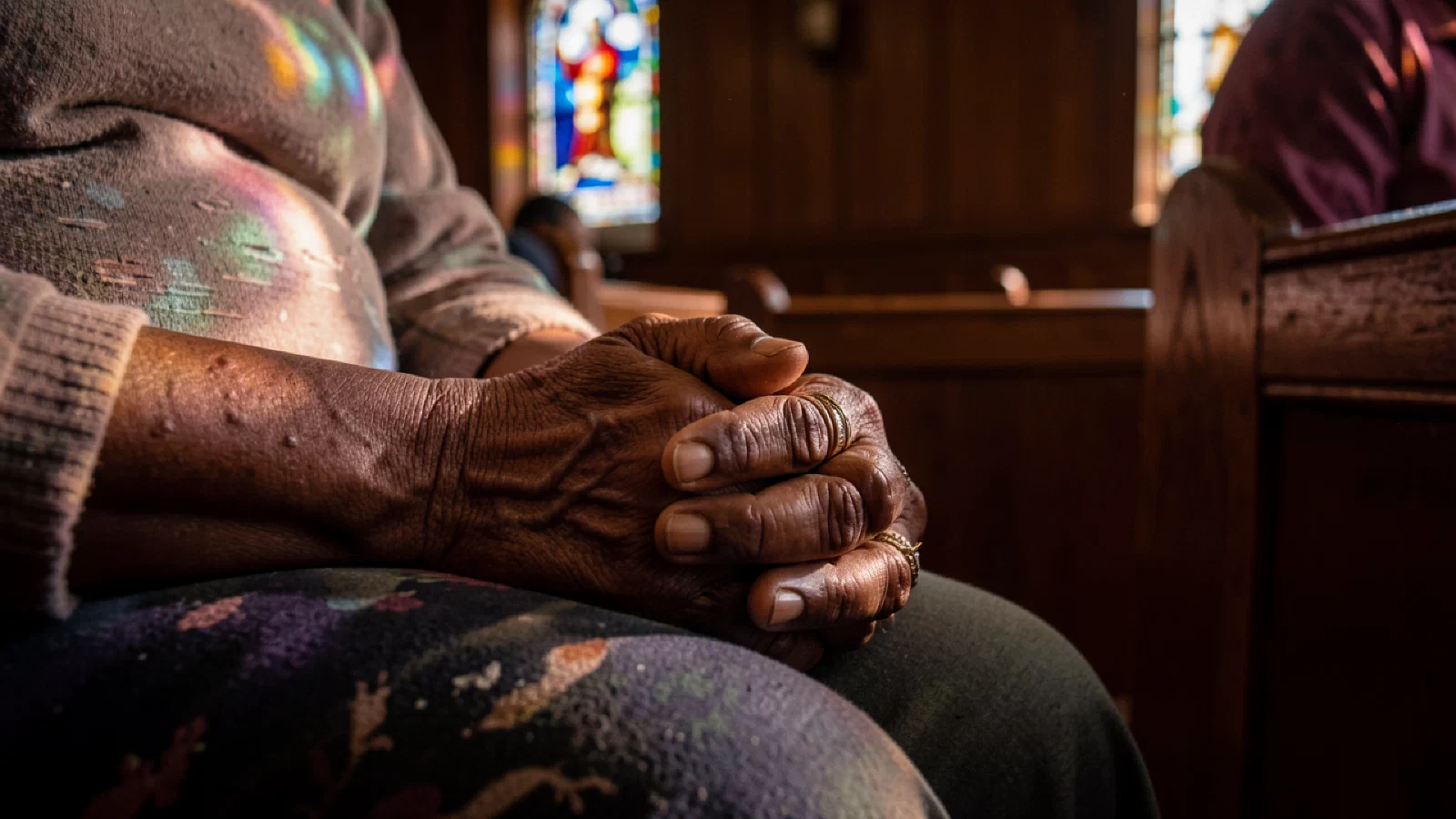
Dolores Williams is 55 years old, but her heart tells a different story. Her cardiologist in Detroit showed her the scans, the numbers, the evidence of what she already knew. The calcium deposits in her arteries, the thickness of her heart muscle walls, the blood pressure that medication barely controls. Her cardiovascular system, the doctor explained, looks like that of a woman in her early seventies. He asked about diet, exercise, family history. He did not ask about the decades of hypervigilance at work, the fear every time her son left the house, the daily toll of being dismissed, overlooked, and second-guessed. He did not ask because he did not know how to measure those things. But her body measured them all along.
What happened to Dolores Williams is not unusual. It is not random. It has a name, coined by a researcher who spent decades documenting what racism does to Black bodies over time.
In 1992, public health researcher Arline Geronimus proposed a concept she called “weathering.” The term was not metaphorical. Geronimus was describing a biological process: the way chronic exposure to racism, discrimination, and the stress of navigating a hostile society literally accelerates cellular aging in Black Americans. The wear accumulates. The body keeps the score. And by the time old age arrives, many Black Americans have already spent decades paying a physical price that their white peers never had to pay.
The science behind weathering is now robust. When the body experiences stress, the hypothalamic-pituitary-adrenal axis activates, flooding the system with cortisol and other stress hormones. In acute situations, this response saves lives. But when stress is chronic, the system never fully resets. Cortisol remains elevated. Inflammation increases. The cardiovascular system is strained. The immune system is suppressed. Over time, this creates what researchers call “allostatic load”: the cumulative burden of chronic stress on the body’s systems.
Studies consistently show that Black Americans carry higher allostatic load than white Americans at every age. The gap does not narrow with time; it widens. By middle age, the physiological differences are measurable in blood pressure, inflammatory markers, stress hormones, and cholesterol levels. They are also visible in something even more fundamental: the protective caps on the ends of chromosomes called telomeres.
Telomeres shorten as cells divide and age. They are biological markers of how much wear a body has experienced. In study after study, Black Americans have shorter telomeres than white Americans of the same chronological age. This holds true even after controlling for income, education, and health behaviors. Something beyond individual choices is aging Black bodies faster than white ones.
That something is the cumulative weight of living Black in America.
The stressors are both dramatic and mundane. They include overt discrimination: being passed over for jobs, denied housing, followed in stores, stopped by police. They include the subtler erosions: the doctor who does not take your pain seriously, the colleague who is surprised you are articulate, the assumption that you are the help rather than the client. They include environmental exposure: Black Americans are more likely to live near industrial pollution, in neighborhoods with fewer grocery stores and more liquor stores, in housing with lead paint and poor ventilation. They include economic precarity: lower wages for the same work, less accumulated wealth, fewer cushions against crisis.
And they include the exhausting labor of vigilance. The mental work of anticipating bias, managing how you are perceived, deciding when to speak up and when to let it go, navigating systems that were not designed for you and often work against you. This cognitive load is invisible but constant. It runs in the background of every interaction, every decision, every day.
What makes the research on weathering particularly striking is that it does not disappear with class advancement. Affluent Black Americans still show signs of accelerated aging compared to their white counterparts. Education provides some protection, but not enough. Money cannot buy freedom from being pulled over. It cannot purchase immunity from the subtle insults that land at work, at school, at the country club. The sociologist Tressie McMillan Cottom has described the particular exhaustion of Black professional life: the requirement to be twice as good for half the recognition, the impossibility of ever fully arriving.
Geronimus and other researchers have documented a phenomenon called “John Henryism,” named for the legendary steel-driving man who won his contest with the machine but died from the effort. John Henryism refers to the health costs of sustained high effort to overcome barriers. Working harder, pushing through, refusing to let obstacles stop you: these are survival strategies, and they are also physiologically expensive. The price is paid in cardiovascular disease, in hypertension, in years of life.
The implications for aging are profound. By the time Black Americans reach what should be their senior years, many have already depleted resources that their white peers still have in reserve. The diseases of aging arrive earlier. Hypertension appears in the forties. Diabetes develops sooner. Heart disease progresses faster. The risk of Alzheimer’s disease is approximately twice as high for Black Americans as for white Americans, and researchers increasingly suspect that vascular damage from decades of stress is part of the explanation.
This is not a failure of personal responsibility. It is not about diet or exercise or lifestyle choices, though those matter too. It is about what happens when a society subjects a population to chronic stress from birth to death, across generations, without relief.
And the stress is intergenerational. Children absorb their parents’ vigilance. They learn early that the world will not treat them the way it treats others. The research on adverse childhood experiences shows that early life stress leaves lasting biological marks. For many Black children, racism is itself an adverse childhood experience, one that begins before they have words to describe it and continues for the rest of their lives.
What would address weathering? The honest answer is that dismantling racism is the root solution, and that is not a healthcare intervention. But even within healthcare, there are steps that could reduce the burden. Addressing bias in medical care would help; Black patients are less likely to receive adequate pain treatment, less likely to receive certain cardiac procedures, less likely to be believed when they describe their symptoms. Building trust would help too, though that trust was destroyed by generations of medical abuse, from the Tuskegee experiment to Henrietta Lacks, and it cannot be rebuilt with good intentions alone.
Economic policy matters. The racial wealth gap means that Black families have fewer resources to buffer against crisis, less ability to choose healthier neighborhoods, less capacity to retire from stressful work. Environmental justice matters. So does housing policy, criminal justice reform, education equity, and the dozens of other policy domains where racism has been built into the infrastructure.
But the first step is naming it. Weathering is not a cultural difference. It is not a reflection of anything inherent to Black bodies. It is the physiological consequence of racism. It is damage inflicted by a society on the people it refuses to treat fairly. Until that is stated plainly, the solutions will remain inadequate.
Dolores Williams did not need her cardiologist to explain the research literature. She needed him to understand that her heart is not weak because of her genes or her choices. Her heart is worn because of what she has carried. The vigilance since childhood. The years of being underestimated and having to prove herself twice. The fear for her children. The hundreds of small indignities and the handful of large ones. The work of holding herself together in a country that would just as soon see her fall apart.
Black Americans do not age faster because of something inherent to their bodies. They age faster because of what America does to their bodies. The stress of racism is not metaphorical. It is biological. It shortens lives. It steals years. It is measurable, documented, and ongoing.
The cost is not theoretical. It is paid in doctors’ offices and emergency rooms and cemeteries. It is paid by people who deserved better and received worse. Weathering is the price of racism, and the bill is always due.
How this article connects to others in Blue Gray Matters.
Sources cited in this article.
- Geronimus, Arline T. "The Weathering Hypothesis and the Health of African-American Women and Infants: Evidence and Speculations." Ethnicity & Disease, vol. 2, no. 3, Summer 1992, pp. 207-221.
- Geronimus, Arline T., et al. "'Weathering' and Age Patterns of Allostatic Load Scores Among Blacks and Whites in the United States." American Journal of Public Health, vol. 96, no. 5, May 2006, pp. 826-833.
- Geronimus, Arline T. Weathering: The Extraordinary Stress of Ordinary Life in an Unjust Society. Little, Brown Spark, 2023.
- Geronimus, Arline T., et al. "Do US Black Women Experience Stress-Related Accelerated Biological Aging? A Novel Theory and First Population-Based Test of Black-White Differences in Telomere Length." Human Nature, vol. 21, no. 1, Mar. 2010, pp. 19-38.
- James, Sherman A. "John Henryism and the Health of African-Americans." Culture, Medicine and Psychiatry, vol. 18, no. 2, June 1994, pp. 163-182.
- Cottom, Tressie McMillan. Thick: And Other Essays. The New Press, 2019.
- Mayeda, Elizabeth Rose, et al. "Inequalities in Dementia Incidence Between Six Racial and Ethnic Groups Over 14 Years." Alzheimer's & Dementia, vol. 12, no. 3, Mar. 2016, pp. 216-224.
- Williams, David R., and Selina A. Mohammed. "Discrimination and Racial Disparities in Health: Evidence and Needed Research." Journal of Behavioral Medicine, vol. 32, no. 1, Feb. 2009, pp. 20-47.
- Felitti, Vincent J., et al. "Relationship of Childhood Abuse and Household Dysfunction to Many of the Leading Causes of Death in Adults." American Journal of Preventive Medicine, vol. 14, no. 4, May 1998, pp. 245-258.