What Dying Well Actually Requires
The Conversation, the Plan, and the Courage to Have Both
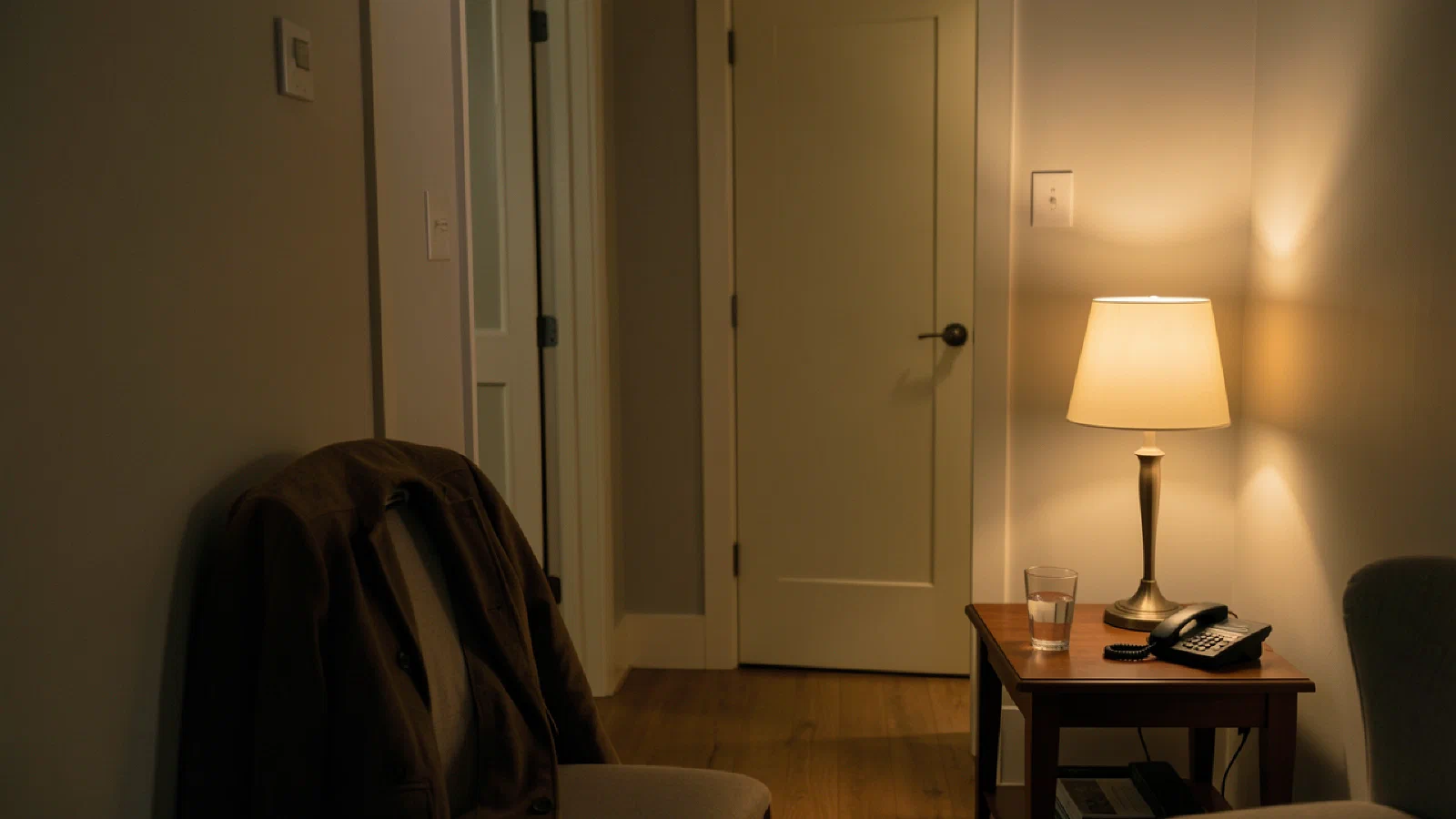
The family gathered in the hallway at 2:14 AM. Carol was 74. She had been admitted three days earlier with pneumonia that had worsened fast, layered on top of congestive heart failure she had been managing for six years. Her daughter Linda had driven in from two hours away. Her son Ray was on a plane from Denver. The attending physician needed an answer about intubation. Carol was sedated. She could not speak for herself.
Linda thought her mother would want everything done. Ray believed she would not want to be on a ventilator. Neither of them knew, because Carol had never said. She had filled out no advance directive. She had named no healthcare proxy. She had not had the conversation, not because she was afraid of death but because there had never seemed to be a good time to bring it up. Now the time had arrived, and the two people who loved her most stood in a fluorescent hallway disagreeing about what she would want while a physician waited.
This scene is not unusual. It is the default.
The Gap#
Americans, when surveyed, are remarkably consistent about what they want at the end of life. Roughly 80 percent say they would prefer to die at home. They want to be comfortable. They want their families present. They do not want aggressive intervention that prolongs the process of dying without improving the quality of the time that remains. The Kaiser Family Foundation has found this preference stable across income levels, education, race, and geography. People know what they want.
What they get is something else. The Centers for Disease Control reports that approximately 36 percent of Americans die in hospitals and another 31 percent die in long-term care facilities. Only about 31 percent die at home, and that number includes hospice patients whose final days were spent in their own beds. The gap between the 80 percent who want to die at home and the 31 percent who do is not a medical mystery. It is the predictable result of a system that defaults to intervention when no alternative has been made clear.
The gap has narrowed in recent decades. Hospice enrollment has grown significantly since Medicare began covering it in 1983, and the share of deaths occurring at home has risen. But the progress is uneven. Black and Hispanic Americans are less likely to enroll in hospice than white Americans. Rural communities have fewer hospice providers. Lower-income patients receive more aggressive end-of-life care, not because they want it more but because they have less access to palliative care teams and less opportunity to have the conversations that would direct their care differently.
The system does not ask what you want unless you force it to. And most people do not force it, because forcing it means saying out loud that you are going to die.
The Conversation That Does Not Happen#
The advance directive is the document. BGM-7F explains the mechanics: how to get one, what it covers, who it authorizes to speak for you. But the document is not the thing that matters most. The conversation is.
An advance directive filed in a medical chart tells a physician your preferences about resuscitation, mechanical ventilation, artificial nutrition. It is a legal instrument, and it matters. But it is also, in most cases, a set of boxes checked in an office while healthy, under no particular urgency, about scenarios that feel abstract. The Hastings Center has found that advance directives, while valuable, frequently fail to prevent the very conflicts they are meant to resolve because the situations that arise at the end of life are rarely the situations people imagined when they filled out the form.
What works better, consistently, is the conversation. Not the document. The conversation.
Atul Gawande described this in “Being Mortal”: the questions that matter are not “do you want CPR” but “what does a good day look like for you?” and “what are you afraid of?” and “what would you be willing to endure for the possibility of more time, and what would you not?” These are not medical questions. They are human questions, and the answers give family members and physicians something a checkbox cannot provide: a sense of who the person is and what they actually value.
The reason the conversation does not happen is not complicated. It is uncomfortable. Adult children do not want to bring it up because it feels morbid, or presumptuous, or as though they are already thinking about inheritance. Parents do not bring it up because it means acknowledging a future they would rather not face. Physicians do not bring it up because they were trained to treat, not to discuss the limits of treatment, and because a fifteen-minute appointment leaves no room for a conversation that needs an hour.
The result is silence. And silence, at 2 AM in a hospital hallway, becomes a crisis.
What the conversation requires is not courage in the heroic sense. It requires the willingness to be specific. To say: if I cannot recognize my family, I do not want to be kept alive by machines. Or: even if recovery is unlikely, I want every possible treatment as long as I am not in pain. Or: I want to be at home, and I want you to let me go when it is time, and I trust you to know when that is. These are different answers. All of them are valid. None of them can help anyone if they stay inside the person who holds them.
Research from the Stanford Letter Project and similar initiatives has shown that when families have had this conversation, even once, the likelihood of the patient’s wishes being followed rises sharply. When the conversation has not happened, families default to “do everything,” not because they believe it is what the person wants but because they cannot bear the alternative of doing less when they do not know.
The Over-Medicalization Problem#
This section requires honesty that may be uncomfortable.
Approximately 25 percent of all Medicare spending occurs in the last twelve months of life. A significant share of that spending goes toward intensive care unit stays, emergency procedures, repeated hospitalizations, and interventions that the patients themselves, when asked in advance, said they would not want. The Medicare Payment Advisory Commission has documented this pattern for decades. The Dartmouth Atlas of Health Care has mapped its geographic variation: a patient in Miami is far more likely to die in a hospital after aggressive intervention than a patient in Portland, Oregon, and the difference has nothing to do with the patients. It reflects the supply of hospital beds, the practice patterns of local physicians, and the degree to which palliative care is integrated into the local medical culture.
The families who authorize aggressive intervention are not doing anything wrong. They are doing what the system shapes them to do. When no advance directive exists, when no conversation has happened, when a physician asks “do you want us to do everything we can?” in a moment of crisis, the answer is almost always yes. The question itself is misleading. “Everything we can” sounds like hope. What it often means, in practice, is a ventilator, a feeding tube, repeated rounds of CPR on a body that is dying, and a death that happens in an intensive care unit under fluorescent lights rather than at home in a bed the person chose.
The argument here is not against treatment. Treatment that offers a meaningful chance of recovery or a significant extension of quality life is always worth pursuing. The argument is against treatment by default, treatment that happens because no one had the conversation, because the paperwork was never filed, because the system’s momentum points toward intervention and only a deliberate human decision can redirect it.
Jennifer Temel’s landmark study, published in the New England Journal of Medicine in 2010, found that patients with metastatic lung cancer who received early palliative care alongside their oncology treatment lived longer, not shorter, than patients who received oncology treatment alone. They also reported better quality of life and less depression. The patients who got less aggressive treatment, who had more conversations about what they wanted, who were supported in making choices aligned with their values, did not die sooner. They died better.
This finding has been replicated across multiple cancer types and extended to heart failure and COPD. The evidence is consistent: palliative care introduced early, running alongside curative treatment rather than replacing it, improves both quality of life and, in many cases, its duration. The reason is not mysterious. Patients who understand their prognosis make different choices. They spend less time in hospitals. They spend more time doing what matters to them. They are less likely to undergo procedures that cause suffering without benefit.
What a Good Death Actually Looks Like#
The phrase “good death” sounds like an oxymoron. It is not. It is a description of something specific and achievable, and the people who work in hospice and palliative care see it regularly.
A good death means pain that is managed. Not eliminated in every case, but controlled to the point where the person is present, not overwhelmed. Modern palliative medicine can manage pain effectively in the vast majority of cases. The fear that dying means suffering is, for most conditions, a fear that reflects the medicine of forty years ago rather than the medicine of today.
A good death means being in a place the person chose. For most people, that means home. For some it means an inpatient hospice facility with round-the-clock nursing care. For a few it means a hospital, because the level of symptom management they need is only available there. The key is that the setting was chosen rather than defaulted into.
A good death means that the people who matter are present. Not in a hallway making decisions. In the room, holding a hand, being there. The hospice model is designed around this: care comes to the patient, the family is supported rather than sidelined, and the final hours or days are spent in the company of people who know the person as a person rather than a chart number.
A good death means that the person’s values guided the care they received. If they wanted every possible treatment, they received it. If they wanted comfort and time with family, they received that. If they wanted to stop eating and let the process take its course, that choice was respected. Autonomy at the end of life is not a euphemism for giving up. It is the same self-determination that defined the person’s entire life, extended to the final chapter.
The National Hospice and Palliative Care Organization reports that the median length of hospice enrollment in the United States is approximately 18 days. That number is far too short. Hospice benefits are available for patients with a prognosis of six months or less, but most patients are referred so late that the full benefit of the service is never realized. Families describe the first week of hospice as a revelation: the pain management, the emotional support, the practical help, the permission to stop fighting and start being present. Then they describe their regret that it did not start sooner.
Early hospice referral requires physicians who are willing to have honest prognosis conversations. It requires patients and families who have done the emotional work of accepting that treatment is no longer curative. It requires a culture that does not treat the transition from curative to palliative as a failure. The medical establishment is slowly moving in this direction. It is not moving fast enough.
What This Requires of You#
Nothing in this article is abstract. It applies to you, or to someone you love, and the distance between knowing this and acting on it is the distance that kills the possibility of dying well.
If you have not had the conversation, have it. Not the legal version (though do that too; BGM-7F walks through the documents). The human version. Tell the people who will be standing in that hallway what you actually want. Be specific. Be honest about what you are afraid of and what you could not bear. Give them the knowledge they will need to act on your behalf without guilt.
If you are a caregiver and your person has not had this conversation, start it. You are not being morbid. You are being responsible, and you are protecting both of you from a moment that arrives fast and unforgiving.
If you are a physician reading this, you already know what the evidence says. Early palliative care improves outcomes. Honest prognosis conversations improve care. The fifteen-minute appointment is not long enough, and the system that created it values billing codes over conversations that save families from years of regret. You know this. You may not be able to fix it alone. You can start the conversation anyway.
Carol survived. Linda and Ray agreed, in the hallway, to intubate. Carol spent eleven days on a ventilator and another three weeks in a rehabilitation facility. She went home. She is alive. She does not remember the hospitalization, but her children remember the hallway. They remember the argument, the fear, the guilt. They have since had the conversation. Carol has an advance directive now, a healthcare proxy named, and a daughter and son who know what she wants.
Most families do not get a second chance. Carol did because the pneumonia was survivable. The underlying heart failure is not going away. The next crisis will come, and when it does, the family will know what Carol wants. Not because the system asked. Because they finally asked each other.
Dying well is not passive. It is not something that happens to you if you are lucky. It is something you build, deliberately, in advance, with the people who will carry the weight of it when you are gone. It is the last significant act of self-determination most of us will ever have. It is worth doing while the doing is still possible.
How this article connects to others in Blue Gray Matters.